Have you ever wondered if your eyes can tell the difference between a digital avatar and a real person? To get photorealistic results in 3D worlds, it’s not just about high-resolution images.
Artists use a complex process to make digital models look real. They capture tiny details like pores and wrinkles with advanced 3D scanning. By adding these details to physically based light-scattering models, they create believable digital characters.
Modern rendering engines use these advanced techniques to make surfaces look natural under different lights. For anyone serious about digital character design, mastering realistic ai skin textures is key. Knowing how light interacts with surfaces is crucial for a lifelike look.
Key Takeaways
- 3D scanning captures micro-details like pores and wrinkles for high fidelity.
- Subsurface scattering is vital for mimicking how light penetrates human flesh.
- Physically based rendering ensures consistent results across different lighting environments.
- High-frequency geometry adds the necessary depth to prevent a flat, plastic look.
- Combining technical scanning with artistic shading creates a believable digital human.
Foundations of Realistic AI Skin Textures
To create digital portraits, you need to understand human skin layers. Making realistic ai skin textures is more than just a high-resolution image. It’s about knowing how light interacts with skin.
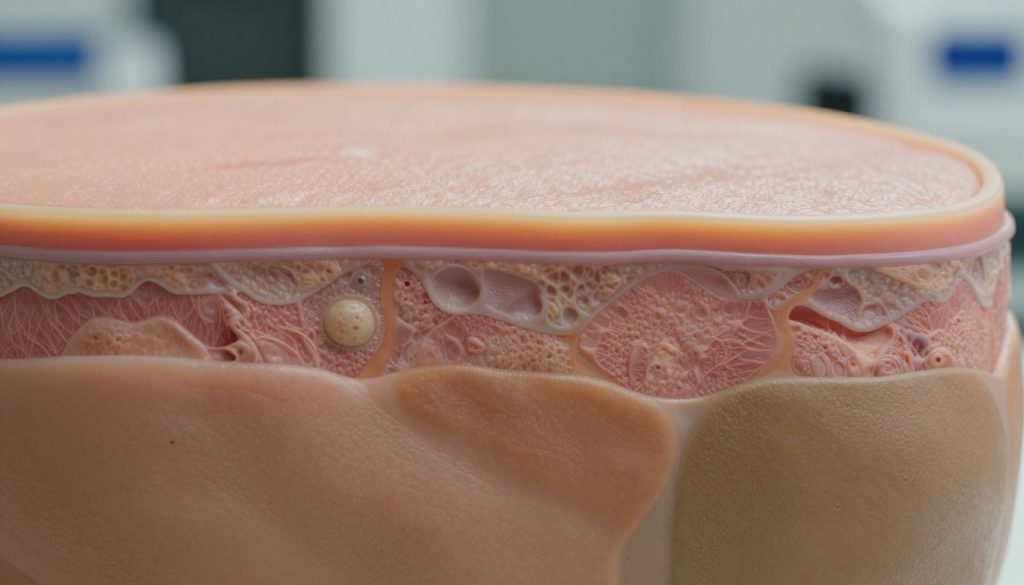
Human skin shows the effect of light scattering through layers. These layers absorb and reflect light in unique ways. This gives skin its distinctive, soft appearance. Without this, digital models can look flat or plastic.
Understanding Human Skin Anatomy for Digital Artists
A convincing model needs to include tiny details that make us human. You should add wrinkles, pores, freckles, hair follicles, and subtle scars to your base mesh. These imperfections are what our eyes expect to see.
The epidermis and dermis are the main canvas for these details. By studying how these layers vary, you can create a more authentic representation. Remember, skin is never perfectly uniform. Capturing this variation is key to success.
The Role of AI in Modern Skin Generation
In the past, artists spent hundreds of hours on each detail. Today, realistic ai skin textures have changed this. AI tools can create complex features quickly and accurately.
Machine learning helps generate detailed maps that are hard to paint by hand. This technology is a powerful assistant, not a replacement for your vision. It lets you focus on the big picture while keeping realism high.
Preparing Your Base Mesh for High-Frequency Detail
To get professional results, start by making your base mesh ready for skin texture ai. Your model needs a clean, logical structure to avoid unwanted issues. This ensures your final image looks natural, not distorted.
Topology Requirements for Pore and Wrinkle Projection
For high-detail features, your mesh must handle dense geometry well. Use quad-based topology to help projection tools work right. Stay away from long, thin triangles to avoid stretching issues.
Make sure your edge flow matches the face’s natural shape. This is key for smooth animations, as it keeps the skin looking right even when moving. A well-made mesh is essential for your skin texture ai work.
UV Unwrapping Strategies for Seamless Texturing
Good UV unwrapping is crucial for a smooth finish. Place seams in hidden spots, like behind the ears or at the hairline. Keeping texel density even across the model ensures uniform detail.
If UV islands are stretched or uneven, textures will look blurry or pixelated. Here’s a table to show how different mesh setups affect your work.
| Mesh Feature | Low-Density Mesh | High-Density Mesh | Impact on Skin Texture AI |
|---|---|---|---|
| Topology Type | Triangles | Clean Quads | High |
| UV Layout | Overlapping | Non-Overlapping | Critical |
| Edge Flow | Random | Anatomical | Medium |
| Detail Support | Poor | Excellent | High |
Sculpting Fine Detail and Micro-Pores
Making digital characters look alive is all about fine details. Modern skin texture ai tools help, but manual sculpting is key for top-notch results. By focusing on small details, your model will look real under different lights.
Utilizing Alpha Brushes for Skin Pores
Alpha brushes are vital for adding texture to digital skin. Choose high-res alphas that mimic real skin’s organic variation. Varying brush intensity helps avoid a uniform look.
Work on a separate layer to keep control. This way, you can adjust the intensity of pores without messing up the whole model. Layering multiple alphas makes the surface look more realistic.
Layering Wrinkles and Expression Lines
Expression lines tell your character’s story. Begin with the main folds around the eyes, mouth, and forehead. Use a standard brush to block these areas, following the muscle structure for accuracy.
After the main lines are set, add finer wrinkles. These should blend with the main lines for a natural flow. Remember, skin is elastic, so lines should be softer where there’s more fat and sharper where skin is thin.
Managing Depth and Scale in ZBrush
Getting the depth right is crucial for a realistic look. If pores are too deep, they’ll catch too much light. Always rotate your model to check how it looks under different lights.
Don’t use the same scale for all details. Pores are bigger on the nose and cheeks, smaller near the eyes and ears. Adjusting your sculpting scale ensures a seamless skin texture ai integration later on.
Generating Skin Maps with AI Tools
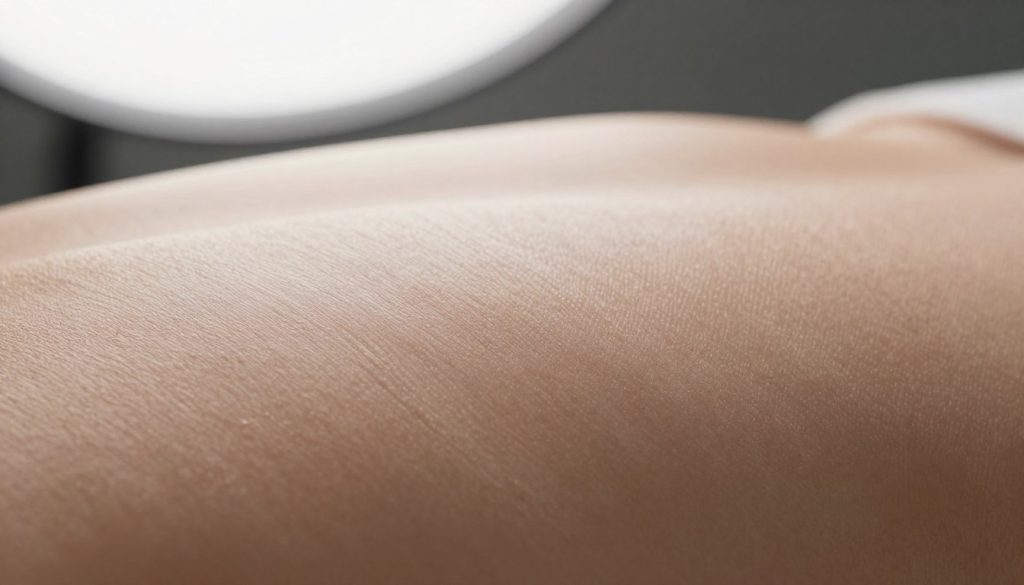
You can now use artificial intelligence to create detailed skin maps quickly. This change moves you from slow manual painting to a faster, more precise process. You can then focus on your art while the AI works on the details.
Leveraging Stable Diffusion for Skin Texture Synthesis
Stable Diffusion is key for artists wanting realistic ai skin textures. It uses prompts for details like pores and skin tone. This creates detailed base maps for your 3D models.
Here are tips for using skin texture ai tools:
- Use tiling parameters for seamless textures.
- Try different seeds for the right skin detail.
- Make many versions to blend for a unique look.
Refining AI-Generated Maps in Adobe Photoshop
After getting your base maps, refine them in Adobe Photoshop. AI maps need tweaks for color and contrast. Think of them as a starting point, not the final product.
Here’s how to finish your assets:
- Color Correction: Adjust layers for the right skin tone.
- Masking: Mix patches for natural variation.
- Detail Enhancement: Sharpen details for realistic textures.
By mixing AI speed with your Photoshop skills, you control the final look. This method keeps your assets unique and saves time.
Mastering Subsurface Scattering Principles
Subsurface scattering makes digital models look alive. It adds a layer of translucency that makes skin look real. Without it, models seem like plastic or stone.
By using sss rendering, you mimic how light interacts with skin. This is key for that soft, glowing skin look. It’s what sets a good render apart from a great one.
How Light Interacts with Dermal Layers
Light doesn’t just bounce off skin. It goes in, scatters, and comes out elsewhere. This journey gives skin its softness and depth.
To get this in your work, you need to understand a few things. These include how much light is absorbed, scattered, and how far it travels before being absorbed or scattered.
- Absorption: How fast light energy is lost in the skin.
- Scattering: How much light changes direction when it hits skin particles.
- Mean Free Path: The average distance a photon travels before being absorbed or scattered.
Defining the Scattering Radius and Color
The scattering radius controls how deep light seems to go. A bigger radius makes skin look softer and more translucent. A smaller radius makes it look firmer and denser. Adjust these based on the face area, like the ears or nose.
The scattering color is also crucial. It’s the tint of light as it leaves the skin, influenced by blood vessels. A warm, reddish hue simulates the natural glow of blood-rich tissue.
Remember, finding the right balance is essential. Too big a radius makes skin look like wax. Too small, and it loses its organic feel. Fine-tuning these settings is key to creating realistic digital humans.
Setting Up SSS Rendering in Arnold
Enhance your character’s look by tweaking subsurface scattering in Arnold. Realistic skin appearance comes from how light moves and scatters in the skin layers. The Kelemen/Szirmay-Kalos model is a strong choice for sss rendering, offering the needed math for top-notch visuals.
Configuring the Standard Surface Shader
The Standard Surface shader is key for your material settings. Start by turning on the Subsurface component to let light interact with your mesh’s inside. Precision is crucial when setting the scattering radius, as it shows how far light goes before leaving the surface.
Make sure your scale settings match your model’s size. Incorrect scaling can mess up light scattering. Always check that your scene units match your texture maps to keep energy conservation principles intact.
Balancing Diffuse and Subsurface Weights
Getting the right mix of diffuse and subsurface weights is tricky. Too much diffuse makes skin look flat, while too much subsurface makes it look like wax.
Use diffuse weight for the base color and surface details. Then, add subsurface weight for the skin’s soft glow. By carefully adjusting these values, you keep your sss rendering realistic yet cinematic.
Creating Realistic Skin Shaders in Unreal Engine
You can make your character models look real by learning about skin shaders in Unreal Engine. A good skin shader should scatter light well to avoid a fake look. By using sss rendering, you make light act like it does in real skin, giving it a natural glow.
Utilizing the Subsurface Profile Shading Model
The Subsurface Profile shading model is made for human faces in games. It lets light spread in a way that looks real. This makes your character’s skin look soft and natural.
With this model, you can control how light scatters. This is key for getting the right colors in places like ears and cheeks. Good sss rendering makes your character look alive, even under different lights.
Optimizing Texture Samples for Real-Time Performance
For games that need to run smoothly, you must balance looks and speed. Make sure your textures are optimized so your character looks good without slowing down the game. Combining maps into one file can save a lot of memory.
Here’s a quick guide to help you pick the right shading for your game:
| Shading Model | Performance Cost | Visual Fidelity | Best Use Case |
|---|---|---|---|
| Default Lit | Low | Basic | Background NPCs |
| Subsurface | Medium | Good | General Characters |
| Subsurface Profile | High | Excellent | Hero Characters |
Don’t forget to use mipmaps and the right texture settings. This keeps your game running well. By managing your textures, you keep your game looking great and running smoothly.
Advanced Color Mapping and Epidermal Variation
Your digital character comes to life with the right color shifts in human skin. Real skin isn’t just one color; it changes due to internal processes. By adding depth to your digital skin, you make it look more real.
Painting Melanin and Blood Flow Variations
To get a realistic look, layer different parts of the skin in your color map. Melanin distribution sets the skin tone, but it’s not the same everywhere. Use soft brushes to add darker patches around the eyes, forehead, and jawline.
Don’t forget about vascularity and blood flow. The nose, ears, and cheeks often look reddish or bluish because of capillaries. Paint soft, desaturated reds in these areas to add warmth and life.
Adding Freckles and Blemishes for Natural Imperfection
Adding freckles, sunspots, and blemishes makes your character unique. These details should never be perfectly symmetrical or uniform in size.
Here are some tips for better skin maps:
- Use procedural noise masks to make freckles look random.
- Vary brush stroke opacity for faded and sharp spots.
- Layer blemishes on a separate channel for color and intensity control.
- Avoid pure black or white for spots; sample colors from the skin.
By focusing on these details, you avoid the “plastic” look in digital characters. Aim to suggest the complexity of human biology, not paint every pore. A layered approach will give you the best convincing results in your final render.
Specular and Roughness Map Workflow
Surface reflection properties make a big difference between a plastic mannequin and a real person. You need a physically based bidirectional reflectance distribution function (BRDF) to get it right. This model makes your specular reflections look natural under different lights, just like real skin.
“Light is the most important tool in the artist’s kit, but it is the surface that decides how that light tells the story.”
Defining Skin Oiliness and Dryness
The look of skin oiliness comes from your specular maps. Places like the nose, forehead, and lips need higher specular values and lower roughness. These areas show sharp, bright highlights, like a natural moisture barrier.
On the other hand, drier spots like cheeks and the eye area should have higher roughness. Adjusting these maps helps show how sebum spreads on the face. Consistency is key; make sure transitions between oily and dry areas are smooth to avoid unnatural looks.
Layering Micro-Roughness for Realistic Highlights
To really capture human skin’s complexity, layer micro-roughness on top of your base maps. Macro-roughness shows the overall oiliness, while micro-roughness adds details from pores and fine wrinkles. Layering these details stops the skin from looking too smooth.
Blend high-frequency noise textures with your pore maps in your shader graph. This method scatters light in a way that feels organic and authentic. When done right, your character will have realistic highlights, even up close.
Integrating Vellus Hair and Peach Fuzz
Getting a realistic look often depends on small details like vellus hair. Skin shaders and texture maps are the base. Peach fuzz adds the final touch, making digital models look like real people. It catches light in a way that creates a soft glow around the skin.
Without peach fuzz, even detailed skin textures can look too smooth or fake. Adding these fine hairs brings natural imperfections. They soften the character’s outline and break up shiny spots.
Grooming Techniques for Subtle Skin Coverage
Good grooming means finding the right mix of density and randomness. Human skin has different hair growth patterns. Using tools like XGen helps you create these patterns naturally.
Here are some tips for grooming:
- Vary the length: Use noise to make hairs of different sizes.
- Control the orientation: Match hair direction with face anatomy.
- Limit the density: Too much hair hides skin textures, so keep it light.
- Use clumping: Clumps make hair look more natural than uniform.
Rendering Fine Hairs with XGen or Groom Assets
Rendering fine hairs needs a shader that handles light and transparency well. Vellus hair is thin and often looks best when it’s translucent. Make sure your shader supports thin geometry to capture the light passing through.
Be careful with light settings when rendering. Fine hairs can stand out too much if not set right. Adjusting the specular weight and roughness of the hair shader helps avoid a shiny look.
Also, think about the hair color. It should match the skin tone to blend well. This makes the character look cohesive, even in close-up shots.
Troubleshooting Common Skin Rendering Issues
Fixing your skin pipeline is key to getting a realistic look. Without subsurface scattering, models can look hard or dry. But, even with sss rendering, you might still see visual issues.
Fixing Over-Saturation in SSS
Artists often struggle with skin that looks too bright or “glowing” in shadows. This usually comes from a too-high scattering radius. Make sure your scene units are right before tweaking your shader settings.
To solve this, try lowering the scattering weight or reducing the light penetration radius. Also, check your diffuse color map to avoid too much brightness. Getting the right balance of light absorption is crucial for a natural look in your sss rendering.
Correcting Artifacts in Normal Map Projections
Artifacts like jagged lines or strange shading can appear on your character’s surface. These problems often come from wrong bit-depths or poor UV unwrapping. If you see seams, make sure your normal maps are in linear color space to avoid gamma errors.
Another common issue is not using proper smoothing groups or hard edges on your mesh. Check your mesh topology for any non-manifold geometry. By improving these technical aspects, you can remove unwanted artifacts and keep your sss rendering surface smooth.
Conclusion
Creating photorealistic skin is a complex journey. It requires a deep understanding of anatomy and light physics. You now have the technical roadmap to make a digital human come to life.
Success in this field depends on blending high-frequency detail with advanced subsurface scattering. Tools like Arnold and Unreal Engine help simulate how light interacts with skin layers. This transforms flat surfaces into organic textures.
Your character work will improve as you refine your approach to micro-roughness and epidermal variation. By experimenting with these settings, you can capture the subtle imperfections that make natural beauty. Every adjustment brings your model closer to true realism.
Keep pushing the boundaries of your creative workflow by trying new alpha brushes and shader configurations. Share your progress with the digital art community to get fresh perspectives. Your dedication to mastering these details will make your work stand out in the competitive world of 3D character design.
FAQ
How does the use of skin texture ai improve the digital character creation workflow?
Skin texture ai tools like Stable Diffusion make creating complex skin features easier. They work faster than manual sculpting. This means you can make realistic base maps quickly in Adobe Photoshop, saving time.
Why is sss rendering necessary for realistic skin?
SSS rendering makes skin look real because it’s translucent. Simple diffuse models can’t capture this. It simulates light scattering, giving skin a natural glow and color shifts, like in ears or nostrils.
How do you balance subsurface weights in the Arnold Standard Surface shader?
In Arnold, balance the diffuse and subsurface weights to 1.0. For realistic skin, use a high subsurface weight and a low diffuse weight. This lets sss rendering show the surface’s character.
What is the advantage of using the Subsurface Profile in Unreal Engine?
The Subsurface Profile in Unreal Engine is great for real-time. It simulates light scattering without slowing down games. This keeps games fast while still showing skin’s translucency.
How does micro-roughness affect the look of skin highlights?
Micro-roughness and oiliness affect how light reflects. Detailed roughness maps control highlights. For example, wet areas like lips have sharp highlights, while dry areas stay matte, making skin look real.
What tools are best for adding vellus hair or peach fuzz to a character?
Use tools like XGen in Autodesk Maya or Groom Assets in Unreal Engine. They add fine hairs that catch light, adding biological complexity and realism.
How can you troubleshoot over-saturation in your skin renders?
Over-saturation happens when scattering is too deep or color too bright. Check your scattering values and use linear color space. Adjusting subsurface scale can also help.
Why is topology important for pore and wrinkle projection?
Good topology is key for details like pores and wrinkles. Uneven or stretched UVs distort these details. Clean, quad-dominant topology ensures accurate translation from 2D to 3D.