Ever wondered why your digital creations look like plastic dolls? Instead of lifelike humans? Getting high-quality results can feel like a guessing game. This is especially true when you run into strange textures or odd lighting issues.
This guide offers a comprehensive approach to fixing common visual errors. We focus on realistic ai porn troubleshooting. Our goal is to help you achieve professional-grade results in your creative projects.
Understanding why images degrade is key. By knowing the causes, you can improve your output quality. Mastering these technical details is crucial for unlocking your full potential in modern image generation.
Key Takeaways
- Identify the root causes of waxy skin textures in your generated images.
- Learn how to adjust lighting parameters to eliminate flat, dull visuals.
- Discover effective methods for removing digital artifacts and noise.
- Apply systematic realistic ai porn troubleshooting to refine your workflow.
- Master the technical settings required for high-fidelity output.
Understanding the Causes of AI Image Imperfections
To get high-quality AI images, you need to understand the technical limits. Learning to troubleshoot ai porn helps you overcome common issues. By finding the main causes of these problems, you can improve your results.
Why AI Models Produce Plastic-Like Textures
AI images often look too smooth because of how they’re trained. Many images in training datasets are heavily edited. This makes the AI think human skin looks unnatural and uniform.
The process of diffusion also plays a role. It smooths out pixel values, losing the details of real skin. To fix this, you need to add back these fine details.
The Science Behind Flat Lighting and Lack of Depth
AI models have trouble with light and shadow. They can mimic light but not how it interacts with skin or objects. This makes images look flat and lacks depth.
Without clear instructions, AI defaults to even lighting. This makes images lack depth. To solve this, you need to tell the AI to create more realistic shadows and highlights.
Identifying Common Artifacts in AI Generations
Artifacts are unwanted structures in digital images. They can be strange shapes, misplaced limbs, or pixel noise. When you troubleshoot ai porn, you learn to spot and fix these issues.
Spotting these problems is the first step to better images. Knowing what causes these errors lets you fine-tune your settings. Consistency comes from understanding these issues.
Mastering Realistic AI Porn Troubleshooting Techniques
Improving your AI-generated content starts with checking your production pipeline. To get professional results, you need to focus on realistic ai porn troubleshooting. This means making sure every detail is considered during creation.
Analyzing Your Current Prompting Workflow
Start by reviewing your prompts to find why your images might not look right. Just like how doctors use exams to diagnose, you need to check your prompts closely. This helps avoid mistakes in your AI images.
Keep track of your successes and failures. Look for patterns in your workflow. This way, you can figure out which words cause unwanted smoothing or distortions in your images.
Adjusting Model Weights for Better Skin Texture
To get beyond flat images, you need to tweak model weights. Focus on tokens that bring out skin pores and natural imperfections. This way, your images will have realistic textures instead of looking generic.
Try different weight settings to find the right balance. This realistic ai porn troubleshooting method helps your model capture human anatomy’s details, not just a blurry look.
Utilizing Negative Prompts to Filter Out Smoothness
Negative prompts can help remove the fake shine often seen in AI images. By excluding words like “smooth skin,” “plastic,” or “airbrushed,” you keep the natural look of skin.
The table below shows how to improve your images with targeted adjustments:
| Strategy | Primary Goal | Expected Outcome |
|---|---|---|
| Prompt Weighting | Enhance skin detail | Increased pore visibility |
| Negative Filtering | Remove plastic sheen | Natural skin texture |
| Workflow Audit | Identify artifacts | Higher image fidelity |
Using these methods regularly will improve your realistic ai porn troubleshooting skills. Keep testing to ensure your images stay sharp, detailed, and true to life.
Fixing Wax Skin Through Prompt Engineering
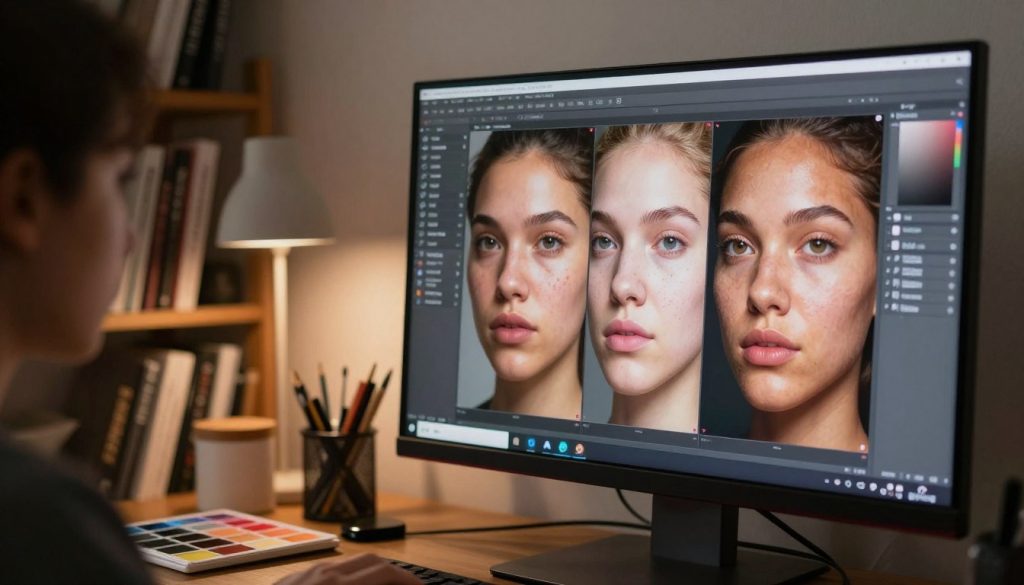
Many digital artists struggle to make wax-like skin look real. AI models often make skin too smooth, losing the natural imperfections. With the right fix tips, you can achieve a more lifelike look.
Adding Skin Detail Keywords to Your Prompts
Using the right words in your prompts is key to realistic skin. Instead of generic terms, use specific ones to highlight details. Precision is essential to avoid a flat look.
Here are some keywords to add:
- Skin pores and visible dermal texture
- Fine lines and subtle skin imperfections
- Natural skin blemishes and realistic subsurface scattering
- Detailed facial topography
Balancing Smoothness and Pore Visibility
It’s important to find the right balance. Too much detail can cause noise or fragmentation. These fix tips help keep your skin looking natural.
Adjust the detail keywords to get the perfect balance. If it’s too grainy, reduce pore-related terms. If it’s still too smooth, add more texture prompts.
Using LoRA Models to Enhance Skin Realism
At times, just prompts aren’t enough. LoRA (Low-Rank Adaptation) models can add high-quality skin textures. They’re a powerful tool to overcome default smoothing.
Using a skin-focused LoRA can add detail hard to get with prompts alone. Make sure to set the LoRA strength right to avoid distorted features. These fix tips will help improve your AI portraits.
Correcting Flat Lighting for Cinematic Depth
Getting a cinematic look in AI art depends on light handling. If your images seem washed out or flat, it’s likely due to uniform lighting. Using specific fix tips can help you achieve the contrast needed for a professional look.
Implementing Lighting Keywords for Dramatic Shadows
To avoid flat images, use precise terms with the AI. Keywords like chiaroscuro, rim lighting, or dramatic shadows help the model place light sources at specific angles. This simple trick adds depth to your subjects.
Light is one of the most dangerous hazards to historic artifacts, as ultraviolet radiation from sunlight and fluorescent light speeds deterioration.
Adjusting Contrast and Exposure Settings
If your images still look dull, check your generation parameters. Tweaking contrast and exposure settings is a key fix tip for balancing your image’s dynamic range. Increasing contrast can make highlights stand out against darker tones.
| Lighting Style | Primary Effect | Best Use Case |
|---|---|---|
| Rim Lighting | Separates subject | Character portraits |
| Chiaroscuro | High contrast | Dramatic scenes |
| Soft Diffused | Even tones | Beauty photography |
Leveraging Depth of Field to Create Separation
Depth of field is great for separating your subject from the background. Using keywords like bokeh or shallow depth of field makes the background blur. This draws the viewer’s eye to the main subject. These fix tips are crucial for making your images stand out.
Eliminating Artifacts and Glitches in Your Output
Getting cleaner AI images starts with knowing how settings affect your results. If your images have unwanted distortions, it’s time to tweak your settings. The right fix tips can turn a messy image into a polished work of art.
Managing Sampling Steps and CFG Scale
The connection between sampling steps and CFG scale is key for image quality. Too few sampling steps can make images blurry or incomplete. On the other hand, too high a CFG scale can make images look unnatural.
Think of these settings like a lab experiment. Just as formalin pigments change when formaldehyde oxidizes, digital artifacts appear when settings are off. Try different fix tips to find the right balance for your model:
- Increase sampling steps slowly to improve edge details.
- Lower the CFG scale if colors look too bright or unnatural.
- Use a consistent sampler for predictable results.
Identifying Over-Training Issues in Custom Models
Custom models can have unique styles but may over-train. Over-training makes models lose their ability to generalize, leading to strange distortions. These glitches happen when the model tries to force specific features.
To spot over-training, look for repeating shapes or textures. If you see these, try reducing the model’s weight or switching to a balanced checkpoint. These fix tips help keep your creative work high-quality.
Cleaning Up Background Noise and Distortions
Background noise can make images look grainy or cluttered. This usually happens when denoising strength is off or when the model can’t process the image well. Adjusting your post-processing steps can help clear these issues.
Here are some final fix tips to keep your images sharp and clear:
- Reduce denoising strength to keep your original image intact.
- Apply a subtle blur to the background to hide small distortions.
- Use high-resolution upscalers to remove noise without losing details.
Optimizing Stable Diffusion Settings for High Fidelity
Getting your settings right is key to making images look real. Even small tweaks can make a big difference. This ensures your images stay clear and detailed.
Selecting the Right Sampler for Skin Texture
The sampler you pick affects how your image is built. For skin, DPM++ 2M Karras or DPM++ SDE Karras are top picks. They balance speed with the detail needed for realistic skin.
Stay away from old samplers like Euler or LMS if skin texture looks off. They can make skin look too smooth, like plastic. Try different samplers to find the right one for your needs.
Fine-Tuning Denoising Strength in Img2Img
In Img2Img, the denoising strength is crucial. If it’s too low, the AI won’t add enough detail. Too high, and it might ignore your original image.
“The secret to great AI art lies in the delicate balance between human intent and machine interpretation.”
For most tasks, aim for a denoising strength between 0.35 and 0.55. This lets the model add realistic skin texture without losing your image’s structure. These tips will help you improve your images’ quality.
Managing Resolution and Upscaling Strategies
Starting with low resolutions can lead to poor image quality. Begin with a resolution that matches your model’s training, like 512×512 or 768×768. Then, use an upscaler like R-ESRGAN 4x+ to enlarge your image without losing quality.
Remember, your hardware has limits when scaling up. Too much strain can cause crashes or distorted images. Use tiled upscaling to manage memory and ensure every pixel is processed well for a sharp finish.
Advanced Post-Processing Workflows
After you’ve made your first image, you can make it even better with professional post-processing. AI models are great, but they sometimes miss small details. Using these fix tips can turn a good image into a stunning one.
Using Inpainting to Fix Specific Skin Areas
Inpainting is key for fixing small skin issues like unnatural smoothness or artifacts. You can mask certain areas and then fix them without changing the rest. This way, you can add subtle pore structures or fix lighting problems the AI might have missed.
Remember to keep your denoising strength low to avoid changing the original look. This helps the AI fix the area without adding new features. Inpainting makes the skin look natural and not fake.
Applying Texture Overlays in External Editors
For the best realism, sometimes you need to use software like Photoshop or GIMP. Adding high-resolution skin texture overlays can give your image a tactile depth AI can’t match. It’s like adding the real imperfections you see in people’s skin.
Using “Overlay” or “Soft Light” modes can blend these textures to mimic human skin’s surface. This method is crucial for avoiding the “plastic” look AI images often have. It gives your images a professional finish that makes them pop.
Color Grading to Add Depth and Realism
Color grading is the last step to make your image look cinematic and real. Adjusting curves, levels, and color balance adds dramatic contrast like real-world lighting. It also helps your subject stand out from the background, creating depth.
Try cooling down shadows and warming up highlights to get a natural skin tone. These fix tips on color management make your image feel complete and thoughtful. A well-graded image looks more real than one left raw.
Selecting the Best Checkpoints and LoRAs
Choosing the right foundation for your AI art is key. If your base model lacks detail, no post-processing can fully fix it. Focus on high-quality checkpoints and LoRAs to create a reliable workflow that avoids common errors.
Evaluating Model Training Data Quality
The quality of a model depends on its training images. Look for checkpoints trained on high-resolution datasets with diverse skin textures and lighting. Avoid models that appear overly filtered, as they often produce unnatural skin.
Review the sample images from the creator. If the skin looks too smooth or lacks pores, the training data was likely compressed too much. Using such models will make achieving a realistic look harder, no matter your prompt engineering.
Mixing Models for Balanced Results
At times, one checkpoint can’t meet all your project needs. Model merging combines two files’ strengths, creating a versatile base. This is a top fix tip for those wanting a mix of artistic style and skin detail.
Use web interface tools to blend model weights. Adjusting ratios can keep a portrait’s structure while adding realistic skin details. This often results in a custom model that outperforms both originals.
Testing for Over-Smoothing in Popular Checkpoints
Many popular models aim for “safety” or “cleanliness,” losing fine details. Test your checkpoints by generating a portrait and checking the skin texture at 100% zoom. If it lacks depth or looks waxy, it’s over-smoothed.
Just as textiles need careful storage, your digital assets require the right selection to avoid quality loss. Use the table below to compare how different models handle skin texture and lighting.
| Model Type | Skin Texture | Lighting Depth | Best Use Case |
|---|---|---|---|
| Photorealistic | High (Pores visible) | Strong Contrast | Portraits |
| Stylized/Anime | Low (Smooth) | Flat/Soft | Illustration |
| Merged/Hybrid | Medium-High | Balanced | General Purpose |
| Over-Trained | Very Low (Waxy) | Artificial | Not Recommended |
Refining Your Workflow for Consistent Quality
To get consistent results with AI image generation, you need a strict workflow. It’s like taking care of old treasures, where you do no harm to your work. This careful approach helps you fix problems better when they come up.
Creating a Standardized Prompt Template
Start with a basic prompt template. This keeps your quality and style tags in order. Consistency helps you spot what’s going wrong with your prompts.
Iterative Testing and Version Control
Don’t trust your memory when trying new things. Use a version control system to save your settings and images. This way, you can go back to a good version if something goes wrong.
Documenting Successful Parameter Combinations
Keep a log of your best settings. This helps you remember what works well together. It’s your go-to for troubleshooting ai porn and finding quality again.
Good habits save you from endless trial and error. You’ll focus more on improving your work. Structured documentation is the key to top-notch AI images.
Troubleshooting Common Hardware and Software Conflicts
Your hardware and software setup greatly affects your AI art quality. Even the best prompts can fail if technical issues arise. Using the right fix tips ensures your system runs smoothly.
Managing VRAM Usage for Better Generation Quality
High-resolution AI art needs a lot of video memory. If your VRAM is full, you might see errors or crashes. To avoid this, try reducing your batch size or use xformers.
Watching your memory in real-time helps you adjust settings. Effective resource management is key to avoiding blurry or corrupted images. Make sure your GPU drivers are up-to-date for the latest memory features.
Updating Extensions and WebUI Versions
The AI world changes fast, and old software can cause problems. It’s important to keep your WebUI and extensions updated. These updates often fix bugs and improve performance.
If you’re still having issues, check the extension repository. Developers often post fix tips and patches for Stable Diffusion. Keeping your setup current helps avoid many common issues.
Resolving Compatibility Issues Between Models
At times, a model might not work well with your setup or sampler settings. This can cause weird visuals or poor textures. Testing different models is a good way to fix tips for output problems.
Here’s a table to help you find and fix common technical problems:
| Issue Type | Common Symptom | Recommended Action |
|---|---|---|
| VRAM Overflow | Out of Memory Error | Reduce batch size or resolution |
| Outdated WebUI | Feature failure | Run git pull to update |
| Model Mismatch | Strange artifacts | Verify model hash and compatibility |
| Driver Conflict | System stuttering | Update GPU drivers to latest |
By tackling these hardware and software issues, you set up a solid base for your work. Regular upkeep is essential for top-notch results.
Conclusion
To get the best results in Stable Diffusion or Midjourney, you need both technical skill and creativity. Now, you have the tools to turn simple images into stunning, real-looking art.
Improving your skills means trying new things with prompts and settings. Every change you make gets you closer to top-notch results. Keep working on your craft to capture the small details that make art great.
Keep up with the latest in generative AI. Share your work with others to learn from their experiences. Your hard work will lead to amazing visuals that impress everyone.
Begin your next project with these new techniques. Your skills in creating realistic textures and lighting will keep getting better with each new image.
FAQ
How can I troubleshoot ai porn generations that look like plastic?
To fix this, add skin detail keywords like “pores,” “moles,” and “fine lines” to your prompt. Use negative prompts like “plastic, wax, smooth, cgi.” Also, lower your denoising strength during upscaling to keep textures organic.
What are the best fix tips for flat lighting in AI images?
For depth, use terms like “volumetric lighting,” “rim lighting,” and “chiaroscuro.” Keep your CFG scale between 5 and 7 to avoid overly flat images.
Why does my AI-generated skin look blurry or low-detail?
It might be due to low sampling steps or the wrong sampler. Try DPM++ SDE Karras with 25-30 steps. Also, generate at a high base resolution or use Hires. fix for more detail.
How do I manage VRAM usage to avoid crashes during high-fidelity renders?
If your NVIDIA card runs out of memory, use `–medvram` or `–xformers` in your Automatic1111 setup. This helps your GPU handle model weights better, allowing for higher resolution outputs without crashing.
Can LoRAs really help troubleshoot ai porn texture issues?
Yes, specialized LoRA models add realistic imperfections. Adding a texture-focused LoRA at 0.4 to 0.6 weight significantly reduces the “wax” effect, improving realism.
What should I do if my images have weird artifacts or glitches?
Lower your CFG scale if it’s too high (above 10). It causes “burn” artifacts. Also, check if your model is over-trained. If problems continue, use ADetailer to clean up faces and hands.
How do I get a more cinematic depth of field?
Use “bokeh,” “shallow depth of field,” and “f/1.8” in your prompt. This blurs the background, creating a professional separation between subject and environment, making the image more cinematic.