Ever thought if digital figures on screens are real or just code? The line between real and digital is getting blurred fast.
Now, you can make flawless avatars that look like real skin. This high quality comes from knowing how to use modern tools well.
With the right tools, you can go beyond basic images to create professional-grade imagery. This guide will show you how to get pore-level detail in your work. It’s the top standard for hyper realistic ai porn.
Whether you’re just starting or already making content, learning these advanced methods is key. Let’s explore what it takes to master hyper realistic ai porn in your projects.
Key Takeaways
- High-end GPU hardware is essential for rendering complex skin textures.
- Software optimization allows for greater control over lighting and shadow depth.
- Mastering prompt engineering is the first step toward achieving professional results.
- Layering techniques help simulate natural imperfections found in human skin.
- Consistent workflows ensure that your generated avatars maintain a lifelike appearance.
Setting Up Your Stable Diffusion Environment for High-Fidelity Output
Your journey to creating hyper-realistic images starts with a solid local setup. A well-configured system is the most critical step to avoid common issues. It ensures every pixel adds to a realistic final image.
Selecting the Right Hardware and Software Stack
Rendering high-resolution images needs a lot of power, especially from your graphics card. Make sure your setup can handle VRAM demands to prevent crashes. A GPU with at least 12GB of VRAM is recommended for consistent, high-fidelity results.
For software, use a stable version of Automatic1111 or ComfyUI. These interfaces give you control over your generation process. Choosing the right environment can make a huge difference in your output.
Installing Essential Extensions for Realistic Generation
After setting up your software, add specific tools to enhance it. Essential extensions give your software the power to handle complex textures and lighting. These tools bridge the gap to professional-grade realism.
Look for extensions that boost image quality and control. By adding these tools, your system can handle detailed skin and shadows. Proper extension management is key for local AI generation.
Mastering Checkpoint Selection for Hyper Realistic NSFW Content
Achieving a hyper realistic nsfw look starts with the right base model. This model is like the brain of your creation, guiding how it looks and feels. Without a top-notch base, even the best settings can’t produce stunning results.
Evaluating Photorealistic Models
Looking for the right model, you’ll find many options. Many artists use the Uber Realistic Porn Merge for its advanced skin and lighting skills. It’s a favorite for its ability to capture detailed skin textures and natural lighting.
Try out different models to find the one that matches your vision. Some are better at soft, movie-like lighting, while others focus on sharp, detailed skin. Choosing wisely can save you from needing to fix a lot in post-processing.
Fine-Tuning Your Base Model Choice
After picking a solid base, make sure it’s ready for your content’s textures. Look for models trained on high-resolution data for the best skin detail. This step is crucial for keeping your hyper realistic nsfw look consistent.
Your base model choice is the biggest factor in your content’s realism. A weak base can make your images look fake, no matter how good your prompts are. Consistency is key, so once you find a good model, stick with it.
Implementing LoRA and Embeddings for Micro Skin Texture
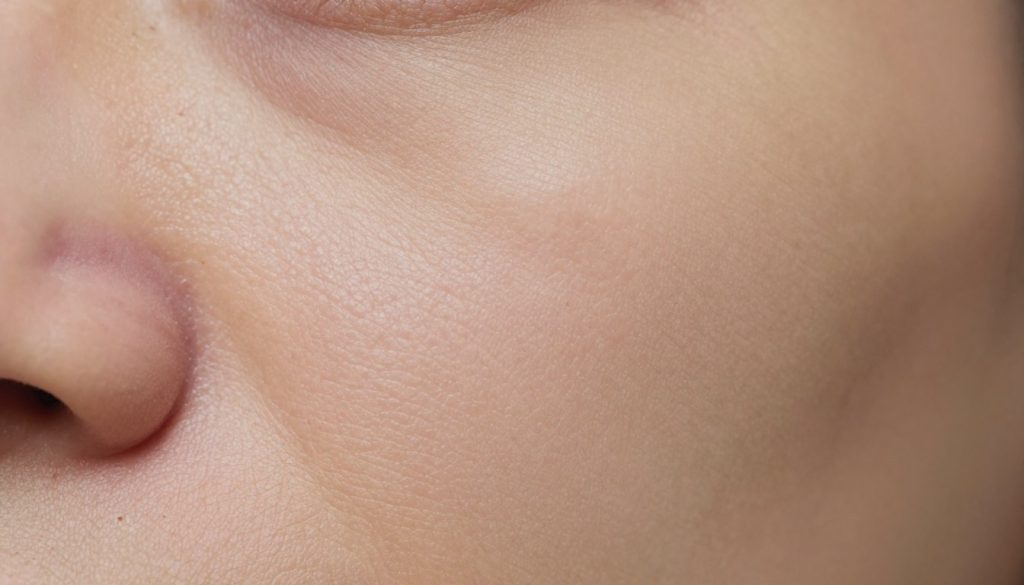
Micro skin texture is key to making AI images look real. Using just a base model can make images look too smooth. Low-Rank Adaptation (LoRA) adds the needed texture and realism.
Understanding Skin Detail LoRAs
A LoRA is a tool to fine-tune AI models for specific features. It acts like a filter, teaching the model to capture complex surfaces. With a skin detail LoRA, the AI focuses on subtle variations in light and shadow on skin.
“True realism in AI generation is found in the imperfections; without the subtle noise of pores and skin texture, the image will always feel artificial.”
Combining Multiple LoRAs for Pore-Level Detail
To get the best realism, use multiple LoRAs. One might focus on general pores, while another adds freckles or moles. This modular approach creates a unique, convincing look.
| LoRA Type | Primary Function | Impact on Realism |
|---|---|---|
| Pore Enhancer | Adds surface depth | High |
| Skin Imperfection | Adds natural spots | Medium |
| Texture Refiner | Sharpens micro skin | High |
Balancing Weights to Avoid Artifacts
Layering LoRAs works well, but you must balance their weights. Too high, and you might get digital artifacts or color shifts. Start with a low weight, like 0.5 or 0.6, and adjust until you get the right pore detail without harming the image.
Optimizing Prompts for Hyper Realistic AI Porn
The bridge between your vision and the screen is built with precise, descriptive language. Prompt engineering is key, turning your ideas into hyper realistic ai porn. It lets you create vivid visuals from your thoughts.
Crafting Descriptive Skin Texture Prompts
To get professional results, go beyond simple keywords. Include details like subsurface scattering, pore-level skin texture, and natural lighting conditions. These details help the model focus on realistic skin.
Many find typing their thoughts and seeing them as images compelling. Mentioning camera settings, like “85mm lens” or “f/1.8 aperture,” adds depth. This makes the hyper realistic ai porn look real, not fake.
Using Negative Prompts to Eliminate Plastic Looks
Negative prompts are key for quality control. They tell the AI what to avoid, keeping results realistic. It’s crucial to exclude terms that cause artificial looks.
To avoid the “plastic” look, use negative prompts like “cartoon, doll, plastic skin, airbrushed, smooth, low resolution, or oversaturated.” This ensures the output has real skin’s grit and imperfections. This method is key to creating standout hyper realistic ai porn.
Utilizing ControlNet for Anatomical and Textural Precision
ControlNet is key for keeping your AI images perfect. It helps keep your subjects looking right throughout the process. With its advanced features, you can lock in the pose and composition before the final touches.
Applying Canny and Depth Maps for Structure
Canny edge detection and Depth maps are crucial for your character designs. Canny maps help keep your subject’s outlines sharp, ensuring limbs and faces are in place. Depth maps give the AI a sense of space, helping it keep objects and the camera at the right distance.
These tools stop your images from getting distorted, especially in complex poses. They let you guide the model to match your vision. This structural reliability is key for creating top-notch content that looks real.
Using Tile Resample for Texture Enhancement
After setting your structure, Tile Resample enhances your image’s surface details. It’s made to add fine textures without changing the overall look or pose. It breaks the image into small parts, improving skin and fabric details.
This method is great for sharpening specific parts of a character. It boosts detail while keeping the body’s shape the same. By combining structure with texture, you get visual consistency that’s hard to achieve with just prompts.
Advanced Upscaling Techniques for Pore Detail
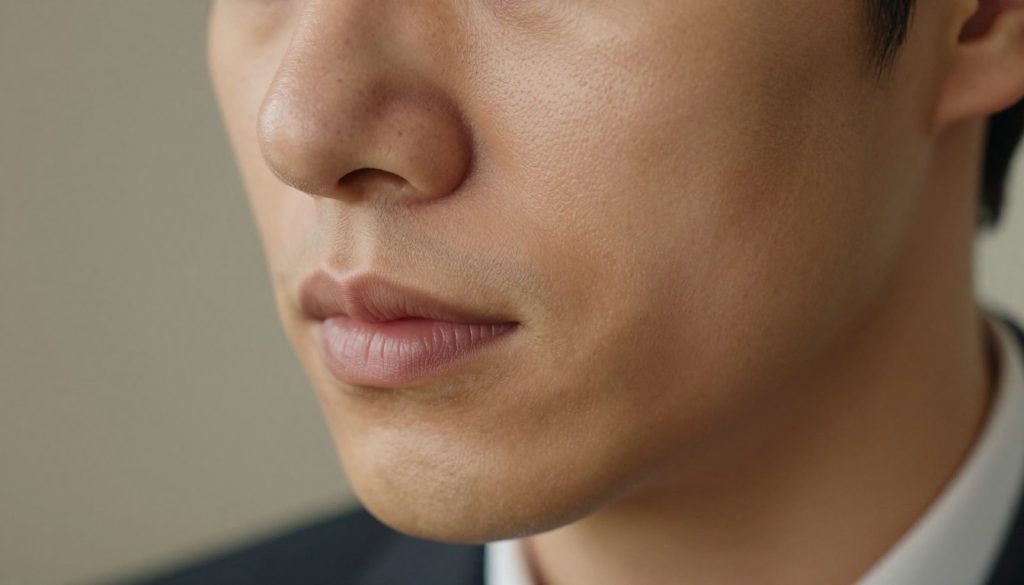
After your base image is made, the real magic happens. You start to upscale it, making sure pore detail stays sharp. This is key to avoiding a blurry mess.
It’s crucial to think about the ethics here. These AI tools use data from many sources, including images of thousands of people. Respecting the source of this data is important for your work.
Choosing the Right Upscaler Models
Not all upscalers are the same if you want photorealism. You need to pick models that focus on textures, like ESRGAN variants or latent upscalers.
Stay away from models that reduce noise too much. They can ruin the pore detail you’ve worked on. Look for ones that keep edges sharp and textures clear.
Executing Multi-Pass Hires Fix
Using a multi-pass Hires Fix lets the AI add more detail. By running the image again at a higher resolution, it sharpens the textures.
This method is vital for realistic images. It makes the difference between a draft and a professional-quality image.
Managing Denoising Strength for Texture Retention
Controlling the denoising strength is key. If it’s too high, the AI might mess up your image with unwanted artifacts.
Keep the denoising strength between 0.3 and 0.45. This balance adds pore detail without harming the image’s structure.
Post-Processing and Color Grading for Realism
Your journey to create hyper-realistic images doesn’t stop when the render is done. Modern models can make things look too perfect, feeling artificial. Adding a final touch in external software is key for top-notch results.
Refining Skin Tones in External Editors
Even with top prompts, AI models can sometimes mess with colors or lighting. Professional photo editing tools let you tweak skin tones to look natural. Focus on mid-tones and shadows to make the image feel real.
“The final edit is where the soul of the image is truly captured, transforming raw data into a believable piece of art.”
Here are steps to refine your images:
- Adjust the white balance to remove unwanted color casts.
- Use selective masking to brighten or darken specific skin areas.
- Ensure the highlights match the ambient light source of the scene.
Adding Natural Imperfections and Grain
The “uncanny valley” effect comes from skin that looks too smooth. To fix this, add natural imperfections like film grain or color noise. This breaks the digital perfection and adds texture.
Also, think about protecting your work. Tools like Image Angel add a hidden watermark. This keeps your images traceable, giving you peace of mind if they’re shared online.
By mixing careful color grading with texture adjustments, you turn your work into a high-fidelity masterpiece. Always aim to make the viewer forget it’s AI-generated.
Troubleshooting Common Generation Issues
When your output doesn’t meet your expectations, knowing how to fix common problems is key. Even the most advanced workflows can have unexpected issues. A systematic approach helps find and fix these problems. This way, you can improve your process and get better images.
Fixing Uncanny Valley Effects
The uncanny valley effect happens when facial features seem off or lack depth. If you see this, try adjusting your prompt weights to focus on skin texture or anatomy. Sometimes, the model just doesn’t have enough training data for certain expressions.
Switching to a specialized model for photorealism can help a lot. These models are made to handle facial details better. Also, make sure your denoising strength isn’t too high, as it can cause problems.
Correcting Lighting and Shadow Inconsistencies
Lighting problems often show as harsh shadows or unnatural highlights. If your image has poor lighting, try running it again with a different seed. This simple change can change how the model sees the light in your scene.
If the issue still exists, you might need to tweak your ControlNet settings. Make sure your depth maps or Canny edges match your lighting direction. Here’s a quick guide for common problems and their fixes.
| Issue Type | Primary Symptom | Recommended Fix | Priority |
|---|---|---|---|
| Uncanny Valley | Artificial facial features | Adjust prompt weights | High |
| Lighting Error | Harsh or flat shadows | Change generation seed | Medium |
| Structural Flaw | Anatomical distortion | Update ControlNet map | High |
| Texture Loss | Blurry skin details | Refine upscaler settings | Medium |
Conclusion
Creating hyper-realistic images needs a deep understanding of hardware and software. You now know how to mix digital art with lifelike skin textures.
Stable Diffusion is a strong tool for your creative ideas. By improving your use of checkpoints and upscaling, you control every pixel. Your skill with these tools makes your final work stand out.
The world of generative art is always changing with new models. Keep trying out different LoRA combinations to see what your system can do. Staying up-to-date with these changes will keep your work leading in the field.
Being ethical is key as you grow as a creator. Use these skills to explore your art while keeping community standards. Your focus on quality will make your projects shine in a busy digital world.
FAQ
What is the most important factor in creating hyper realistic nsfw images with visible pore detail?
The most important factor is choosing the right base checkpoint. Look for high-quality models like Uber Realistic Porn Merge. It’s designed for detailed skin textures and accurate anatomy.
How can I achieve a micro skin texture that doesn’t look like plastic?
Use LoRA files to add surface details. Layering them can bring out pores, freckles, and small imperfections. Make sure to balance these files in Stable Diffusion for a realistic look.
Which software stack is recommended for high-fidelity AI generation?
Use Stable Diffusion with Automatic1111 or Forge web UI. A powerful NVIDIA GeForce RTX GPU is essential. Also, install ControlNet and Ultimate SD Upscale for better results.
How do negative prompts help in achieving hyper realistic nsfw results?
Negative prompts exclude unwanted looks like “plastic” or “smooth.” Use terms like “cgi” or “cartoon” to guide the model toward realistic features.
What role does ControlNet play in textural precision?
ControlNet helps keep details precise with Canny or Depth Maps. The Tile Resample model in ControlNet enhances texture, improving pore detail.
Why is the Hires Fix necessary for seeing pore detail?
Standard images lack detail for textures. A multi-pass Hires Fix adds more detail. Use upscaler models like 4x-UltraSharp for clear skin textures.
How can I refine skin tones to look more natural after generation?
Use Adobe Photoshop or Lightroom for a final touch. Adjust skin tones and add grain or color noise to avoid a too-perfect look.
Is there a way to secure my images and ensure they are traceable?
Yes, use Image Angel for invisible watermarks. This ensures your images can be traced if shared without permission.
How do I fix the “Uncanny Valley” effect in my AI portraits?
Adjust Prompt Engineering for better lighting and facial symmetry. Use Inpainting to correct features and enhance realism.
What is the ethical importance of understanding the data behind these models?
Remember, these tools use data from many sources, including sex workers. Be ethical and use tools like Image Angel for responsible content creation.