Ever noticed why some digital scenes seem flat, while others draw you in? The answer often lies in camera movement. Learning realistic ai porn camera movement can turn amateur clips into professional stories.
Using software to mimic real camera gear, like sliders and dollies, can make scenes come alive. This guide shows how to use advanced tools for handheld shakes and smooth shots. Boosting your visual quality begins with these basic principles.
You’ll learn to create motion paths that match top-notch productions. Whether you need a slight move or a shaky shot, these methods give you the control. Let’s explore how to make digital scenes feel real.
Key Takeaways
- Learn to replicate professional slider and dolly shots in digital environments.
- Understand how to add handheld jitter for a more authentic, raw aesthetic.
- Discover tools that bridge the gap between static generation and cinematic flow.
- Master the art of timing to ensure your visual transitions feel natural.
- Improve overall project quality by applying advanced simulation techniques.
Understanding the Fundamentals of Cinematic Flow
Cinematic flow is like a magic thread that connects your story to the viewer. It’s the seamless integration of movement that guides the eye. Mastering this makes your digital work more than just images; it becomes a story that grabs your attention.
The Role of Camera Motion AI in Modern Content
Before, getting pro-grade camera moves was hard and expensive. Now, camera motion ai is key for creators wanting to draw viewers in. It lets you mimic complex movements without needing a big studio.
With these tools, you can add smooth pans, tilts, and tracking shots. This makes your content feel intentional and engaging. It’s the difference between simple and stunning visuals.
“Movement is the language of film; it dictates how the audience feels about the space they are inhabiting.”
Defining Cinematic Flow and Its Impact on Viewer Engagement
Cinematic flow is about keeping the story tight with every camera move. When a camera moves well, it keeps the viewer’s attention on what matters. Without it, viewers might get bored or feel left out.
The table below shows how different camera moves affect your digital projects:
| Feature | Static Content | Dynamic Content |
|---|---|---|
| Viewer Retention | Low | High |
| Narrative Depth | Minimal | Significant |
| Production Effort | Low | Moderate (via AI) |
| Visual Impact | Basic | Professional |
Using cinematic flow with camera motion ai is all about rhythm. When your camera moves with your story’s pace, it’s more immersive. This careful planning is what makes your work stand out.
Preparing Your AI Generation Environment
Creating high-quality AI motion is like making a movie. You need the right hardware and software to work together. Precision is key to making camera movements look planned, not random.
Selecting the Right AI Video Tools for Motion Control
Not all AI platforms can handle complex camera movements. Look for tools that offer granular control over motion. This means you can adjust each frame and path precisely.
Choose software that supports high-resolution exports. Consistency is crucial when adding multiple effects. A reliable preview window helps test your camera paths before finalizing.
Setting Up Your Workspace for Consistent Results
A professional digital workspace is as important as a physical studio. A Passport 2 Portable Camera Dolly costs $2,500.00 for a stable base. Your digital setup needs a strong GPU and enough memory to avoid crashes.
Organizing your project files and presets saves time. Standardizing your workflow helps you achieve consistent results. Use the table below to check if your setup meets professional standards.
| Component | Minimum Requirement | Recommended for Stability |
|---|---|---|
| GPU VRAM | 8GB | 16GB or higher |
| System RAM | 16GB | 32GB or higher |
| Storage Speed | HDD | NVMe SSD |
| Software Control | Basic Prompts | Keyframe Integration |
Investing time in your environment helps avoid creative blocks. Reliability in your hardware means smoother, more professional AI video.
Mastering Realistic AI Porn Camera Movement
To get a realistic ai porn camera movement, you need to balance your prompts and technical limits. You should write prompts that tell the camera what to do while keeping the scene real. This way, your work will look professional and engaging.
Prompt Engineering for Specific Camera Behaviors
For the right motion, include technical details in your prompts. Use terms like “smooth tracking shot,” “slow pan,” or “dynamic zoom”. These words guide the AI on how to move the camera.
Keep your prompts consistent. Clearly state where the camera starts and where it should go. This helps the AI keep the scene steady.
Balancing Motion Intensity with Visual Fidelity
Too much motion can blur the details, which is bad for the viewer. Adjust your settings to keep the visual fidelity clear, even with fast camera movements. It’s better to use smooth, controlled moves than quick, jumpy ones.
Avoiding Artifacts During High-Motion Sequences
Artifacts can pop up when the AI has trouble with fast scenes. To avoid this, try lowering the motion scale or increasing the sampling steps. Reducing the scene’s complexity during fast scenes also helps.
| Motion Setting | Impact on Quality | Recommended Use |
|---|---|---|
| Low Motion Scale | High Stability | Close-up shots |
| Medium Motion Scale | Balanced | Standard tracking |
| High Motion Scale | Risk of Artifacts | Action sequences |
By using these methods, you can master realistic ai porn camera movement in your work. Try different settings to find what works best for your projects.
Executing the Slider Movement Technique
The slider technique is key for smooth, side-to-side motion like in top-notch movies. It helps keep your cinematic flow smooth from start to finish. Just like camera dollies, your AI prompts need to move smoothly side to side.
Defining the Slider Effect in AI Prompts
To get a pro slider look, use the right words in your prompts. Use terms like “lateral tracking shot,” “horizontal pan,” or “smooth sliding motion.” These words tell the AI to keep the horizon steady while moving the view across the scene.
Precision is key when setting the path. Clearly say the direction, like “sliding from left to right,” to avoid unwanted movements.
Adjusting Speed and Direction for Smooth Transitions
It’s crucial to control the camera’s speed for a natural cinematic flow. If it’s too fast, the AI might struggle, causing visual issues. On the other hand, a slow slide can look static if not set right.
Try different speeds to find the perfect match for your scene. Consistency in direction is also key. Make sure your prompt clearly states the slide’s start and end points for a smooth transition.
Common Mistakes When Simulating Lateral Motion
One big mistake is not considering the scene’s depth. When sliding, objects closer to the camera should move faster than those far away. This is called parallax. Without it, your footage might look flat or fake.
Another mistake is shaky motion from unclear instructions. Too many commands at once can confuse the AI, leading to shaky frames. Stick to one clear path for a smooth cinematic flow.
Implementing Dolly In and Dolly Out Simulations
In 1914, the Italian epic Cabiria introduced the first complex traveling shot. This changed cinema forever. It allowed filmmakers to move the camera, creating a sense of presence. Now, you can use this in AI video projects to pull your audience into the story.
The Mechanics of Dolly Movement in Virtual Spaces
In virtual spaces, a dolly movement shifts the camera along the Z-axis. Unlike zooming, which just magnifies, a dolly changes the background’s perspective. This spatial transformation adds a cinematic feel to your AI content.
To do this, adjust the camera’s position in your frames. Moving closer to the subject creates a Dolly In effect, adding tension. Moving away creates a Dolly Out effect, great for showing the environment or ending a scene.
Creating Depth and Focus Shifts with Dolly Effects
Dolly movements guide the viewer’s eye in the frame. As the camera moves, the subject and background’s relationship changes, creating depth. Adding a blur to the background mimics a real lens.
The table below shows the main differences between Dolly In and Dolly Out movements:
| Movement Type | Primary Effect | Best Use Case |
|---|---|---|
| Dolly In | Increases intimacy and focus | Highlighting emotional reactions |
| Dolly Out | Provides context and scale | Establishing a new location |
| Combined Path | Dynamic spatial awareness | Complex narrative transitions |
Techniques for Maintaining Subject Stability
Keeping the subject stable during movement is a big challenge. Use consistent seed values and anchor points. Locking the subject in the center helps prevent it from drifting.
Make sure your prompt clearly describes the subject’s position. If the subject distorts, reduce the movement’s intensity. This way, you’ll get a smooth, professional result every time.
Simulating Handheld Camera Movement
To make your AI videos feel real, add the charm of handheld camera work. Smooth, robotic shots are nice, but they miss the raw energy of real filming. By adding controlled motion, you can make your videos feel more real.
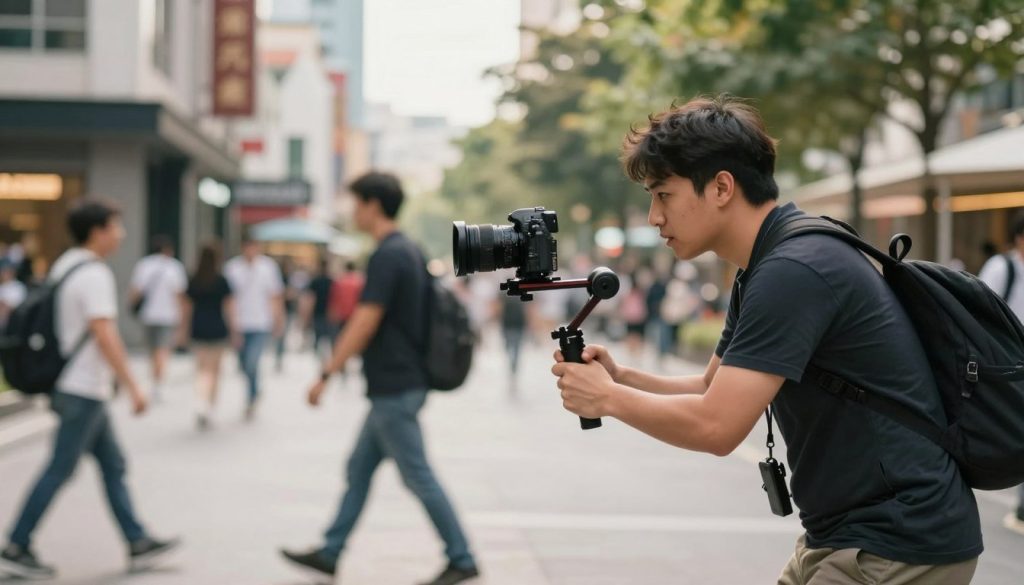
Adding Organic Shake and Human-Like Imperfections
In real filming, tools like the Lazy Shoulder 100mm help capture the natural camera sway. You can do this in AI by adding small, random movements to your main camera path. These tiny changes make your video look less computer-made.
Think of these small movements as the heartbeat of your scene. They make the viewer think there’s a real person filming. This adds a layer of realism that makes your project feel more real.
Controlling the Frequency and Amplitude of Handheld Motion
To get a realistic look, balance the camera shake’s frequency and amplitude. Frequency is how fast the camera shakes, and amplitude is how big those shakes are. If the frequency is too high, your video will look glitchy.
Start with a low amplitude to keep the shake small and natural. Aim for a gentle, rhythmic movement that feels like a person’s breathing. Test your settings in short clips to make sure the shake feels intentional.
When to Use Handheld vs. Stabilized Footage
Choosing between handheld and stabilized footage depends on the mood you want. Handheld shots are great for action scenes or documentaries to create immediate tension. They keep the viewer on edge.
Stabilized footage is better for calm scenes, like interviews or establishing shots. It lets the viewer focus on the details without distraction. Mastering the transition between these styles will help you control the emotional impact of your story.
Advanced Camera Pathing and Keyframing
You can turn static scenes into movies by learning digital keyframing. As modern robotic dolly systems grow, knowing how to control virtual space is key. Advanced camera motion ai lets you guide viewers through detailed 3D worlds with ease.
Utilizing Keyframes for Complex Camera Trajectories
Keyframing is the heart of telling stories with visuals. By setting points in your timeline, you control the camera’s path. This ensures your camera motion ai moves smoothly and on purpose.
“The camera is the eye of the storyteller, and every movement must serve the narrative arc.”
Mastering these paths lets you do more than simple pans. You can follow subjects through complex paths and depth changes. This skill makes your videos stand out from amateur ones.
Combining Multiple Movements for Dynamic Scenes
Real visual impact comes from mixing different techniques in one shot. You might use a gentle dolly-in with a slight slide to the side. This mix keeps viewers interested by feeling like a real person moved the camera.
Using camera motion ai in these complex shots needs careful planning. By balancing the start and end points, you get a smooth, professional look. Trying out these mixes will make your digital projects much better.
Optimizing Lighting and Composition for Moving Shots
Mastering the visual environment is key for a high-quality cinematic flow in complex camera movements. As your virtual camera moves through a scene, light and geometry change fast. You need to manage these changes to keep your output professional and immersive.
Maintaining Consistent Lighting During Camera Pans
AI video generation often struggles with sudden exposure changes when panning across different lights. To keep your cinematic flow smooth, aim for even lighting across the camera’s path. If the AI sees different light levels, it might try to adjust, causing flickering or brightness jumps.
“Light is the language of cinema; if the light is inconsistent, the story loses its voice.”
To avoid these problems, use global illumination settings in your tools. Locking your exposure parameters stops the software from changing light levels mid-shot. This keeps the viewer focused on the action, not technical issues.
Framing Techniques That Enhance Motion Perception
Good composition guides the viewer’s eye, especially with moving cameras. Use leading lines and depth cues to make your cinematic flow feel expansive and intentional. Placing subjects along the rule of thirds during camera movement adds a dynamic sense of space.
Here are some framing techniques to improve your work:
- Foreground elements: Use objects near the lens to emphasize the parallax effect during dolly shots.
- Negative space: Leave room in the direction of the movement to suggest a path for the subject.
- Depth layering: Ensure that background elements move at different speeds to reinforce the 3D nature of the scene.
By using these strategies, your AI-generated sequences will look polished and deliberate. When you balance your composition with smooth motion, you create a truly cinematic visual experience.
Troubleshooting Common AI Motion Artifacts
To get a realistic AI porn camera movement, you need more than a good prompt. You also need to watch out for technical errors. Even top-notch tools can have digital glitches that ruin the scene’s feel. Just like the JL Fisher Model 10 has brakes for quick stops, you must fix these visual issues with specific steps.
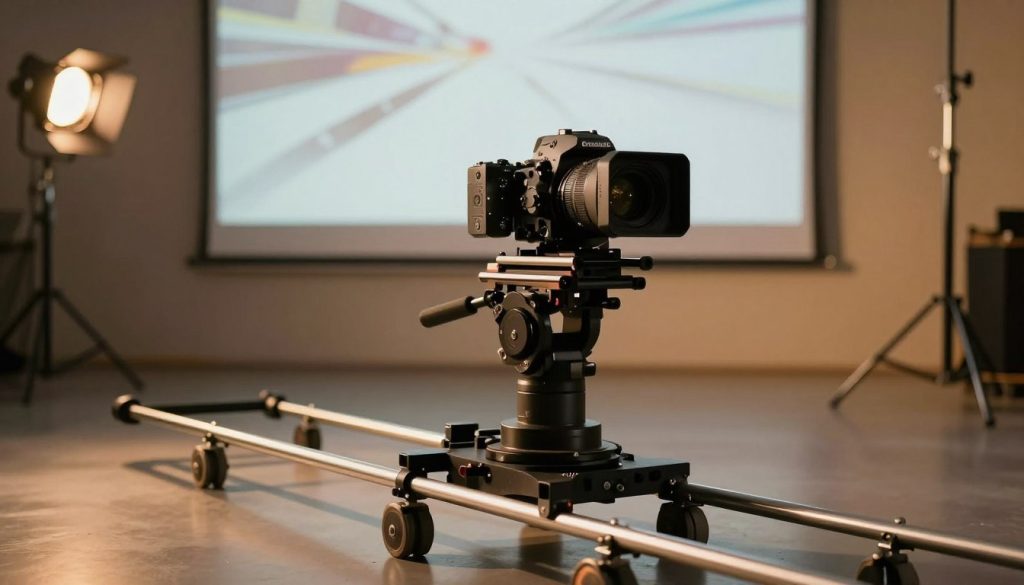
Fixing Morphing and Distortion in Moving Frames
Morphing happens when AI can’t keep objects the same in each frame during a pan. If you see parts of the body or background changing shape, tighten your prompt. This helps keep things stable. Also, start with less motion in your prompt to avoid new shapes appearing between frames.
To keep the realistic AI porn camera movement smooth, follow these steps for distortion:
- Lower the CFG scale: High values can cause AI to make things too sharp.
- Use temporal consistency tools: Tools like frame-interpolation can make transitions smoother.
- Adjust seed values: Changing the random seed can fix frame-by-frame changes.
Refining Motion Blur Settings for Realistic Output
Motion blur is key for a cinematic look, but AI often gets it wrong. If your video seems too sharp or jerky, it’s because of missing blur. Adjust your motion settings to match your project’s frame rate for a professional feel.
By tweaking these settings, your realistic AI porn camera movement will feel more real. Subtle motion blur covers up small frame issues, making the video look smoother. Try different blur levels to find the right mix of sharpness and cinematic feel.
Post-Processing and Stabilization Workflows
After you get your raw footage, it’s time to make it look professional. Even with great camera motion ai results, small issues need fixing. This step turns good clips into top-notch, ready-to-air content.
Using External Software to Polish AI-Generated Motion
Tools like Adobe Premiere Pro, DaVinci Resolve, or Topaz Video AI are key for improving your camera motion ai work. They help with color, smoothness, and cleaning up noise. Using these tools, you can fine-tune your project’s look and feel.
It’s important to smooth out any shaky parts. Editing software can help make your video flow better. This step is key to keeping viewers engaged.
Applying Digital Stabilization to Handheld Simulations
Handheld shots can be too shaky. Digital stabilization fixes this while keeping the shot feeling real. Most editing tools have advanced stabilizers that fix camera movements.
But, be careful not to make it too smooth. This can make the shot look fake. Adjust the settings so the movement feels natural and intentional.
| Tool Category | Primary Function | Best For |
|---|---|---|
| Warp Stabilizers | Reduces jitter | Handheld footage |
| Optical Flow | Frame interpolation | Slow-motion smoothing |
| Color Grading | Visual consistency | Final polish |
| Noise Reduction | Artifact removal | Low-light shots |
Conclusion
Learning camera movement in AI generation is a mix of technical skill and creativity. You now have the tools to make still images move and look professional.
Use these techniques to improve your work. Regular practice helps you find your own style. This style will make your work stand out online.
Trying new things is key to getting the most out of tools like Runway or Pika. See how small changes in motion can change your video.
Your viewers want to see smooth, intentional visuals. Keep working on your skills to make every frame tell a story. Start your next project today and see your digital work come alive with more depth and energy.
FAQ
How do I ensure my AI video maintains a consistent cinematic flow?
To keep your AI video smooth, use specific terms in your prompts. Say things like “tracking shot” or “cinematic pan.” Also, make sure your hardware is stable and your camera motion ai settings are right for smooth output.
What is the difference between a Slider and a Dolly in AI generation?
A slider is side-to-side motion, like a Passport 2 Portable Camera Dolly on a track. A dolly is moving the camera forward or backward to add depth.
How can I stop AI from distorting subjects during high-intensity movement?
To avoid distortion, use “positive locking” prompts for “fixed anatomy.” Or, use tools for precise motion paths to keep realistic ai porn camera movement steady.
Why should I use handheld simulation instead of a static camera?
Handheld simulation, like the Lazy Shoulder 100mm, makes your footage feel real and immersive. Static shots can feel too perfect or “sterile.”
Will AI camera motion technology continue to improve?
Yes, it will. The demand for camera motion ai is growing. By 2032, the tech will get better at simulating complex movements and lighting.
What is the best way to handle motion blur in AI video?
To get a natural look, ask for “natural motion blur” in your prompts. Or, use software like DaVinci Resolve to add blur. This avoids the “stop-motion” look in fast scenes.