Ever wondered why your digital work looks great on your screen but not on others? This issue often comes from not setting up your display right. To get professional-grade visual results, you need more than a fancy monitor. You need to set it up just right.
Mastering monitor profiling means your display shows colors as they should. This is key for both complex graphics and fine-tuning realistic ai porn calibration. Keeping color accuracy consistent is crucial for a smooth creative process.
This guide will show you how to avoid unexpected changes in your work. You’ll learn to match what you see with what others see. This way, you’ll keep your color accuracy perfect in every project.
Key Takeaways
- Understand why monitor profiling is essential for professional creative work.
- Learn how to maintain consistent color representation across different devices.
- Discover the impact of display settings on your final digital output.
- Avoid common pitfalls that lead to unexpected color shifts in your projects.
- Master the foundational steps to ensure your workflow remains reliable and accurate.
Preparing Your Workspace for Accurate Color
Getting professional color accuracy starts before you use your calibration software. Your workspace affects how you see light and shadow. This, in turn, impacts your display consistency. By controlling your environment, you lay a solid base for your visual work.
Controlling Ambient Lighting Conditions
The light in your room affects your vision. Sunlight can make colors less vivid and change how you see color balance. Keep your desk away from windows or use thick curtains to block sunlight.
Consistency is key for color-critical tasks. A monitor hood is great for blocking light from overhead. It keeps your monitor setup steady, away from environmental changes.
Selecting the Right Monitor Surface and Position
Where you put your screen is crucial. Don’t place it against a wall with bright colors, as they can tint your screen. A neutral gray or matte black wall is best for display consistency.
Also, make sure your screen is at eye level. Most screens change color when viewed from far away. Sit right in front of your screen to see colors as they should be.
Understanding the Fundamentals of Color Accuracy
To achieve color accuracy, you need to know the technical standards for your display. Understanding how your monitor shows digital data is key. This knowledge helps you make adjustments for better quality work.
Defining Color Gamut and Color Space
A color gamut is the range of colors a device can show. Different displays can show different colors. This is why choosing the right color space is important.
The color gamut of your monitor affects how vibrant your images look. For print work, you might need Adobe RGB. But for web projects, sRGB is best because it works for everyone.
| Color Space | Primary Use Case | Gamut Coverage |
|---|---|---|
| sRGB | Web and Digital | Standard |
| Adobe RGB | Professional Print | Wide |
| DCI-P3 | Cinema and Video | Very Wide |
The Role of Gamma and White Point
Gamma and white point are also important. The white point is the color temperature of white on your screen. It’s usually measured in Kelvin. Getting this right helps your grays look neutral.
“True color fidelity is achieved only when the display’s white point is perfectly aligned with the ambient light of your workspace.”
Gamma controls how black and white look. A good gamma curve keeps shadows and highlights clear. By adjusting your white point and gamma, your display will be reliable for all your projects.
Essential Hardware for Professional Calibration
To get color accuracy right, you need the right tools. Your eyes are good at seeing beauty, but they can’t measure screen light. You need special tools to make sure your monitor shows colors just as you want them for your work.
Choosing a Colorimeter vs. Spectrophotometer
Most pros use a colorimeter for everyday work. It works like your eyes to check colors on LCD and OLED screens. It’s cheaper and quicker than other tools.
A spectrophotometer is better for precise color checks. It’s top-notch for print work and special screens. But, it costs more and takes longer.
Datacolor SpyderX Pro Features
The Datacolor SpyderX Pro is great for photographers and designers. It’s fast and easy to use. Its software is simple, perfect for beginners.
Calibrite Display Plus HL Capabilities
The Calibrite Display Plus HL is for high-brightness screens. It has advanced sensors for precise color checks. It’s ideal for those who need exact colors in many color spaces.
Software Requirements for Realistic AI Porn Calibration
To get a realistic ai porn calibration, you need the right software. It connects your hardware’s performance to your color goals. The software turns data from your colorimeter or spectrophotometer into an accurate ICC profile. Without the right software, even the best hardware can’t give you consistent results.
Installing Manufacturer Calibration Software
Most hardware comes with special software. This easiest starting point makes calibration simple. It guides you through each step, ensuring your calibration ai porn settings are right for your monitor.
But, this software might not let you tweak everything. If your display still doesn’t look right, you might need something more advanced.
Utilizing Open Source Alternatives like DisplayCAL
Open source software like DisplayCAL gives you more control. It lets you adjust every part of your color profile. This flexible approach helps you get precise results for your viewing space.
DisplayCAL is known for making top-notch profiles that work on many systems. It’s more challenging to learn, but it offers better results for a realistic ai porn calibration. Many experts choose it because it doesn’t have the limits of manufacturer software.
| Feature | Manufacturer Software | Open Source Software |
|---|---|---|
| Ease of Use | High | Moderate |
| Customization | Limited | Extensive |
| Cost | Included with Hardware | Free |
| Compatibility | Device Specific | Universal |
Step One: Initial Monitor Settings and Warm-up
Getting perfect color accuracy starts before you use your calibration software. Preparing your hardware well sets a solid base for the whole process. This simple step makes sure your display works well during the measurement phase.
Allowing the Backlight to Stabilize
One key part of this prep is the monitor warm-up time. Let your display run for at least 15 minutes before starting any tests. This lets the inside parts and backlight get to a steady temperature.
Consistency is key for color-critical tasks. Skipping this step can make brightness and color change while data is being collected. This time ensures your final profile stays accurate in your work.
Resetting Monitor OSD to Factory Defaults
After your display warms up, you need to check your OSD settings. It’s best to reset your monitor to its factory settings before starting. This clears out any old changes that might mess with the calibration software.
Going back to the original settings gives you a clean start. Then, the calibration tool can make the right changes for your color space. This methodical approach avoids any setting conflicts that could ruin your results.
Step Two: Configuring Target Calibration Parameters
Setting up your monitor is key to getting professional color accuracy. By setting these targets, your display will meet your creative needs. This makes your screen a trusted tool for top-notch visual editing.
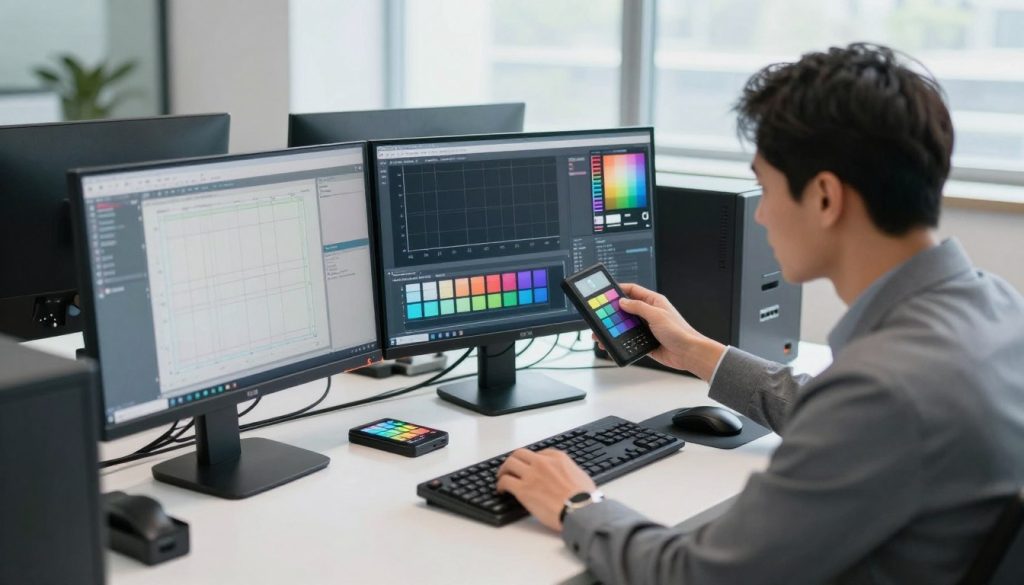
Setting the Correct Brightness Levels
The first step is to set the right brightness levels for your space. If it’s too bright, your images might end up too dark. On the other hand, if it’s too dim, they could look washed out.
Experts usually aim for 80 to 120 cd/m² brightness. Adjust this based on your room’s light to get a consistent viewing experience. It’s important to avoid eye strain while working.
Adjusting Contrast and Black Levels
After setting the brightness, focus on contrast and the black point. These settings help keep details in dark areas. If they’re off, you might lose important textures.
A good contrast ratio keeps whites sharp without losing detail. For realistic ai porn calibration, it’s crucial to have clear shadows and mid-tones. This balance is what makes your work look professional.
Why Black Point Matters for AI Generated Content
The black point is vital for calibration ai porn work. AI images have complex dark areas that can get lost on bad screens. If your black levels are too high, your images will look flat.
Setting the black point too low can also ruin your shadows. This means losing important visual details. Getting this right ensures your realistic ai porn calibration is spot on. This way, your calibration ai porn projects will keep their depth and artistic value.
Step Three: Executing the Calibration Process
Getting your display to show colors accurately is the last step. It’s all about following a clear plan. This way, you make sure your monitor works its best. Paying close attention to every detail is key to getting the best results.
Positioning the Sensor on the Screen
Putting the sensor in the right spot is very important. It needs to be right against the screen to get accurate readings. Modern colorimeters come with special parts to stay in place while you work.
Be careful not to scratch your screen if it’s glossy. If the sensor slides, tilt your screen a bit. A secure fit means the sensor sees colors just like you do.
Running the Automated Profiling Sequence
After setting up, the software starts the automated profiling process. It shows color patches on your screen for the sensor to measure. This helps the software figure out how to fix your monitor’s color.
Don’t touch your screen or change settings while it’s running. The automated profiling takes a few minutes, depending on the patches. When it’s done, you’ll get a special ICC profile for your display.
| Action | Best Practice | Common Mistake |
|---|---|---|
| Sensor Positioning | Flush contact with screen | Leaving gaps for light leaks |
| Room Environment | Dim, consistent lighting | Direct sunlight on screen |
| Software Operation | Let the sequence finish | Interrupting the process |
| Hardware Setup | Use a counterweight | Holding the sensor by hand |
Step Four: Validating Your Color Profile
Validation is the last step in making sure your monitor is perfectly calibrated. It checks if all the changes you made earlier worked well. This step is crucial for professional color work.
Analyzing the Delta E Values
Looking at the Delta E values is key to knowing if you did a good job. These values show how close your monitor’s colors are to the perfect ones. A lower number means your screen is very close to the ideal.
In places where color matters a lot, a Delta E under 2.0 is great. If your numbers are much higher, you might need to tweak your settings again. Keeping an eye on these values helps keep your workspace accurate.
Comparing Pre-Calibration and Post-Calibration Results
Seeing how your monitor changed before and after calibration is very helpful. Most software lets you compare these changes side by side. You’ll notice big improvements in color and brightness.
This comparison is key to knowing if your colors are professional-grade. By looking at the Delta E charts, you can spot any issues. Keeping these records helps you see how your display is doing over time.
Maintaining Consistency Over Time
Your monitor changes over time, even the most expensive ones. This is due to environmental changes and aging parts. Proactive maintenance is key to keeping your work accurate and reliable.
Establishing a Monthly Recalibration Schedule
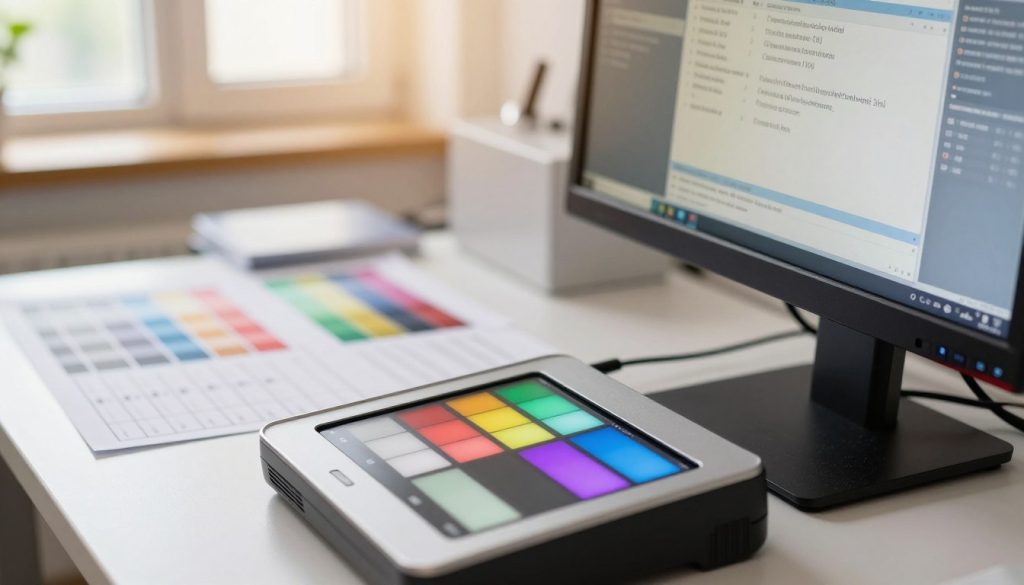
To keep your color accuracy high, set up a recalibration schedule. Most pros check their displays every four weeks. This keeps small changes from becoming big errors.
Keep a log of your calibration results. This helps spot trends in your monitor’s behavior. If it needs big adjustments every month, your environment or hardware might be failing.
Monitoring Backlight Degradation
Backlight degradation is a common cause of display drift. LEDs or CCFL tubes lose intensity and color over time. This change is slow, making it hard to notice until it’s too late.
“Consistency is the hallmark of a professional. If your tools are drifting, your vision will inevitably follow suit.”
Track backlight decline by comparing brightness levels over months. If you need to increase brightness to reach the same level, your backlight is failing. Use the table below to see how usage affects maintenance needs.
| Usage Intensity | Recommended Check | Risk Level |
|---|---|---|
| Light (1-2 hours/day) | Every 3 Months | Low |
| Standard (4-8 hours/day) | Every Month | Moderate |
| Heavy (10+ hours/day) | Every 2 Weeks | High |
Troubleshooting Common Calibration Issues
Even the most precise setup can sometimes face technical problems. Keeping your calibration ai porn standards high requires attention to detail. A systematic approach helps find the problem quickly when your screen looks off.
Resolving Color Casts and Tinting
Color casts or unwanted tints often come from an incorrect grayscale balance. This can happen if the white point target doesn’t match your monitor’s native capabilities. Make sure your ambient light settings haven’t changed since your last session.
To solve this, try recalibrating your display in a dark room. If the tint persists, check your monitor’s OSD settings. Ensure no “warm” or “cool” presets are overriding your custom profile. Consistent grayscale performance is key for accurate color.
Fixing Profile Loading Errors in Windows and macOS
Profile loading errors can occur if your OS can’t find the right ICC file. This might happen if another app is trying to manage color settings. Check your system’s color management control panel to make sure your custom profile is the default.
On Windows, make sure the “Use Windows display calibration” checkbox is on. For macOS users, check that no third-party utilities are interfering with the system’s color sync engine. If you still see profile errors, try deleting the old profile and calibrating again to remove any corrupted data.
Conclusion
Mastering your display settings changes how you use your digital canvas. Getting professional color management takes the right tools and a careful workflow. You now know how to adjust your monitor, check your profiles, and keep everything running smoothly.
These steps help keep your work consistent from start to finish. Using tools like Datacolor Spyder or X-Rite i1Display is key. Now, you can start your creative projects with confidence in your gear.
Make these steps a regular part of your work. Doing so leads to better results and fewer mistakes. Your focus on detail makes your work stand out in a crowded digital world.
FAQ
Why is realistic ai porn calibration necessary for digital content?
It ensures your edits show the correct colors. Without calibration, your work might look different on other screens. This can lead to poor color accuracy and lost detail.
What is the benefit of using a colorimeter like the Datacolor SpyderX Pro?
A good colorimeter gives precise readings of your monitor’s output. Tools like the Datacolor SpyderX Pro or Calibrite Display Plus HL are key for making an accurate ICC profile.
How does ambient light affect my calibration ai porn workflow?
Ambient light can cause glare and affect contrast. For best results, calibrate in a dim room. Use a monitor hood to keep color accuracy steady, even with changing light.
What are Delta E values and why should I care about them?
Delta E measures color differences. A value under 2.0 means your colors are very accurate. This is crucial for professional work.
Can I use open-source software like DisplayCAL with any sensor?
Yes, DisplayCAL works with most major sensors, including Datacolor and Calibrite. It’s often preferred for its detailed control over calibration ai porn.
How often should I perform a recalibration of my monitor?
Recalibrate once a month. Backlights degrade and change color over time. Regular maintenance keeps your colors accurate.
What should I do if my screen has a noticeable color cast after profiling?
A color cast might mean the sensor moved or the monitor wasn’t warm enough. Reset your OSD and try calibrating again.
What is the difference between sRGB and Adobe RGB color spaces?
sRGB is for web and consumer devices. Adobe RGB has a wider color range, especially in greens and cyans. It’s better for professional photography and print.