Ever wondered why your media looks flat compared to pro footage? The secret is in the final touches after the first render.
To get high-end visual standards, you need more than a powerful generator. You must refine the raw output to a polished, pro look.
This guide covers key techniques for realistic ai porn post production. Sharpening, film grain, and noise control are crucial. They help keep your visuals intact while making them look cinematic.
Key Takeaways
- Learn to balance image sharpness without unwanted digital artifacts.
- Discover how adding subtle film grain creates a more organic, authentic texture.
- Master noise reduction techniques to clean up shadows while preserving fine details.
- Understand the importance of color grading in unifying your final visual output.
- Apply professional workflows to ensure your media meets modern high-definition standards.
Understanding the Fundamentals of Realistic AI Porn Post Production
Learning realistic ai porn post production starts with knowing how AI pixels differ from camera shots. AI doesn’t use a lens like cameras do. It uses math to create images. This means you need to be very careful when editing to make it look real.
Look for signs of AI, like perfect skin and odd lighting. These can look too good or not quite right. Spotting these issues early helps you fix them without messing up your project.
Using a structured workflow helps keep your project looking consistent. A clear plan of action reduces mistakes and keeps your work looking top-notch. This approach is key for anyone aiming for the best in realistic ai porn post production.
Preparing Your AI Footage for Professional Editing
Starting your ai video editing journey well before adding filters is key. A structured setup keeps your creative flow smooth and efficient. Proper preparation also prevents data loss and keeps your project organized as it grows.
Organizing Your Source Files and Color Spaces
A professional workflow begins with a clear folder structure. Organize your raw clips, proxy files, and final sequences into separate folders. This makes tracking different versions easy, especially when working with lots of content.
Choosing a consistent color space is also crucial for keeping visuals consistent. Decide on a color space like Rec.709 or ACES early on. This ensures your colors stay true throughout the post production ai process. Not setting these colors early can cause color issues later.
Initial Cleanup and Artifact Removal
After organizing your files, review them for any visual issues. AI content often has flickering, morphing, or noise that needs fixing. Removing these artifacts early gives you a clean base for further enhancements.
Use masking tools or frame-by-frame healing to fix these problems before grading. This saves time by avoiding mistakes in later editing stages. Here’s a table with tips for keeping your project in good shape.
| Task Category | Action Item | Priority Level |
|---|---|---|
| File Management | Standardize Naming | High |
| Color Management | Set Working Space | Critical |
| Visual Cleanup | Artifact Removal | High |
| Version Control | Backup Sequences | Medium |
Focus on these foundational steps to set up a solid post production ai environment. A well-organized professional workflow leads to a more polished final product.
Mastering Sharpening Techniques for AI Content
Improving the visual fidelity of your projects is easier with the right sharpening techniques. AI-generated footage can look soft because of how neural networks upscale images. By making the right adjustments, you can reveal hidden textures and achieve a more polished look.
Applying Unsharp Masking Effectively
Unsharp masking is a key tool for enhancing details. It increases contrast along edges to make images sharper. Be careful not to overdo it, as too much can introduce digital noise.
Adjust the radius and threshold settings carefully. This ensures sharpening only hits the right spots. Too much can make the image look gritty. Always check your work at full resolution to keep it looking natural.
Using High Pass Filters for Edge Definition
High pass filters are great for sharpening edges. They focus on high-frequency details, sharpening specific parts of the image. This is perfect for making your subject stand out from the background, adding depth to your AI content.
To use it well, apply the filter to a duplicate layer. Set the blending mode to Overlay or Soft Light. This lets you control how much sharpening you apply, improving visual fidelity without harming the image.
Avoiding Halo Artifacts and Over-Sharpening
Over-sharpening can make images look unnatural, with harsh edges and halo artifacts. These are signs you’ve sharpened too much.
To avoid this, keep your sharpening subtle. If halos appear, reduce the radius or the effect’s strength. The goal is to enhance the image naturally, not to force a digital look that breaks immersion.
| Method | Best Use Case | Primary Benefit |
|---|---|---|
| Unsharp Masking | General detail enhancement | Easy to control contrast |
| High Pass Filter | Edge and texture definition | Non-destructive workflow |
| Smart Sharpen | Reducing motion blur | Advanced noise suppression |
Advanced Noise Control Strategies
Mastering noise reduction is key to making AI content look like a movie. Digital artifacts can pull viewers out of the story. With the right strategies, your content will look sharp and professional.
Identifying Different Types of AI Noise
AI footage has its own kind of noise, different from camera grain. You need to spot the synthetic noise that looks like flickering or geometric shapes. These don’t move naturally with the scene.
Spotting these early helps you pick the right tools. Using too much filter can mess up the image. Always check your footage at 200% zoom to see the noise’s structure.
Utilizing Temporal Noise Reduction Tools
Temporal noise reduction works by looking at frames over time. It catches jittery artifacts that static filters miss. This makes your video look smoother and more professional.
Adjust your settings based on the scene’s motion. Fast scenes need different settings than still ones to avoid ghosting. Keeping it consistent is crucial for a smooth watch.
Balancing Detail Retention with Smoothness
The goal is a clean image that still keeps important texture retention. Apply filters carefully to avoid losing details in hair, skin, or grass. Over-processing can make your project look fake.
Use masks to target noise reduction on flat areas like walls or skies. This keeps details sharp while smoothing the background. Finding this balance is essential for a natural and high visual fidelity look.
| Method | Best Use Case | Pros | Cons |
|---|---|---|---|
| Spatial Filtering | Static backgrounds | Fast processing | Loses fine detail |
| Temporal Filtering | Moving subjects | High stability | Requires more power |
| Local Masking | Skin and hair | Preserves texture | Time-consuming |
The Role of Film Grain in Achieving Realism
Mastering film grain can make your AI video look more real. AI videos often look too perfect and fake. Adding a bit of texture makes them feel more real and cinematic.
Why AI Footage Needs Organic Texture
Real footage has tiny variations from light hitting the camera. AI videos lack this natural tonality, making them look flat. Film grain adds texture, like silver halide crystals in old film.
This doesn’t just add noise. It adds depth that makes the video feel more real. It makes AI videos look like they were captured, not created.
Selecting the Right Grain Profiles
Choosing the right film grain is crucial. The wrong one can mess up your video. For high-resolution videos, use a finer grain to avoid looking digital.
For a gritty look, choose a coarser grain. Test your grain in different lights. Consistency is key to avoid distractions.
Layering Grain for Depth and Consistency
For a professional look, layer your grain. Use different intensities to mimic film stock. This hides the AI origin and keeps your edit cohesive.
Keep your grain the same in all cuts. This makes your video feel polished and real. It turns AI content into something believable.
Integrating Finishing Touches for Cinematic Quality
The final touches of your project are where magic happens. They turn raw AI output into a cohesive visual experience. By making precise adjustments, you bridge the gap between synthetic and professional standards. These finishing touches are key to creating a seamless, high-end look that grabs your audience’s attention.
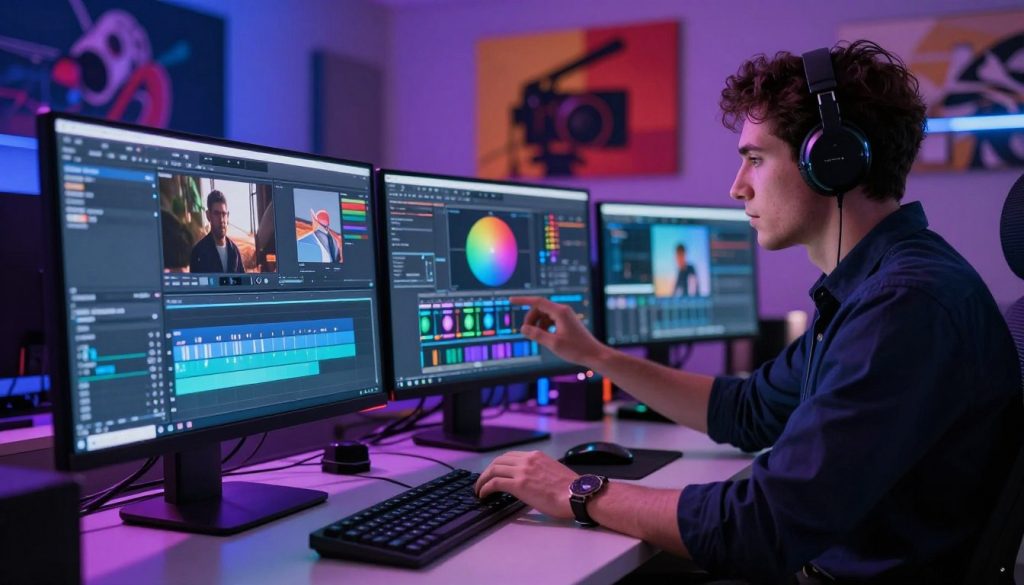
Color Grading to Unify AI and Real-World Elements
Effective color grading blends different visual sources into one believable scene. Focus on matching skin tones and ambient lighting to ground AI-generated subjects in their environment. When the color palette is consistent, the artificial nature of the source material is less noticeable.
“Color is a power which directly influences the soul.” — Wassily Kandinsky
Secondary color correction helps refine specific areas, like faces or backgrounds, to match their hues. This control allows you to blend AI assets with real-world footage seamlessly. Achieving this balance is what makes your project truly cinematic quality.
Adjusting Contrast and Dynamic Range
To achieve a professional look, carefully adjust contrast and dynamic range. Avoid over-correcting blacks or highlights, as this can flatten the image. Instead, aim for a balanced histogram that keeps detail in shadows and highlights.
Using a subtle S-curve can add depth and dimension to your footage. This technique enhances the subject’s definition against the background, giving your image a more three-dimensional feel. Always check your scopes to keep your adjustments within safe limits.
Adding Subtle Lens Effects and Chromatic Aberration
Real camera optics are never perfect, and adding subtle imperfections can enhance realism. Introduce a hint of chromatic aberration to simulate color fringing in high-end lenses. Keep this effect light, as too much can be distracting.
Adding a touch of lens flare or soft glow to highlights can mimic light’s interaction with glass. These small, deliberate imperfections break up the sharpness of digital AI output. By embracing these optical nuances, you elevate your project to a professional level.
Workflow Optimization for High-Resolution Exports
Handling high-resolution exports well is key to a smooth professional workflow. When using post production AI, the amount of data can be huge. A well-planned method keeps your system fast while you finish your project.
Managing Render Times and Hardware Resources
Using proxy workflows can cut down wait times a lot. Editing with lower-resolution files keeps your system quick. Then, switch to the high-quality files for the final output.
It’s also important to manage your cache well. Store cache files on a fast NVMe drive to avoid slowdowns. Here are some tips for better performance:
- Allocate enough RAM for your editing software and AI effects.
- Use GPU acceleration to lighten the load on your CPU.
- Regularly clear your media cache to avoid drive clutter and errors.
Choosing the Best Codecs for Final Delivery
Picking the right codec is crucial for file size and quality. For most projects, choose formats with high bit-depth and good compression. This ensures your files work well on different devices.
| Codec | Best Use Case | Quality Level |
|---|---|---|
| ProRes 422 HQ | Mastering/Archiving | Excellent |
| H.265 (HEVC) | Web Delivery | High |
| DNxHR | Intermediate Editing | Very High |
Maintaining Quality During Compression
Compression can harm the details of your AI-enhanced footage. Adjust your settings for the output resolution. For example, if downsizing by 50%, increase granularity by 30 points.
Always test a short, complex segment before full export. This professional workflow checks if your high-resolution exports are sharp and clear. By watching your bitrate and encoding, your final output will be as good as your original project.
Common Mistakes to Avoid in AI Post Production
Mastering AI video editing is about avoiding mistakes as much as using techniques. Even with top software, small errors can ruin your work’s quality. Spotting these mistakes early helps keep your final product polished and real.
Over-Processing and Loss of Skin Texture
Aggressive noise reduction can remove natural detail. Overdoing it can erase the skin’s texture, making subjects look fake. This leads to a plastic-like look that’s obvious.
Keeping texture retention high is key for quality. Too much sharpening can make grainy images worse. Aim for a balance that keeps the image clean but natural.
Ignoring Motion Blur Consistency
AI clips often have unnatural movement, making them jarring. If you don’t match the motion blur of AI elements with your project, it looks unnatural. Professional cinematography demands consistent movement.
Check the frame rate and shutter speed to ensure smooth transitions. If the motion seems stuttered or too sharp, it breaks the illusion of realism. Take the time to adjust these settings for a smooth, cinematic feel.
Neglecting Frame-by-Frame Flicker Correction
Flickering in AI video comes from uneven lighting across frames. Ignoring this can make your final product look amateurish. You must fix these issues during editing to meet professional standards.
Using tools for flicker removal can prevent your project from looking amateur. Consistency is key in avoiding AI artifacts. Correcting these errors ensures a stable, high-quality final product.
Software Recommendations for Professional Results
Choosing the right software is key to making high-quality AI videos. The tools you pick set the limits of your creativity. Using the same tools for every project ensures your work looks consistent.
Utilizing DaVinci Resolve for Advanced Grading
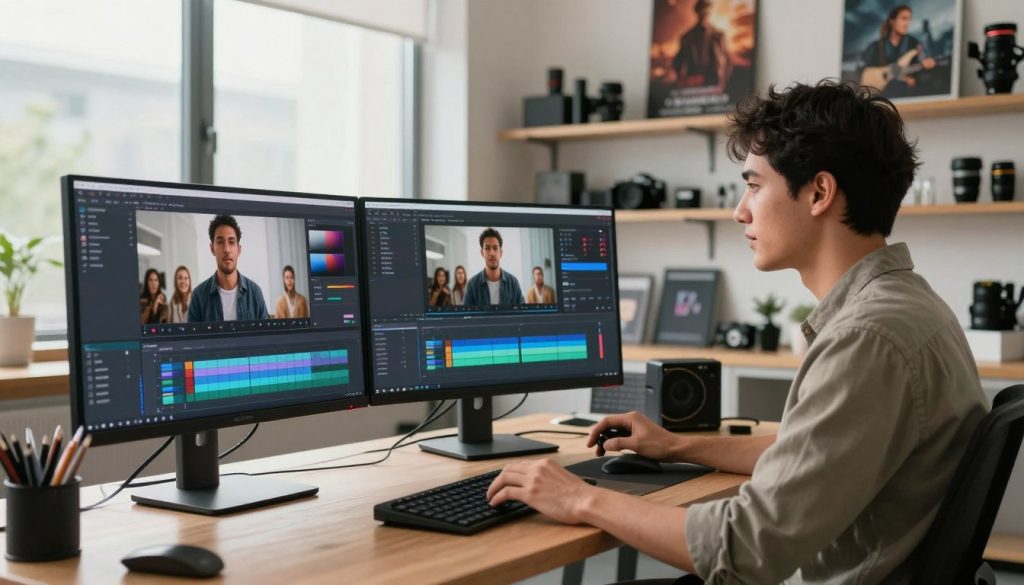
DaVinci Resolve is the top choice for color grading. It lets you control the look and feel of your video with great detail. You can tweak skin tones and adjust the brightness of AI clips to match real scenes.
This software is great at mixing different colors, which is crucial when combining AI with real footage. Its advanced tools help you keep your ai video editing at a professional level.
Leveraging Adobe After Effects for Compositing
Adobe After Effects is the best for complex compositing. It helps you blend different elements with precision, fixing AI issues. You can smooth out shaky frames and layer images for a seamless final product.
“The true power of modern post-production lies not in the AI generation itself, but in the surgical precision of the compositor who refines the output.”
Top-Tier Plugins for Grain and Sharpening
To get a cinematic feel, you need to add textures and sharpness. Special plugins for film grain give your video a natural look, covering up AI’s digital smoothness. Tools for sharpening techniques also help bring out details without adding unwanted halo effects.
| Software/Plugin | Primary Function | Key Benefit |
|---|---|---|
| DaVinci Resolve | Color Grading | Advanced Tonality Control |
| Adobe After Effects | Compositing | Precise Masking & Tracking |
| FilmConvert | Film Grain | Organic Texture Emulation |
| Topaz Sharpen AI | Sharpening Techniques | Detail Recovery |
Using these professional tools can really speed up your work. By combining strong software with top plugins, you can take your videos from experimental to cinematic quality.
Troubleshooting Persistent AI Artifacts
Even top AI models can have unexpected visual issues. These need manual fixing. Artifact removal is key for a polished look. Fixing small errors keeps your project professional.
Fixing Morphing and Jittering Issues
AI motion can look unnatural. First, tell the difference between film grain and digital noise. Scanner noise is harsh and distracting, while grain adds texture.
To fix jitter, use temporal smoothing filters. These average out frame movements. If needed, add a light motion blur to hide small movements.
Correcting Inconsistent Lighting Patterns
Lighting issues can cause sudden brightness changes. This often happens with AI’s exposure struggles. Use keyframe adjustments to fix this.
Manual adjustments in luminance values are crucial. They ensure a stable visual experience. This is key for cinematic quality, hiding the digital generation.
Masking and Tracking Techniques for Stability
When global fixes don’t work, masking is your go-to. Use advanced tracking to target specific issues. This way, you fix problems without affecting the rest of the image.
These methods are vital for high-resolution exports. Precise tracking keeps masks on the subject, even in fast scenes. Mastering these techniques removes distractions and keeps your motion blur and cinematic quality intact. This is what makes professional edits stand out.
Conclusion
Improving AI-generated media means moving from just creating to adding the final touches. You can transform basic digital content into stunning art by paying attention to the small details. These details are what make your work stand out as professional.
Regular use of tools like DaVinci Resolve or Adobe After Effects helps you develop your own style. Adding the right finishing touches makes your work connect with viewers. This is what makes synthetic images feel real and cinematic.
Stick to a strict process that focuses on texture, stability, and color. Try out different grain profiles and sharpening settings to get better. By adding these finishing touches to every project, your work will shine in a crowded online world. Your commitment to quality will be key to your success in this ever-changing field.
FAQ
How can I enhance the fine details of my AI-generated video without introducing digital noise?
To improve your video’s look, use unsharp masking to add detail. High pass filters help define edges, separating subjects from backgrounds. But, avoid halo artifacts and over-sharpening to keep your video looking natural.
What is the most effective way to handle synthetic artifacts and jitter in AI footage?
Use temporal noise reduction tools in software like DaVinci Resolve. These tools smooth out jitter by analyzing frames. It’s important to keep your video looking natural, without losing important details.
Why is adding film grain considered essential for professional AI video projects?
Film grain adds a natural texture to digital footage. Choose grain profiles that match your project’s resolution. This makes your video look more cinematic and cohesive.
What finishing touches can I apply to make AI and real-world elements look unified?
Color grading is key to matching the look of different elements. Add subtle lens effects and chromatic aberration. These touches help blend AI and real-world footage seamlessly.
How do I manage long render times and heavy hardware demands for high-resolution exports?
Use proxy workflows and efficient cache management to speed up your work. Choose the best codecs like ProRes or H.265 for quality. This ensures your video looks great on any platform.
What are the most common mistakes to avoid during the AI post-production process?
Avoid over-processing to prevent a “plastic” look. Don’t ignore motion blur consistency. Frame-by-frame flicker correction is also crucial for professional quality.
Which software applications do professionals recommend for AI-enhanced workflows?
DaVinci Resolve is top for color grading. Adobe After Effects is best for complex compositing. Use plugins from Red Giant or Boris FX for grain and sharpening.
How can I fix persistent issues like morphing or unstable lighting in AI motion?
Use advanced masking and tracking to stabilize images. Correct lighting and “morphing” glitches with Adobe After Effects tools. This keeps your exports stable and error-free.