Ever wondered why your first idea often fades during production? It’s not the idea that’s the problem. It’s the long journey after it’s approved.
To turn your idea into a final product, you need a clear plan. A realistic ai porn workflow helps manage the technical parts. This way, your creative vision stays in control.
This guide shows you how to improve your process. We’ll cover going from simple prompts to top-notch results. Consistency is the key to quality every time.
Key Takeaways
- Identify the creative bottleneck in your production pipeline.
- Learn to transition from raw generation to professional assets.
- Master the art of lighting to enhance visual depth.
- Implement a detail pass to refine textures and clarity.
- Streamline your export settings for maximum quality.
Setting Up Your Environment
A professional workflow needs a solid setup to reduce technical issues. A strong technical base keeps your creative flow smooth. This setup lets you focus on your art, not on fixing hardware problems.
Hardware Requirements for Stable Diffusion
Creating top-notch AI art needs lots of computing power. Your GPU is key, as it does most of the image work.VRAM is crucial, affecting the image’s quality and detail.
If your local machine gets too hot or slow, think about using a cloud server. Cloud-based work has big benefits for your projects:
- Thermal Management: It keeps your local machine cool during long use.
- Performance Consistency: It stops your device from slowing down, unlike mobiles or weak laptops.
- Speed: Cloud GPUs make each image batch much quicker.
Selecting the Right Checkpoints and LoRAs
With your hardware set, pick models that match your style. Checkpoints set your style, and LoRAs add special touches.Consistency is key for a unique brand or style.
Organize your models by output type. Test each to see its strengths in lighting, anatomy, and texture. A tidy folder system saves time when switching between styles.
| Component | Primary Function | Best Practice |
|---|---|---|
| Checkpoints | Defines base style | Keep a core set of 3-5 models |
| LoRAs | Adds specific details | Use sparingly to avoid artifacts |
| Embeddings | Refines prompt logic | Use for consistent character faces |
Mastering the Realistic AI Porn Workflow
Modern AI tools help you create top-notch visual content from simple prompts. By using a realistic ai porn workflow, you can improve scenes step by step. This way, you know what to expect.
This method turns text into detailed images you can tweak. Consistency is key, making sure your work looks professional.
Understanding the Core Pipeline
The core pipeline is a series of steps to improve quality. You start by setting up your scene with precise prompts. This is the foundation for the whole process.
“Creativity is the ability to see the connections between disparate ideas, but execution is the bridge that makes those ideas real.”
After the first generation, you refine the details. You adjust textures and lighting. This realistic ai porn workflow makes sure every part of the image is on purpose.
Integrating ControlNet for Pose Accuracy
Getting human figures right is hard. ControlNet helps keep poses accurate. This is crucial for realistic human figures.
With reference images or skeletal maps, you guide the AI. This avoids common mistakes. Your realistic ai porn workflow becomes more precise and reliable.
Combining technical controls with refinement boosts your work’s professionalism. Learning these basics is crucial for top-quality visual assets.
Crafting Effective Prompts for Realism
To improve your realistic ai porn workflow, you need to mix technical skills with creative ideas. How you talk to your model affects the quality of what you get. A structured method helps avoid mistakes and makes your images look professional.
Structuring Positive and Negative Prompts
A good prompt follows a certain order: Object + purpose + material + style + constraints. This order helps the AI know exactly what you want. It also keeps out things you don’t want.
Negative prompts are just as important. They tell the AI what not to do, like avoiding distorted limbs or extra fingers. A clean list of negatives stops the model from adding unwanted details.
Using Weighted Tokens for Skin and Anatomy
Weighted tokens let you highlight certain features or textures. By using (keyword:1.2), you tell the model to focus on those areas. This is key for high-fidelity skin pores and realistic muscles.
But don’t overdo it with the tokens. Too much can cause pixel issues. Start small and add more as needed. This keeps your realistic ai porn workflow consistent.
Balancing Descriptive Keywords
Too many adjectives can confuse the model. Stick to essential descriptors like lighting, skin tone, and camera angle. A clear prompt usually works better than a long, detailed one.
| Component | Purpose | Example |
|---|---|---|
| Object | Define the subject | Beautiful woman |
| Material | Define skin/texture | Soft skin, pores |
| Style | Define aesthetic | Photorealistic, 8k |
| Constraints | Remove artifacts | No blur, no extra limbs |
Keeping a balance ensures your realistic ai porn workflow always produces top-notch images. Consistency is the secret to mastering AI generation.
Advanced Lighting Techniques for Skin Texture
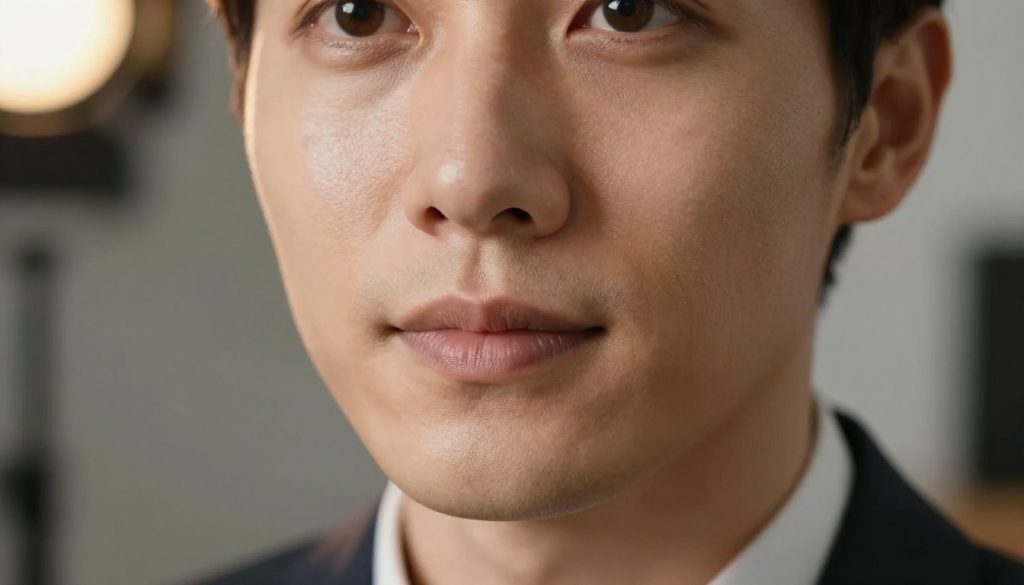
Mastering light is key to making AI images look real. By controlling how light hits your subject, you can show convincing skin pores and details. The right light makes your portraits stand out.
Simulating Studio Lighting Setups
Soft studio lighting is crucial for realistic images. Using terms like “softbox” and “rim lighting” in prompts helps. This way, you get consistent skin texture in all views.
Balance is key between the main and fill lights. A well-lit face shows natural highlights. This detail makes your images lifelike.
Adjusting Contrast and Shadows for Depth
Light and shadow create depth. AI images often lack this, looking flat. Adjusting contrast or using prompt modifiers can fix this.
Deep shadows define the face and body. High-contrast settings highlight skin texture. But, be careful not to overdo it.
Utilizing Lighting LoRAs
Lighting LoRAs add atmospheric tones to your work. They bring complex lighting scenarios to life. Layering these LoRAs can make your project cinematic.
| Lighting Style | Primary Effect | Best Use Case |
|---|---|---|
| Softbox | Reduces harsh glare | Portrait photography |
| Rim Lighting | Defines silhouettes | Dramatic character shots |
| High Contrast | Adds 3D volume | Artistic or moody scenes |
| Golden Hour | Warm, soft glow | Outdoor or lifestyle themes |
Implementing the Detail Pass
A quick 10-second quality check can save you hours of work. It helps spot floating geometry or texture stretching early. This phase turns a solid generation into a professional-grade asset through targeted refinement.
By focusing on the finer points, you ensure your final output stands up to close inspection.
Using Inpainting for Face Restoration
Inpainting is your most powerful tool for fixing facial features. It helps when these features may have lost clarity during the initial generation. By masking the face area, you can re-render just that portion at a higher resolution or with a more specialized model.
- Masking precision: Always use a soft brush to blend the inpainted area with the original skin tones.
- Denoising strength: Keep your denoising strength between 0.3 and 0.5 to maintain the original likeness while adding detail.
- Model selection: Use a dedicated face-restoration checkpoint to ensure eyes and teeth appear sharp and natural.
Refining Skin Imperfections and Pores
Realism often lives in the imperfections that many AI models tend to smooth over. To achieve a lifelike look, you must reintroduce high-frequency details like pores, subtle blemishes, and skin texture.
You can achieve this by using a secondary pass with a low denoising strength and a prompt focused on skin texture. This process adds organic depth to the surface, preventing the “plastic” look that often plagues digital portraits. Remember that skin is rarely uniform, so adding slight color variations helps ground the image in reality.
Layering Details with ControlNet Tile
When you need to add complex details without losing the original composition, ControlNet Tile is an essential asset. It allows you to maintain the structural integrity of your subject while the model fills in high-frequency information.
By using the Tile model, you effectively guide the AI to respect the existing geometry while sharpening textures. This technique is particularly useful when you want to upscale or refine specific areas without introducing unwanted artifacts. Consistency is key, and this method ensures that your final image remains faithful to your original vision.
Upscaling and Resolution Management
To get professional-grade clarity in your final exports, managing upscaling is key. Moving beyond standard sizes means keeping image quality high without artifacts. Proper resolution management turns a raw draft into a high-definition asset.
Choosing the Right Upscaler Models
Choosing the right upscaler is crucial for keeping textures and details sharp. Not all models work the same; some are better for smooth styles, others for detailed skin and fabric. Always test your chosen model on different subjects to avoid noise or blurring.
Remember, the export format affects how your work looks. STL is for geometry, but GLB or OBJ keeps visual depth. Match your upscaler to your output goals for the best results.
Managing VRAM During High-Res Passes
High-resolution work can overload your graphics card, causing errors. Watch your VRAM closely during final passes. Tiling helps by breaking the image into smaller parts for easier processing.
If your system struggles, try reducing batch sizes. This frees up resources for high-res work. Balancing hardware with resolution targets keeps your workflow smooth.
Color Grading and Post-Processing
The journey from raw AI output to a polished masterpiece is through your color grading workflow. AI is great at creating complex textures and structures. But, the final look often depends on your human touch. The teams winning in 2026 are those who pair great human creatives with AI to ensure every pixel serves the intended mood.
Applying LUTs for Cinematic Tones
Look-Up Tables, or LUTs, are a powerful tool for unifying your images’ color palette instantly. By applying these mathematical filters, you can shift your raw output into a specific cinematic color space that feels intentional and cohesive. This step is essential for removing the “digital” look that often accompanies raw AI generations.
Try different LUTs to find a style that complements your subject matter. Whether you prefer high-contrast film looks or soft, desaturated tones, these presets provide a consistent foundation. Consistency is the hallmark of professional production, and LUTs help you maintain that across entire batches of work.
Final Adjustments in External Software
After applying your base grade, moving your work into external software like Adobe Photoshop or Lightroom allows for surgical precision. AI models sometimes struggle with subtle color imbalances or localized lighting issues that only a human eye can detect. You can use these tools to refine skin tones, sharpen details, and fix minor artifacts that remain after the initial generation.
This final stage is where you add the finishing touches that AI alone cannot provide. By manually adjusting shadows, highlights, and mid-tones, you ensure the final output meets high-end industry standards. Human-led creative intervention is exactly what separates amateur outputs from professional-grade production.
| Technique | Primary Benefit | Software Tool | Impact Level |
|---|---|---|---|
| LUT Application | Unified Color Palette | DaVinci Resolve/Photoshop | High |
| Manual Masking | Localized Correction | Photoshop/GIMP | Medium |
| Noise Reduction | Texture Smoothing | Topaz Photo AI | High |
| Sharpening | Detail Enhancement | Lightroom/Photoshop | Medium |
Managing NSFW Production Steps and Safety
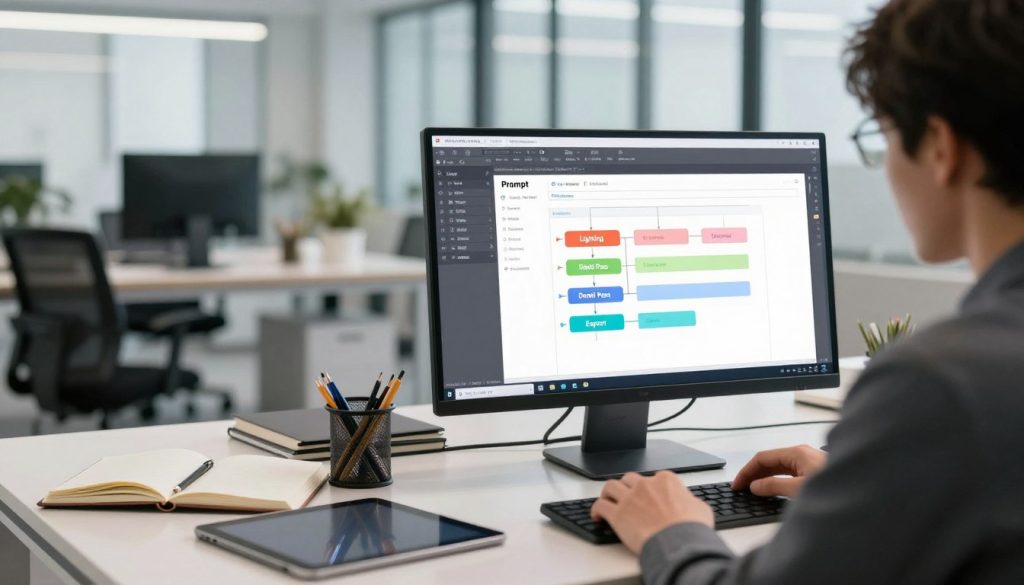
Scaling up your creative output means you need to stay organized. A well-planned ai workflow nsfw helps you focus on being creative, not searching for files. Early on, set clear rules to keep your data safe and all assets secure.
Organizing Your Project Folders
Good file management is key to professional production steps. Create a standard folder structure for each project. This keeps your workspace tidy and easy to search. Your folder system should have areas for raw images, upscaled versions, and final approved files.
- /01_Raw_Generations: Store initial outputs here before any editing.
- /02_Inpainting_Passes: Keep your refined face and skin detail files separate.
- /03_Final_Exports: Save your polished, color-graded work in this folder.
- /04_Project_Logs: Maintain text files containing your prompt seeds and settings.
“Order is the first step toward mastery. When your files are in their place, your mind is free to explore new artistic possibilities.”
Maintaining Consistency Across Batches
Keeping a uniform style in hundreds of images is tough. Document your LoRA weights, seed numbers, and sampler settings for each batch. Use the same file naming for all to track what works best.
Consistency also means repeating successful production steps in different sessions. Save your prompt templates and model settings. This makes your ai workflow nsfw reliable and saves time on repetitive tasks. It also keeps your project quality high.
Troubleshooting Common Generation Artifacts
Troubleshooting is key to keeping your ai workflow nsfw top-notch. You’ll run into minor visual issues, but knowing how to fix them quickly keeps your creative flow going.
Instead of tossing a nearly perfect image, you can often tweak specific problems with great care. Targeted re-prompts are much quicker than starting over from scratch.
Fixing Anatomical Errors
Anatomical mistakes, like extra fingers or limbs out of place, are common. When you spot these errors, use the inpainting tool to cover just the wrong area.
Then, give a detailed prompt to help the model get it right. For example, if a hand looks too thin or wrong, a prompt like “thicken the handle” or “detailed human hand” usually fixes it without changing the rest.
Correcting Lighting Bleed and Noise
Lighting bleed happens when bright colors mix with nearby areas, making things look muddy. To fix this, tweak your denoising strength during the refinement step.
Lowering denoising strength helps keep the original shape while removing unwanted details. If noise still shows up, try a gentle denoise filter or tweak your prompt to focus on smoother textures.
Keeping your ai workflow nsfw clean takes patience and trying different settings. By mastering these tweaks, your final work will look professional and consistent every time.
Optimizing Performance for Faster Iterations
When scaling your production, performance optimization is key. It helps you spend less time waiting and more time on creativity. With the right software tweaks, you can cut down the time for each cycle.
Utilizing Xformers and Flash Attention
To get the most from your hardware, focus on memory-efficient attention. Xformers and Flash Attention are crucial. They reduce VRAM usage and boost speed, making your GPU handle complex data faster.
“Efficiency is doing things right; effectiveness is doing the right things.”
Adding these tools is easy for most setups. Just add the right command-line arguments to your launch script. You’ll see a big improvement, especially with high-res images or complex models.
Batch Processing Strategies
Batch processing is great for creating many versions of a concept. Instead of running each prompt separately, queue them for a single session. This keeps your ai workflow nsfw projects consistent.
Here are ways to boost your efficiency:
- Group similar prompts: Keep settings the same to avoid model changes.
- Use seed variations: Create multiple versions of a prompt to find the best fast.
- Automate your exports: Set software to save files automatically in a folder for easy post-processing.
While local hardware is good for quick tests, server-side generation offers consistent results. By optimizing locally and batching smartly, you can keep your creative pace high and downtime low.
Ethical Considerations and Content Standards
Your journey with AI tools is shaped by your choices in production steps. AI does the technical work, but your creativity is key. Keeping your work honest and high-quality is crucial in today’s fast-changing digital world.
Responsible Content Creation Practices
Being responsible starts with how you handle your data and creative workflow. Always be open about using AI in your projects. By sharing your production steps, you gain trust and build a strong reputation.
Think about how your content affects others. Good creators avoid making harmful or fake images. They focus on art that respects others. This approach keeps your brand safe and helps create a better space for digital artists.
Understanding Platform Guidelines
Every platform has rules for AI media. Knowing these rules is key to sharing your work without problems. Breaking these rules can harm your account and audience.
Keeping up with safety standards is important. When you follow platform rules, you avoid risks and share your work with the right people. Use the table below to check how you manage your content.
| Practice Category | Ethical Approach | Risk Factor |
|---|---|---|
| Data Sourcing | Use licensed or public domain assets | High risk of copyright infringement |
| Transparency | Label AI-generated content clearly | Loss of audience trust if hidden |
| Safety Compliance | Follow platform moderation rules | Account suspension or banning |
| Workflow Integrity | Review all production steps | Inconsistent quality and safety |
Conclusion
Mastering the AI production pipeline is a journey. It’s about balancing human creativity with technical precision. Now, you know how to make your workflow smoother and produce top-notch, realistic images every time.
Improving your production steps lets you focus more on your artistic vision. AI helps with the technical parts, but your unique view is what makes every asset special.
Think of AI outputs as starting points that need your special touch to shine. Quality checks are key to make sure every image meets your high standards.
Try out new AI models and methods to keep your work exciting. Share your work with others to learn and improve your skills. Your hard work will make your images stand out in a busy digital world.
FAQ
What are the best hardware brands for a high-end AI workflow nsfw?
For top performance, use NVIDIA GPUs, especially the GeForce RTX 3090 or 4090. They offer the VRAM needed for complex steps and high-resolution upscaling without bottlenecks.
How can I ensure anatomical accuracy in my realistic ai porn workflow?
Use ControlNet for accuracy. Models like OpenPose lock in the subject’s structure. Inpainting refines details like hands and faces in the detail pass.
Which software is best for the final post-processing stages?
Adobe Photoshop and Lightroom are key for final color grading. They let you apply LUTs and make manual adjustments to lighting and contrast, enhancing your workflow’s quality.
What is the role of weighted tokens in prompting?
Weighted tokens guide the AI’s focus. Syntax like `(skin texture:1.3)` ensures high-frequency details are prioritized, crucial for realism.
How do I fix common artifacts like lighting bleed or digital noise?
Adjust CFG Scale or switch to DPM++ 2M Karras for stable samplers. For localized errors, use Inpainting to fix specific areas without regenerating the entire image.
Where can I find the best Checkpoints and LoRAs for my projects?
Civitai and Hugging Face offer high-quality models. Choosing the right checkpoint is essential for your workflow’s realism.
Why is resolution management important for high-definition output?
Proper resolution management prevents VRAM crashes and ensures clear upscaling. Models like 4x-UltraSharp maintain detail for professional displays.