Ever felt like some digital stuff feels empty, while others transport you to another world? It’s often the tiny details that our brains pick up without us realizing.
Getting good at realistic ai porn audio sync is key to making content that feels real and engaging. By adding breathing sounds, foley effects, and background noise, you create a world that feels genuinely alive.
By focusing on these details, you turn dull, fake-sounding projects into top-notch ones. This guide will show you how to match your audio with visuals for a seamless final output that grabs your audience’s attention every time.
Key Takeaways
- Layering breathing and foley creates a sense of physical presence.
- Ambient background noise grounds your project in a believable space.
- Precision in timing is vital for maintaining viewer immersion.
- Professional results require balancing multiple sound tracks simultaneously.
- Consistent alignment between visuals and sound prevents cognitive dissonance.
Preparing Your Audio Assets for Realistic AI Porn Audio Sync
To get a realistic ai porn audio sync, start early. Good preparation is key, especially with AI assets. A clear plan saves you from hours of editing later.
Organizing Source Files and AI Generations
Keep your audio files organized. Use folders for ambiance, foley, and vocal effects. Mark Berger suggests recording foley in real spaces for better sound.
Keep raw AI files separate from edited ones. This avoids confusion and keeps your data safe.
“Recording foley in spaces that duplicate the real scene provides authentic perspective changes.”
Setting Up Your Digital Audio Workstation
Set up your DAW for realistic ai porn audio sync. Create a template with tracks for dialogue, breathing, and textures. This keeps your project on track and your workflow smooth.
| Asset Category | Storage Priority | Processing Need |
|---|---|---|
| AI Dialogue | High | Cleanup & EQ |
| Foley Effects | Medium | Spatial Panning |
| Ambient Layers | Low | Dynamic Compression |
Organizing your tracks well lets you focus on the performance’s details. A well-organized project leads to a realistic ai porn audio sync that feels real to your audience.
Synchronizing Breathing Patterns with Visual Cues
Creating realistic audio tracks starts with matching breath sounds to on-screen actions. Many creators focus on dialogue, but breath sounds are crucial. They form the essential foundation for a believable performance. Getting this right is key to making your audio sync ai porn sound professional.
Identifying Breath Cycles in Video
First, watch the subject closely to find their natural breathing rhythm. Look for subtle physical indicators like the chest rising or shoulders tensing during an inhale. These signs help you place audio samples correctly.
Don’t guess when to time these events. Mark the exact frames where breathing starts and stops. This careful planning keeps your sound design rooted in reality.
Matching AI Breath Samples to Movement
After timing, align your AI breath samples with precision. Mark Berger recommends using a metronome with a light to sync frames per footstep. This method works well for breath timing too. A visual metronome helps you perfectly lock your audio to the action.
Consistency is key when adding these sounds. If the breath feels off, tweak the start time by a few milliseconds. This attention to detail makes the final product feel real and engaging.
Integrating Foley Effects for Physical Realism
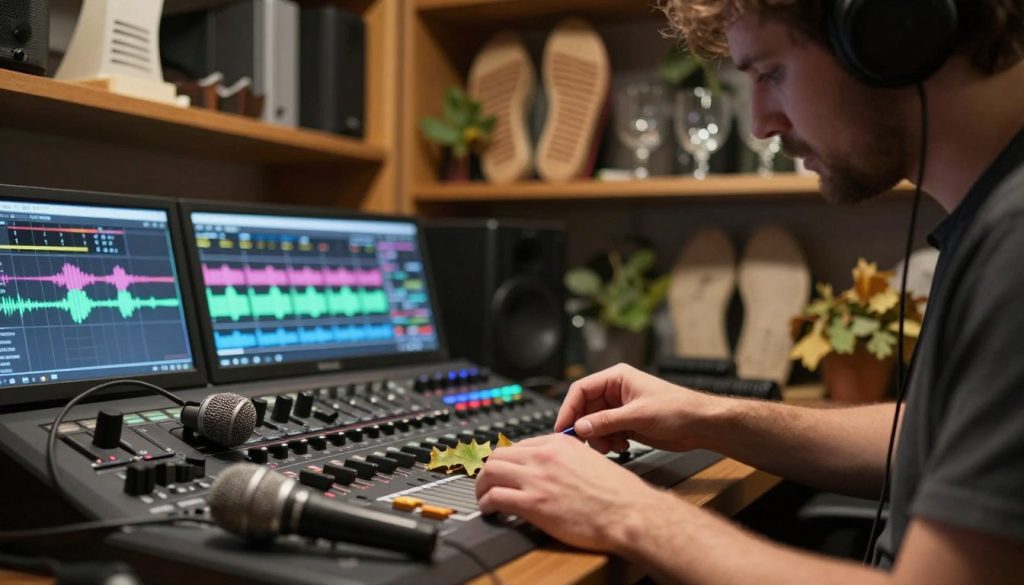
Foley effects are key to making audio feel real. As the sound effects market grows, so does the need for top-notch sound design. These small audio details help make your visuals feel real and believable.
Selecting Appropriate Foley Libraries
To create a believable world, you need the right audio assets. Look for libraries with detailed recordings of clothing rustle, skin contact, and movement. These sounds add depth and prevent your mix from feeling fake.
When searching for assets, check the dynamic range and clarity. High-quality libraries let you tweak sounds without losing their essence. This focus on detail is what makes professional sound design stand out.
Layering Sounds for Texture and Depth
One-dimensional audio can’t hold an audience’s interest. You need to layer Foley tracks to create a rich sound environment. This adds depth and weight to every action on screen.
Here’s a table to guide your Foley layering for the best results:
| Foley Category | Primary Texture | Purpose in Mix |
|---|---|---|
| Fabric/Clothing | Soft Rustle | Adds movement realism |
| Skin Contact | Impact/Slap | Provides physical weight |
| Surface Friction | Slide/Creak | Establishes environmental context |
| Breath/Exertion | Air/Respiration | Enhances human presence |
To make your sound design work, balance these layers well. Use volume automation to keep important sounds clear. This way, your mix will be cohesive and engaging for your audience.
Layering Ambient Soundscapes to Enhance Immersion
Ambient soundscapes are like the invisible foundation of your audio project. They make your audio feel real. Without them, even the most detailed recordings can sound empty.
Choosing Background Ambience for Scene Context
Choosing the right background tracks is all about knowing your scene. Whether it’s a quiet bedroom or a busy city street, the audio must match the visuals. Consistency is key to keeping the illusion alive.
Mark Berger explains that recording foley outdoors adds a layer of ambiance, which can be reduced to compensate for the foley’s own natural sound.
When you record outdoor foley, you capture a unique sound. Think about these things when picking your ambient layers:
- Spatial Accuracy: Does the background noise reflect the size of the room or the openness of the outdoors?
- Frequency Range: Make sure your ambient tracks don’t clash with your dialogue’s main frequencies.
- Dynamic Movement: Use small changes in volume to mimic real-world environments.
Balancing Ambient Levels Against Dialogue
Getting the balance right is crucial. Your ambient bed should support the dialogue and foley without drowning them out. A common error is letting background noise overpower the mix, making it muddy.
To get it right, focus on making room for the human voice. If the background is too loud, use EQ to adjust the frequencies. This strategic approach keeps your mix clear and impactful for your audience.
Advanced Techniques for Realistic AI Porn Audio Sync
To get a professional look, you need to go beyond simple edits. Focus on the small details of your sound design. This ensures every sound fits perfectly with the video’s story. This precision makes your edit stand out as a realistic ai porn audio sync.
Using Time-Stretching to Align Audio Peaks
Time-stretching lets you change audio clip lengths without changing pitch. You can stretch or compress sounds to match video cues. This makes sound effects match video movements with surgical accuracy.
Aligning audio peaks with video events boosts viewer immersion. If sounds are off by even a few milliseconds, reality feels lost. Learning this skill is crucial for a realistic ai porn audio sync that feels real and cinematic.
Applying Dynamic Processing for Natural Flow
Dynamic processing, like compression, keeps audio volume steady. Without it, loud sounds can pull viewers out of the experience. A compressor smooths out loud parts and brings up quiet ones, creating a cohesive soundscape.
This makes your audio sound natural, like real recordings. Balanced levels let listeners focus on the content, not adjust volume. Here’s how different tools affect your audio quality.
| Tool | Primary Function | Impact on Quality |
|---|---|---|
| Time-Stretching | Duration Adjustment | Perfects timing alignment |
| Compression | Dynamic Range Control | Ensures consistent volume |
| Limiter | Peak Prevention | Prevents digital clipping |
| Expander | Noise Reduction | Cleans up background hiss |
Using these advanced tools makes your production look professional. Regular use of these techniques will make your realistic ai porn audio sync clear and deep.
Managing Phase and Frequency Conflicts
When your audio tracks fight for the same space, your mix gets muddy. This is a big challenge in sound design. It happens when frequencies overlap, making your main sounds hard to hear.
Identifying Frequency Masking Issues
Frequency masking is when sounds compete in the same frequency space. The louder sound can hide or even cancel out the quieter one.
Use a spectrum analyzer to see these conflicts live. It helps you find out which sounds are causing trouble in your mix.
Utilizing EQ to Carve Space for Foley
After spotting the problem, use EQ to make space for your foley and dialogue. Give each sound its own frequency space to keep them clear and distinct.
If your foley is clashing with dialogue’s lower-mid range, use a narrow EQ band to remove those frequencies from the foley. This intentional approach to sound design makes your mix clear and realistic.
Remember, small changes can make a big difference. By carefully handling these conflicts, you keep your audio clean and professional.
Automating Volume and Panning for Spatial Realism
Automation connects static audio to a dynamic environment. It changes a flat mix into a three-dimensional space that moves with the visuals. This is key to making a project sound professional.
Creating Movement with Panning Automation
Panning automation lets you follow objects’ movement in the stereo field. When a character moves, their sound should too. But, be careful not to confuse the listener.
“Mark Berger advises against panning principal actors’ foley while they have on-screen dialogue to avoid the phenomenon of feet walking right while the mouth talks center.”
It’s crucial to keep dialogue in the center for spatial realism. Panning background sounds or non-speaking characters is okay. This way, the listener stays immersed.
Smoothing Transitions with Volume Envelopes
Volume envelopes help audio clips blend smoothly. They fade sounds in and out, like in real life. This makes your sound design smooth and natural.
Here are tips for using volume automation:
- Gradual Fades: Use soft slopes for ambient layers.
- Dynamic Balancing: Match sound levels to the visuals.
- Crossfading: Blend clips with slight overlaps and volume curves.
Small volume changes make transitions feel natural. They help the listener focus on the story, not the audio tech.
Refining the Final Mix for Professional Output
To get a professional sound, you need to mix your audio carefully. This is when you blend all the layers into one polished track. Adding these final touches makes your sound design stand out to today’s listeners.
Applying Compression for Consistent Levels
Compression helps keep your audio levels steady. It stops sudden volume changes that can pull you out of the music. This makes your sound design flow smoothly and keeps listeners interested.
Compression is like a guard for your sound design. It controls the loud parts and brings out the quiet ones. Use a moderate ratio to keep things balanced. This ensures your music sounds great on any system.
Final Mastering for Streaming Platforms
Mastering for streaming needs to meet loudness standards. Your music should sound clear on any device, from studio monitors to phones. Good mastering keeps your audio sharp and impactful, no matter where it’s played.
Here’s a table showing how different steps affect your final sound:
| Processing Stage | Primary Goal | Impact on Sound Design |
|---|---|---|
| Dynamic Compression | Level Consistency | High |
| Equalization | Frequency Balance | High |
| Limiting | Loudness Optimization | Medium |
| Stereo Imaging | Spatial Depth | Medium |
Troubleshooting Common Sync and Quality Issues
Keeping audio sync ai porn quality high needs a sharp eye for tech problems. Even with good planning, tech issues can pop up. Learning to fix these problems helps keep your work error-free.
Fixing Latency and Timing Mismatches
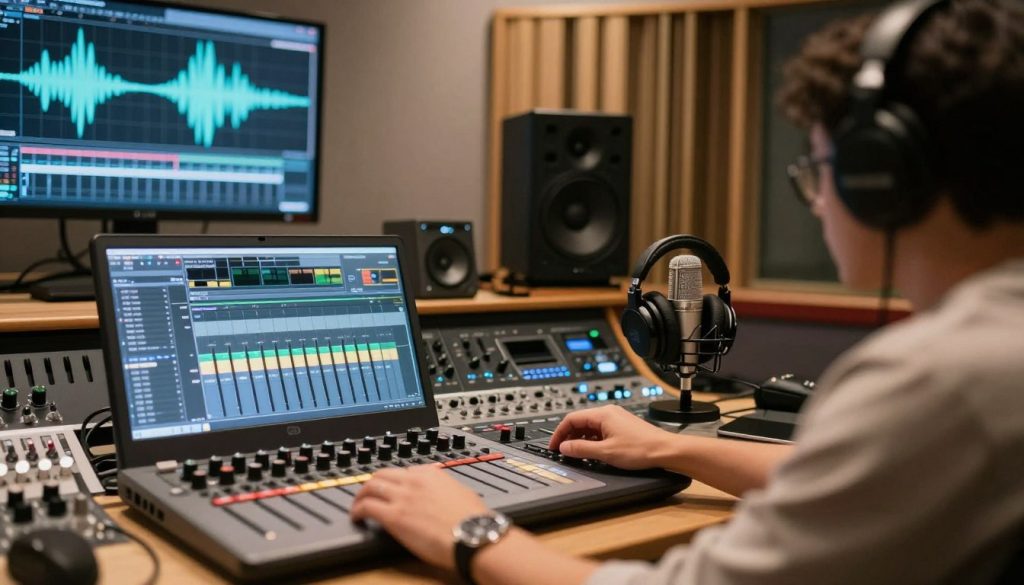
Phasing is a common problem where sound waves are slightly off. This makes audio sound thin or hollow. Try moving your clips a bit to fix this.
If it still doesn’t work, try flipping the polarity of one track. Also, check your digital audio workstation’s buffer settings to avoid latency.
Correcting Artifacts in AI-Generated Audio
AI audio can have digital artifacts like metallic sounds. These can ruin your audio sync ai porn experience. Use spectral repair tools to fix these issues without harming the rest of the audio.
If the problem is too big, try regenerating the segment with new settings. Consistency is key with AI. Keep your files organized for easier fixes. Here’s a quick guide for common problems.
| Issue Type | Primary Symptom | Recommended Fix |
|---|---|---|
| Phasing | Thin, hollow sound | Nudge clips or flip polarity |
| Latency | Delayed audio response | Adjust buffer size settings |
| Digital Artifacts | Metallic chirps or clicks | Use spectral repair tools |
| Volume Mismatch | Inconsistent levels | Apply compression or gain staging |
Fixing these tech issues early keeps your audio sync ai porn top-notch. Being proactive ensures your audience stays engaged.
Conclusion
Mastering audio layering and synchronization is a journey that makes your videos better. You create a world that draws viewers in by choosing the right scenes and assets.
Good sound design is often unseen but crucial. It supports the story without being too obvious. Your hard work makes every sound and background feel real.
You now have the skills to make professional audio for any project. Use these techniques in your next project to see the difference. Try new things in your digital audio workstation to make your sound unique.
Share your work with others to get better. Your focus on quality will make your videos stand out. Keep exploring what you can do with sound.
FAQ
How should I organize my digital audio workstation for efficient sound design?
Start with a clean setup. Organize your sounds into folders for ambiance, foley, and effects. This saves time and keeps your work organized.
Mark Berger suggests recording foley in real settings for authenticity. Use your DAW, like Avid Pro Tools or Adobe Audition, to keep your workflow smooth.
Why is syncing breathing patterns so important for human-like realism?
Breathing makes your work feel real. Find natural breath cycles in your video. Use a metronome to time your breath samples.
This makes the performance feel real and connected.
Is it worth investing in high-quality foley libraries for adult content?
Yes, it’s worth it. The sound effects market is growing fast. Choose libraries like Splice or Boom Library for detailed sounds.
This adds depth and prevents a one-dimensional sound.
How can I balance ambient soundscapes without overwhelming the dialogue?
Ambient sounds set the mood. Mark Berger says recording foley outdoors adds natural ambiance. Choose background tracks that fit your scene.
Make sure the ambient sounds support the dialogue and foley, not drown them out.
What is frequency masking and how do I fix it in my mix?
Frequency masking happens when sounds clash. Use a spectrum analyzer to find these clashes. Apply EQ to make each sound clear.
This ensures your mix sounds balanced and professional.
Should I use panning automation for principal actors during dialogue?
Be careful with panning actors during dialogue. Mark Berger warns against it to avoid awkward sound placement. But, use panning for moving objects to keep the sound realistic.
How do I troubleshoot phasing and timing mismatches in AI-generated audio?
Phasing makes audio thin. Fix it by adjusting clips or using a polarity flip. Also, address latency and artifacts in AI audio to ensure a polished output.
What are the final steps for mastering audio for streaming platforms?
Master your audio with compression and tools like iZotope Ozone. This ensures your audio meets streaming standards. A well-mastered audio makes your project sound professional on any device.