Ever wondered why your complex visual projects slow down just when they’re almost done? Creating a high-performance environment is more than just having lots of power. It’s about having a smart, growing setup.
To stay ahead in 2026, you can’t just rely on brute force. Using GPU clusters lets you spread out big tasks across many nodes easily. This keeps your work flow smooth and quick.
Load balancing is like a traffic cop for your data, stopping jams before they start. With a well-organized cache system, your work gets done much faster. This is true whether you’re working on a realistic ai porn rendering farm or top-notch movies.
Key Takeaways
- Use GPU clusters to grow your production power smoothly.
- Implement load balancing to stop system jams during busy times.
- Optimize your cache to cut down on delays and speed up work.
- Move from simple rendering to a smart, automated process.
- Get your setup ready for 2026 and the years after.
Architecting Your Realistic AI Porn Rendering Farm
Building a realistic ai porn rendering farm is more than just having lots of power. It’s about creating a balanced system. You need to match your computer needs with your space’s limits for steady work.
Good planning here stops expensive hardware problems. It keeps your work flow going without hitches.
Selecting High-Performance GPU Hardware
The heart of your setup is the GPU hardware. You need fast cards like the NVIDIA RTX 5090 for AI tasks. But, these cards use a lot of power.
Look for GPUs with lots of VRAM and speed. This way, your tasks won’t slow down.
Efficiency is key when picking parts. Go for top-notch cards or high-end GPUs with good cooling. Make sure your power supply can handle all the cards’ power needs.
Designing the Physical Infrastructure and Cooling
Your render farm infrastructure must handle the heat from many GPUs. Without good cooling, your gear will slow down. You need to plan for all the heat your setup will make.
Think about a special server room setup with active airflow management. Use systems that keep cold air in and hot air out. This keeps your gear cool and safe from overheating.
Configuring GPU Clusters for Maximum Throughput
You can unlock your GPU clusters‘ full potential by focusing on network architecture and resource synchronization. Scaling operations often reveals a bottleneck in data transfer speeds, not just compute power. A high-speed environment is key for complex neural rendering tasks that need constant node communication.
Interconnecting Nodes via High-Speed Networking
To achieve maximum throughput, you must eliminate latency at the hardware level. Standard Ethernet cables often can’t handle the massive data packets of distributed rendering. Instead, use high-bandwidth solutions like InfiniBand or 100GbE switches for fast node communication.
These high-speed interconnects ensure quick data transfer between nodes. This keeps your GPUs active, not idle. It’s crucial for high frame rates in professional neural rendering workflows.
Synchronizing GPU Resources Across the Cluster
After setting up your network, focus on software-level synchronization. A robust orchestration layer is needed for effective distributed rendering across your GPU clusters. Ensure all nodes get instructions at the same time to avoid frame stuttering or visual artifacts.
Specialized drivers and containerization tools help align resources. This treats multiple machines as one unified engine. Keeping nodes in sync maximizes your GPU clusters‘ efficiency and ensures consistent output quality.
| Technology | Typical Speed | Latency | Best Use Case |
|---|---|---|---|
| Standard Ethernet | 1 Gbps | High | Basic File Transfer |
| 10GbE | 10 Gbps | Medium | Small Rendering Farms |
| 100GbE | 100 Gbps | Low | Large-Scale Clusters |
| InfiniBand | 200+ Gbps | Ultra-Low | High-Performance AI |
Optimizing the GPU Pipeline for AI Workloads
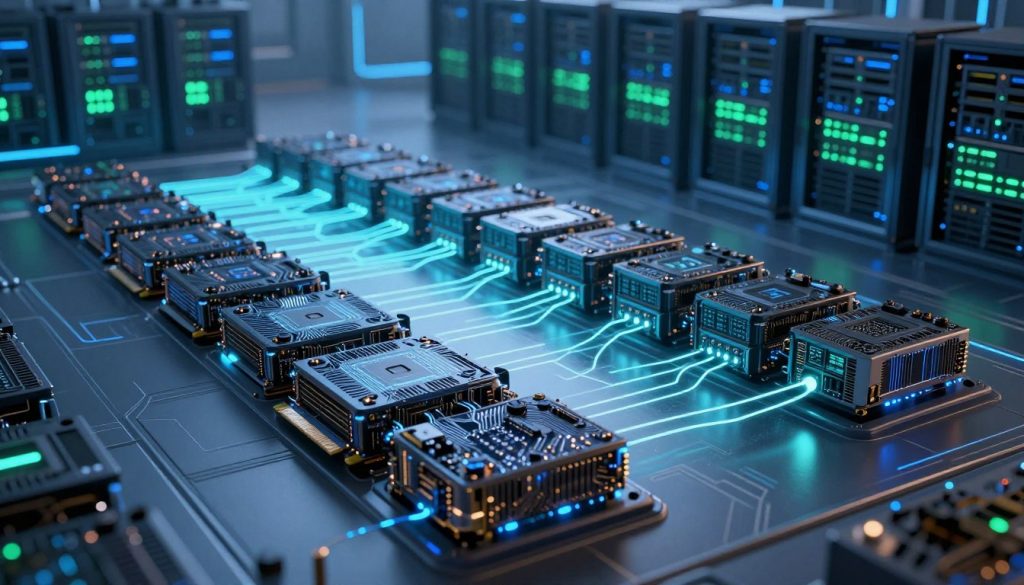
Your gpu pipeline is key to every high-quality frame. Adding AI-assisted rendering makes your hardware’s speed crucial. Make sure data moves smoothly from storage to processing units to avoid delays.
Streamlining Model Loading and Inference Cycles
To keep GPUs working well, cut down model loading time. Pre-loading assets into the cache helps your system move quickly between tasks. This keeps your hardware busy, not waiting for data.
Using optimized model formats also helps. It cuts down the time needed to start work. This way, you can make more frames per hour. Keeping a steady flow is vital for top-notch rendering.
Managing VRAM Allocation for Large-Scale Generation
Good VRAM allocation is key for big projects with high-resolution textures and complex AI models. Poor memory management leads to crashes. Watch your memory use to handle big projects.
Dynamic memory tools can help. They focus on important assets first. This way, you can use your hardware fully without problems. It lets you grow your work while keeping quality high.
Implementing Effective Load Balancing Strategies
Transform your rendering workflow by smartly distributing traffic across your GPU cluster. Effective load balancing prevents any single node from being overwhelmed during busy times. This way, you keep the output quality consistent.
Distributing Rendering Tasks Across Available Nodes
For top performance, use a strong distributed rendering setup. It breaks down big AI tasks into smaller parts. These parts are then sent to the most free GPU nodes.
Automating this keeps your hardware running full speed without needing you to do anything. Consistency is crucial when scaling up to meet big demands. Keep an eye on node availability to avoid overloading any one node.
Handling Queue Management and Priority Scheduling
Managing your job queue is as vital as your GPUs’ power. A good system lets you put urgent jobs first. This load balancing stops less important tasks from slowing you down.
Automated scheduling software makes these tasks easier. It keeps your distributed rendering setup fast, even with many users at once. Here’s a table showing common scheduling methods:
| Strategy | Primary Benefit | Best Use Case |
|---|---|---|
| Round Robin | Simple implementation | Uniform task sizes |
| Least Connections | Prevents node overload | Variable AI workloads |
| Priority-Based | Ensures urgent delivery | Time-sensitive projects |
| Resource-Aware | Optimizes VRAM usage | Large-scale model training |
Leveraging Caching Techniques to Reduce Latency
Reducing rendering latency is key to a fast production environment. When GPUs wait for data, efficiency drops. Optimizing data retrieval keeps your hardware busy during AI tasks.
Utilizing NVMe Storage for Rapid Asset Retrieval
Old hard drives slow down high-performance clusters. Switching to NVMe storage boosts IOPS for multiple GPUs. This rapid retrieval keeps your pipeline smooth with big datasets.
Use NVMe drives for main asset libraries to cut down load times. High-speed storage acts as a local cache. This setup avoids network bottlenecks during busy times.
Implementing Distributed Caching Layers
A distributed cache lets nodes share assets efficiently. Instead of fetching from a central server, nodes get data from peers. This cuts down network congestion and keeps rendering latency low.
Setting up a strong caching layer needs careful network planning. Use tools like Redis or specialized file systems. A fast cache reduces storage requests across your farm.
| Storage Type | Latency | Throughput | Best Use Case |
|---|---|---|---|
| HDD Array | High | Low | Cold Storage |
| SATA SSD | Medium | Moderate | General Files |
| NVMe SSD | Very Low | Very High | Active Cache |
| RAM Disk | Ultra Low | Extreme | Temporary Assets |
Managing Rendering Farm NSFW Content Workflows
Running a rendering farm nsfw means balancing speed and security. Keeping data integrity is key to protecting your work. A secure setup keeps your projects safe from unauthorized access.
Automating Batch Processing for Large Datasets
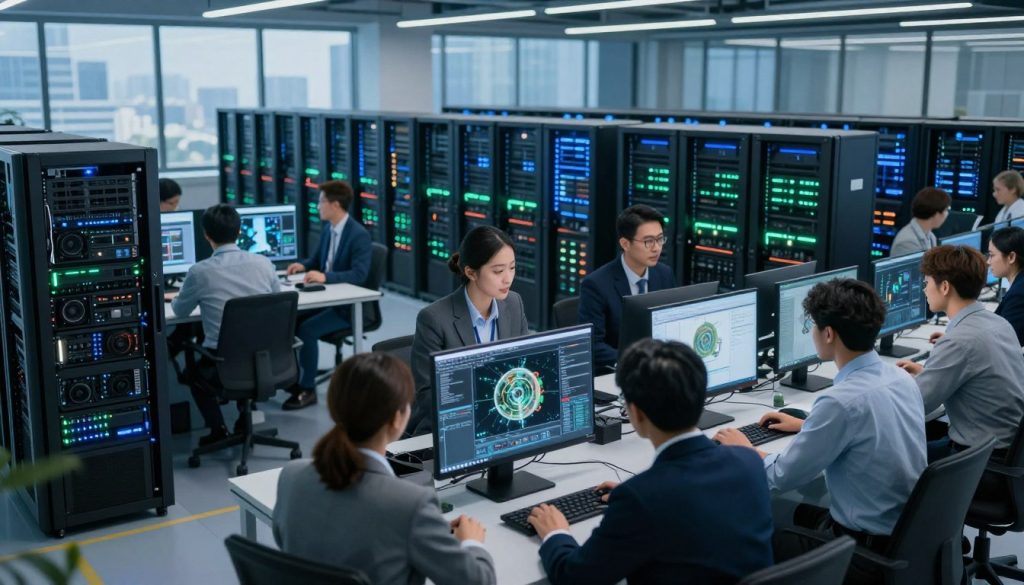
Handling big data quickly is crucial. Batch processing lets you work on thousands of frames at once. It cuts down on mistakes and keeps your equipment busy.
Use special scripts to get your files ready for rendering. Standardizing file names and folders helps the system work better. This setup is vital for a smooth, reliable workflow.
Ensuring Data Integrity and Security Protocols
Keeping your content safe needs a strong security plan. You must control who can access your files. Encryption helps protect your work when it’s stored or sent.
Check your security logs often to keep your data safe. Following best practices keeps your work secure. Regular checks help keep your system safe from threats.
Monitoring and Troubleshooting Your Rendering Farm
Keeping your render farm infrastructure running smoothly is key. Watch your system closely to catch small problems before they get big. This way, your work stays smooth and your results consistent.
Tracking GPU Health and Thermal Performance
Your GPU hardware is the heart of your setup. It’s crucial to watch its temperature and power use. This stops overheating, which can slow down your work.
Overheating can damage your hardware early. If your GPU gets too hot, check your cooling right away. Keeping it cool helps your gear last longer and work better.
Here are some important things to track:
- Core clock speeds and changes under heavy loads.
- VRAM usage to spot memory issues.
- Fan speeds and airflow to ensure good cooling.
- Power draw to find failing power units.
Identifying Bottlenecks in the Rendering Pipeline
Even top-notch hardware can have hidden problems. Look at render logs to find where things slow down. Finding these spots lets you improve your workflow and speed up your work.
If your output slows, check for node sync issues. Sometimes, the problem isn’t the GPU but how fast data moves. Keeping data integrity is crucial during these checks to avoid file damage.
Regular audits of your performance can catch trends early. By comparing current logs to past ones, you can see if changes affect your speed. This careful approach keeps your setup reliable and ready for any task.
Scaling Your Infrastructure for Future Growth
As your production needs grow, your rendering farm must keep up. It’s not just about adding more hardware. It’s about building a flexible architecture for easy growth. This way, your pipeline stays efficient and ready for new tech.
Expanding Cluster Capacity Without Downtime
You can grow your cluster with modular nodes for hot-swapping. This keeps your farm running smoothly while adding new power. Smart load balancing spreads tasks to new nodes instantly.
High availability needs a strong network backbone for quick scaling. When adding capacity, make sure your network can quickly add new resources. This seamless integration avoids slowdowns and keeps your pipeline fast.
Upgrading Components for Next-Generation AI Models
Staying ahead means getting ready for the latest neural rendering advancements. As models get more complex, your setup must handle more work. Keep an eye on your hardware to know when to upgrade.
Good VRAM allocation is key for big AI models needing lots of memory. Upgrading to better GPUs means your system can handle big textures and high-res assets. This keeps your output quality high.
Also, make your workflow better for batch processing with growing datasets. Automating tasks cuts down on idle time and makes the most of your new hardware. These upgrades today will keep your setup strong for the future.
Conclusion
Building a strong rendering farm needs a good grasp of hardware and software. You now know how to match your GPU clusters with today’s AI demands.
Using smart load balancing and caching can cut down rendering time. This means your projects will look better and get done faster.
The world of generative tech is always changing. Keeping your setup flexible and scalable is key. This way, your hardware stays up-to-date with the latest from NVIDIA and Stability AI.
Use these tips to improve your workflow right now. Being able to adjust your cluster’s size is crucial for top-notch content. Start tweaking your nodes to reach the best performance in every cycle.
FAQ
Which hardware is recommended for building a high-performance rendering environment in 2026?
To meet modern AI content demands, focus on raw compute power and thermal efficiency. High-end GPUs, like the NVIDIA RTX 5090, are key for your gpu pipeline. But, pair these with advanced cooling solutions to avoid thermal throttling and ensure long-term stability.
How do I prevent data bottlenecks when using a large GPU cluster?
Maximizing throughput needs high-speed networking and robust interconnects. Synchronize your GPU resources across nodes to distribute scenes effectively. This setup ensures your cluster communicates smoothly, avoiding delays in distributed rendering tasks.
What are the best practices for managing VRAM in an AI-heavy gpu pipeline?
To avoid out-of-memory errors, prioritize efficient VRAM allocation. Streamline model loading and use AI-assisted rendering tools to reduce inference cycles. A balanced approach to asset loading keeps your GPUs active and productive.
How can I ensure my render farm operates at maximum capacity without manual intervention?
Implement sophisticated load balancing and queue management systems. Automate task distribution across nodes and prioritize critical jobs. This maintains a consistent output flow and prevents bottlenecks during peak hours.
How does storage choice affect the overall latency of my rendering workflow?
Reducing latency depends on asset retrieval speeds. Use NVMe storage and distributed caching layers for almost instant data access. This minimizes GPU wait times, boosting your render farm’s efficiency.
What security measures are necessary for a rendering farm nsfw content workflow?
Managing sensitive content requires strict data integrity and security protocols. For nsfw environments, use end-to-end encryption, multi-factor access controls, and automated batch processing. These practices protect your assets throughout the production pipeline.
How can I proactively monitor the health of my rendering infrastructure?
Effective management involves tracking GPU health and thermal performance in real-time. Analyze render logs and performance data to identify bottlenecks before they cause downtime. Proactive troubleshooting keeps your hardware within safe temperatures and at peak performance.
What is the best strategy for scaling my render farm to support future AI models?
Scaling for future growth needs a strategic approach to capacity expansion and hardware upgrades. Look for next-generation components with features like Neural Texture Compression. Careful planning ensures smooth integration of new nodes without downtime, keeping your infrastructure competitive for future AI needs.