Ever wondered why some digital projects feel empty, while others draw you in? The answer often lies in how the environment is built. To master a realistic ai porn scene builder, you need more than tech skills. You must understand how to tell stories with visuals.
To make your work stand out, focus on how sets and characters work together. Adding meaningful props and strategic story points can turn a simple project into a story that grabs you. This guide will teach you the pro techniques to tackle today’s production challenges.
Every detail, from lighting to background elements, has a role. Let’s dive into how to refine your creative process. We’ll explore how to make your work resonate with your audience.
Key Takeaways
- Understand the importance of environmental storytelling in digital production.
- Learn how to select props that enhance the narrative flow of your work.
- Discover techniques for placing story anchors to guide viewer attention.
- Master the balance between technical settings and artistic vision.
- Improve the overall quality of your projects through structured design principles.
Understanding the Fundamentals of a Realistic AI Porn Scene Builder
Success in digital artistry is like studying for exams. You need a clear plan, just like the 40 million learners on Vaia. Using a realistic ai porn scene builder well means you focus on your goals, not just trying things out.
Defining Your Creative Vision
Before you start, you must have a clear creative vision. This is like a blueprint for your digital world. You need to decide on the mood, lighting, and story elements of your scene.
Setting your goals early saves time. You can then focus on the important details, like texture and depth. A good plan helps keep your final work true to your vision.
The Role of AI in Modern Visual Storytelling
Artificial intelligence makes visual storytelling easier by handling complex tasks. It lets you focus on the narrative flow of your work. This tech helps turn your ideas into detailed, realistic scenes.
The table below shows the key steps from idea to finished scene.
| Stage | Focus Area | Primary Goal |
|---|---|---|
| Conceptualization | Vision & Mood | Define the core narrative |
| Technical Setup | Model Selection | Choose the right AI engine |
| Refinement | Lighting & Props | Enhance visual realism |
| Final Polish | Upscaling & Grading | Ensure high-fidelity output |
Mastering these basics makes your work process reliable. Whether you’re new or experienced, a realistic ai porn scene builder works best with a clear vision. Stay focused, set your goals, and let the tech handle the hard parts.
Selecting the Right AI Tools for Your Project
Choosing the right scene builder ai model is key for top-notch digital art. Just like 94% of Vaia users get better grades with smart learning, you can boost your art with the right tools. Look for ones that render textures well.
The world of generative tech is always changing. It’s vital to pick software that meets your art needs. Focus on models that get spatial accuracy and lighting right. This way, your vision comes to life digitally.
Comparing Top-Tier Image Generation Models
Each platform has its own strengths for complex scenes. Some are great at photorealism, while others offer better control over structure and narrative depth.
| Model Name | Best For | Texture Quality | Ease of Use |
|---|---|---|---|
| Midjourney | Artistic Flair | High | Moderate |
| Stable Diffusion | Custom Control | Very High | Advanced |
| DALL-E 3 | Prompt Accuracy | Medium | Easy |
Optimizing Prompts for Realistic Textures and Lighting
After picking your scene builder ai, refine your prompts. Give clear details about materials and lights for a deep dive into immersion.
Use specific terms for object properties. Say “brushed metal,” “soft velvet,” or “diffused morning light” for better quality.
Practice with these prompts to get the hang of your software. Adding these details makes your scene real and engaging.
Mastering Set Design for Immersive Environments
Creating a believable digital world is key to telling stories well. With a scene builder ai, aim to make spaces feel real and lived-in. Every design choice affects how viewers see your story.
Establishing Spatial Depth and Perspective
Good design makes a two-dimensional space feel three-dimensional. Designers like Deb Sivigny used this in “Hello, My Name Is…” to show the lives of Korean adoptees. By adding layers, you guide the viewer’s eye.
“Space is the breath of art; it is the silent language that tells the story before a single word is spoken.”
Try different vanishing points and camera angles to add depth. A great scene builder ai project uses these to avoid a flat background.
Choosing Color Palettes to Evoke Mood
Colors have big emotional impacts. Warm colors feel cozy, while cool ones suggest isolation. Pick colors that match your story’s mood.
Keep your colors consistent in textures and lighting. This makes your environment feel cohesive and intentional.
Utilizing Architectural Elements for Realism
Architecture gives your digital world a real feel. Adding details like crown molding or textured walls makes it believable. These elements anchor your scene builder ai and make it feel like a real place.
| Design Element | Primary Function | Impact on Viewer |
|---|---|---|
| Spatial Depth | Creates immersion | High |
| Color Palette | Sets emotional tone | High |
| Architecture | Provides realism | Medium |
| Lighting | Defines atmosphere | High |
Think about how architecture and lighting work together. When done well, it adds depth and complexity to your scene.
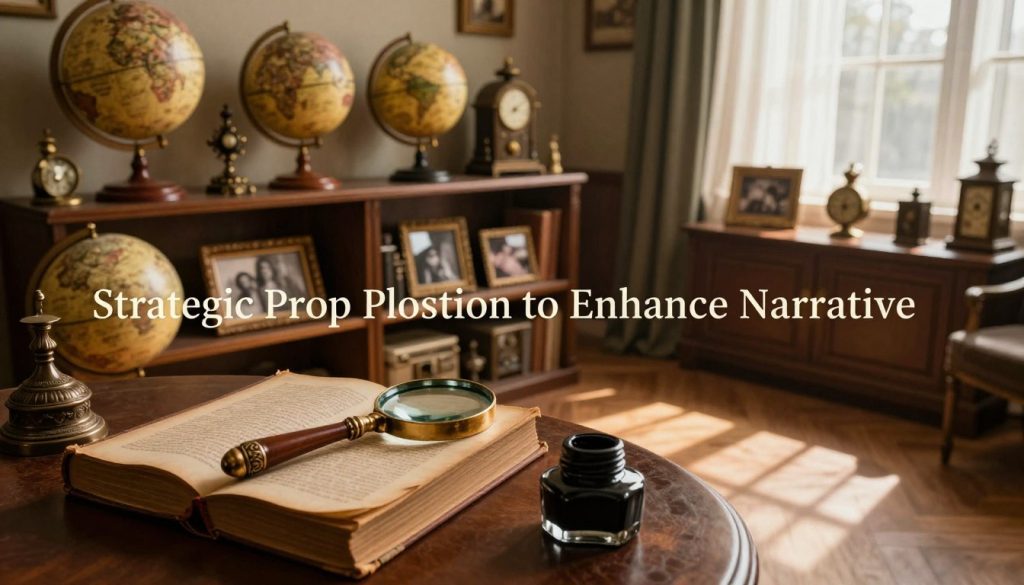
Strategic Prop Placement to Enhance Narrative
Choosing objects for your digital world is like lighting design. Each item adds mood and context to your storytelling. Making every choice count makes your scene feel real and meaningful.
Selecting Props That Tell a Story
Think about what props say about your characters. A prop should hint at a backstory or motivation. Choose items that feel lived-in and have personality.
Consider if an object adds to the story or just takes up space. If it doesn’t help the atmosphere or character’s journey, it’s best to remove it. This keeps your storytelling clear and impactful.
Balancing Clutter and Minimalism in Your Scene
It’s important to balance detail and simplicity. Too many objects can be distracting. Minimalism lets you focus on key items in your story.
Try to create depth without overwhelming the viewer. Use empty space to draw attention to important parts of your storytelling. This keeps your scene professional and easy to follow.
Implementing Story Anchors to Guide the Viewer
You can turn a still image into a story by using visual anchors. These elements draw the viewer’s eye to key parts of your picture. This way, you control where the audience looks, making your storytelling clear and powerful.
What Are Story Anchors and Why They Matter
Story anchors are objects or lighting that help the viewer feel grounded. They give every pixel in your image a purpose. Mastering this skill makes your work look professional, unlike amateur art.
The strategic use of space and focal points is what elevates a design from simple decoration to a narrative experience.
David Bengali’s design for “Van Gogh’s Ear” won a Drama Desk Nomination. His use of light and space to focus the viewer’s attention is a lesson in storytelling. You should aim to achieve this level of focus in your AI-generated scenes.
Positioning Focal Points for Maximum Impact
Choosing where to place your anchors needs both instinct and planning. Too many points can confuse the viewer and lose them in the story. Instead, create a clear order of importance.
Here are tips to enhance your scene layout:
- The Rule of Thirds: Put your main anchor at grid line intersections for natural tension.
- Contrast Utilization: Bright lights or bold colors make your anchor pop against a dull background.
- Leading Lines: Arrange items or structures to guide the viewer to your main subject.
By using these techniques, your storytelling will be both clear and engaging. Every element in your image should have a role. By removing distractions and focusing on the anchor, your work will connect more deeply with your audience.
Lighting Techniques for Cinematic Realism
Professional multimedia designers, like Katherine Freer, know light is key. Her work on The Curious Incident of the Dog in the Night Time shows how light shapes space and emotions. You can use these ideas to make your AI scenes more than just images.
Mastering Three-Point Lighting in AI Generation
The three-point lighting system is a classic for film and photography. It gives a balanced, professional look. By using three lights, your subjects will pop against the background naturally.
To use this in AI prompts or post-processing, remember these parts:
- Key Light: This is your main light, defining your subject’s shape and volume.
- Fill Light: This light softens shadows, showing details in dark areas.
- Back Light: Also called a rim light, it makes your subject stand out from the background, adding a cinematic glow.
Creating Atmosphere Through Shadows and Highlights
Lighting isn’t just about seeing; it sets the mood. By playing with light and dark, you guide the viewer’s eye. High-contrast lighting adds drama, while soft light creates calm.
Play with light intensity and color to add depth. Shadows are as crucial as highlights for a three-dimensional feel. Balancing these creates a compelling atmosphere that draws the viewer into your story.
Refining Character Integration Within the Set
Making your character blend seamlessly with their environment is key. When you put a subject in a virtual space, aim for them to feel like they belong. Visual dissonance happens when the character and background don’t match physically.
Ensuring Anatomical Consistency and Scale
Keeping the right scale is crucial for realism. If your character looks too big or too small compared to the set, it breaks the illusion. Just like the Vaia app works on both iOS and Android, your character models need to fit various settings well.
Always check if the character’s body fits the room’s perspective. Use set elements like table heights or window widths to judge size. This makes the character feel physically grounded.
Matching Character Poses to the Environment
A character’s pose should match the set’s story. In a lounge, the character should look relaxed with the furniture. Avoid poses that make it seem like the character is floating.
Here are some tips for natural interaction:
- Align contact points: Hands, feet, and back should touch surfaces like chairs or walls.
- Match the mood: Use body language that fits the room’s atmosphere, like leaning back in a casual setting.
- Check for clipping: Make sure clothes or limbs don’t go through solid objects in the set.
- Maintain eye lines: Position the character’s gaze to interact with key points in the environment.
By paying attention to these details, you create a unified image. Consistency turns a simple scene into a powerful visual story.
Advanced Prompt Engineering for Complex Scenes
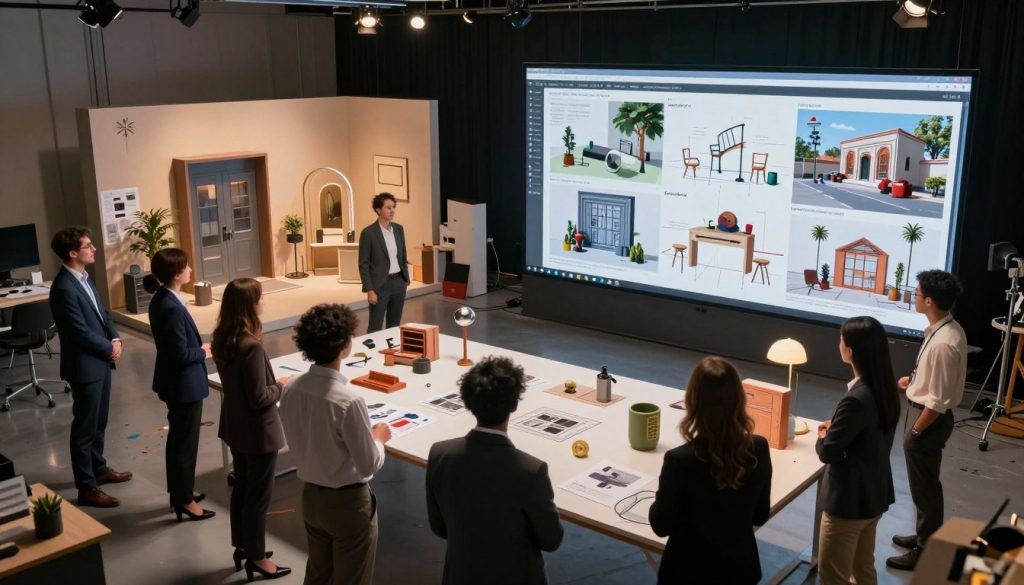
Mastering complex scenes requires a deep dive into prompt engineering. You can go beyond simple descriptions to control the details of your digital world. This is key for creators aiming for a professional look.
Think of your prompt as a dynamic blueprint that needs constant tweaking. Just as Vaia helps with notes, you can fine-tune your AI output. This ensures your scene matches your vision perfectly.
Using Negative Prompts to Remove Distractions
Negative prompts are your shield against unwanted visuals. They tell the AI what not to include. This stops common problems like blurry textures or misplaced objects.
Start by spotting common errors in your first tries. Look out for terms like blurry, low resolution, distorted anatomy, or extra limbs. These constraints help the model focus on what you want.
This method keeps your scenes clean and professional. Removing distractions makes the remaining details stand out. Consistency is the key to quality assets for future projects.
Layering Details for High-Fidelity Results
High-fidelity results come from layering details. Begin with a general description and add specifics in later steps. This builds complexity gradually.
Use this method to control lighting, materials, and atmosphere separately. This avoids overwhelming the model. The modular approach ensures each layer is clear and precise.
The best scenes have every detail thought out. By stacking your prompts carefully, you create a rich, immersive experience. Patience and experimentation are crucial for achieving top visual quality.
Post-Processing and Editing for Final Polish
Much like how Vaia provides instant feedback on mock exams to help learners improve, your post-processing workflow acts as a critical review for your visual art. This final stage allows you to identify minor flaws and elevate your work from a raw generation to a professional-grade masterpiece. By dedicating time to these finishing touches, you ensure your output is clear, consistent, and ready for any presentation.
Upscaling and Enhancing Image Clarity
AI generation often produces images at lower resolutions that may lack fine detail. Upscaling tools are essential for increasing pixel density while maintaining the integrity of your textures. You should look for software that utilizes neural networks to sharpen edges and remove artifacts without introducing unwanted noise.
When you enhance clarity, focus on the focal points of your scene. Strategic sharpening can draw the viewer’s eye exactly where you want it, making the composition feel more intentional. Always check for anatomical consistency after upscaling, as some algorithms may slightly alter facial features or limb proportions.
Color Grading to Unify the Scene
Color grading is the secret to making your AI-generated elements feel like they belong in the same physical space. By applying a unified color palette, you bridge the gap between disparate lighting sources and textures. You can use adjustment layers to shift the overall temperature, tint, and contrast of your image to match a specific mood.
Consider using Look-Up Tables (LUTs) to apply professional cinematic styles quickly. These tools help you maintain consistency across a series of images, ensuring your project has a cohesive visual identity. A well-graded scene feels immersive and polished, effectively hiding the seams of the generation process.
| Tool Category | Primary Function | Best For |
|---|---|---|
| AI Upscalers | Resolution boost | High-fidelity prints |
| Color Grading | Mood and tone | Cinematic consistency |
| Noise Reduction | Texture smoothing | Removing artifacts |
| Sharpening | Edge definition | Detail enhancement |
Common Pitfalls and How to Avoid Them
Proactive troubleshooting is key to making a good AI scene great. It’s like using a smart to-do list and dynamic calendar on Vaia to keep track of your goals. Keeping your creative projects organized helps you spot technical issues early.
Fixing Perspective Distortions
Perspective distortions happen when the AI has trouble with depth in complex scenes. You might see furniture looking off or the background not matching the foreground. These small mistakes can ruin the scene’s feel.
To solve this, try using ControlNet tools to keep architectural lines straight. If the problem stays, try making the environment description less detailed. Also, adjusting your camera angle can help the model get the scene’s depth right.
Correcting Inconsistent Lighting Sources
Inconsistent lighting makes scenes look fake. When shadows don’t match, it’s clear the scene lacks visual cohesion. Always state your main light source in your prompt to ensure everything looks right.
If characters and background don’t match in lighting, use selective masking to tweak brightness and color. Realism starts with consistent lighting. By balancing highlights and shadows in post-processing, you can make the scene look unified.
Ethical Considerations and Best Practices
Your journey into AI-assisted design is more than just tech skills. It’s about the ethical choices you make every day. As you explore new ways to tell stories visually, remember that your work shows your values. Responsible creation keeps the digital world safe and full of new ideas for everyone.
Respecting Content Guidelines and Safety
Every platform for image generation has rules to protect users and the public. It’s important to know these rules to avoid breaking them. Following these guidelines helps keep the creative community healthy.
Think about how your content might affect others when you create it. If a tool warns you about a prompt, learn why instead of ignoring it. Respecting these limits helps keep the tools you use working well for your projects.
Maintaining Creative Integrity in AI Art
True creativity comes from being open and finding your own artistic voice. Even with AI’s help, your vision should always be your own. Just like how groups like USITT offer different levels of access to resources, the art world does better when creators share and keep their standards high.
Being transparent is key in digital art today. If you use AI, sharing how you work builds trust with your audience. The table below shows how groups often offer different levels of access to support various levels of engagement.
| User Status | Resource Access | Cost | Professional Benefit |
|---|---|---|---|
| Standard Member | Full Library | $0 | High |
| Non-Member | Limited Access | $15 | Moderate |
| Institutional Partner | Premium Support | Custom | Maximum |
By valuing professional standards, your work will last. Stay true to your vision while respecting the ethics of digital art. Your commitment to these values will make your work stand out in a crowded field.
Conclusion
Mastering scene building is a mix of technical skills, storytelling, and ethics. You now know how to turn simple ideas into amazing digital worlds.
By using set design, prop placement, and story anchoring, you can grab your audience’s attention. Your control over lighting and character placement will make your work stand out.
Tools like Midjourney and Stable Diffusion open up endless creative possibilities. Use them to explore new ways of telling stories with AI.
Your adventure in creating high-quality images is just starting. Try new prompts and methods to find your own style. Share your work to inspire others and improve your skills.
FAQ
How does a scene builder ai enhance modern storytelling?
A scene builder ai makes visual storytelling easier by doing complex tasks fast. It’s like Vaia, which helps 40 million learners plan their goals. These AI tools help you plan your project with a clear vision, moving from simple images to professional scenes.
Why is selecting the right AI model critical for texture rendering?
Choosing the right model makes a big difference. Just like Vaia helps 94% of users get better results, the right tools can improve your texture rendering. This makes your digital art look real and immersive.
How can I use set design to establish spatial depth?
Get inspiration from designers like Deb Sivigny, who worked on “Hello, My Name Is…”. Learn about structure and depth to make your AI scenes real. Use architecture and colors to set the mood you want.
What role do props play in creating a narrative context?
Props add depth and context to your scenes. Follow lighting designer Porsche McGovern’s work on “Skeleton Crew”. Each item should tell a story. Balance clutter and minimalism to keep focus clear.
What are story anchors and why are they important for composition?
Story anchors draw the viewer’s eye. Like David Bengali’s work on “Van Gogh’s Ear”, use them to enhance your story. They keep your narrative clear and engaging.
How do I achieve cinematic realism using lighting techniques?
Use three-point lighting to create realism, like Katherine Freer did on “The Curious Incident of the Dog in the Night Time”. Control shadows and highlights to set mood and depth.
How can I ensure character integration looks natural within a generated set?
Pay close attention to anatomy and scale. Make sure your character models fit well with the set. This prevents visual dissonance and ensures natural interaction.
What is the benefit of using negative prompts in advanced prompt engineering?
Negative prompts help you control your output. Like Vaia’s tools for improving, they help filter out unwanted details. This leads to high-quality results that stand out.
Why is post-processing necessary for a professional finish?
Post-processing refines your work for a polished look. Like Vaia’s feedback on mock exams, use techniques to unify your scene’s tone. This makes your image clear and balanced.
How do I troubleshoot common errors like perspective distortion?
Even experts face issues like perspective distortion. Use a structured approach to find and fix problems. This keeps your work at a high standard.
What ethical considerations should I follow when creating AI art?
Keep your work honest and follow guidelines. Like USITT’s resources for a responsible community, creators should be transparent and safe. This protects your unique voice and promotes a responsible environment.