Have you ever thought about how much of your online life is visible? In today’s world, keeping your realistic ai porn privacy safe is crucial for your peace of mind.
Just like the community that came together for the Wilmot Warrior Weekend 2026, we stand united. They raised $75,158 for cancer research. We believe in protecting your personal space from unwanted eyes.
By learning to browse securely, you can enjoy your favorite content without fear. Keeping your realistic ai porn privacy safe means your online life stays private.
Key Takeaways
- Understand the importance of protecting your digital identity while browsing.
- Learn how to implement effective security measures for your online activities.
- Recognize that anonymity is a vital component of modern digital safety.
- Draw inspiration from community-driven efforts to foster better personal data management.
- Take control of your browsing experience to prevent unwanted data tracking.
Understanding the Risks of Realistic AI Porn Privacy
Exploring AI-generated content means you need to watch your digital safety closely. You might give up your privacy for the sake of convenience. Keeping your realistic ai porn privacy safe is key to keeping your habits private.
Data Tracking and Behavioral Profiling
AI platforms collect lots of data on how you use them. They track what you search for, the prompts you use, and the images you save. This data helps them understand your preferences over time.
Companies use this data to make their AI better. But it also keeps a record of your interests. Here’s how your data is usually collected:
- Prompt History: Every text input is logged and linked to your user ID.
- Session Duration: They watch how long you spend on certain content.
- Interaction Patterns: They record your clicks, downloads, and shares to understand you better.
The Dangers of Unsecured AI Generation Platforms
Using unsecured platforms for your projects can risk your privacy. Many free or cheap services don’t focus on security. This means your work and personal info could be shared without your consent.
Metadata is especially risky because it can reveal a lot about you. When you upload or download, you might share more than you think. Securing your workflow is crucial to keep your browsing habits private.
Selecting a Privacy-Focused Browser and Search Engine
If you want to keep your private ai porn viewing habits private, choosing the right browser is key. Most browsers collect your history and cookies, which can reveal your interests to advertisers. Switching to privacy-focused browsers blocks these tracking methods at the source.
Configuring Brave or Mullvad Browser for Anonymity
Brave is a great choice because it blocks trackers and ads by default. To boost your security, go to the settings and turn on “Strict” fingerprinting protection. This stops websites from identifying your device based on its unique features.
The Mullvad Browser also offers strong protection by sharing less data with the web. It makes all users look the same, which is key for anonymous private ai porn sessions. Make sure you don’t install unnecessary extensions, as they can create digital fingerprints that harm your privacy.
Utilizing DuckDuckGo and Startpage for Private Searches
Your search history is valuable to data brokers, but you can protect it with privacy-focused search engines. DuckDuckGo is popular because it doesn’t store your IP address or search queries. This keeps your private ai porn searches anonymous.
Startpage is another great tool that offers Google-quality results without tracking. It acts as a proxy, fetching results for you so your identity remains hidden. Using these tools stops major ad networks from creating profiles based on your browsing habits.
| Tool Name | Primary Benefit | Privacy Level |
|---|---|---|
| Brave Browser | Built-in Ad Blocking | High |
| Mullvad Browser | Anti-Fingerprinting | Very High |
| DuckDuckGo | No Search Logging | High |
| Startpage | Anonymous Proxy | High |
Implementing a Zero Logs VPN Strategy
Using a zero logs strategy is key for digital privacy today. When you look for private ai porn, your ISP might watch your online moves. A top-notch VPN creates a safe tunnel, hiding where you’re going.
Why Zero Logs Policies Matter for Adult Content
A strict no-logs policy means your provider won’t keep track of what you do online. This is crucial because if they don’t keep your data, they can’t share it with others. Privacy is not just about hiding; it is about ensuring your habits remain yours alone.
“Privacy is the power to selectively reveal oneself to the world.” — Eric Hughes
Setting Up Kill Switches and Multi-Hop Connections
Even the best VPNs can sometimes lose connection. A kill switch is a must-have feature. It cuts your internet if the VPN tunnel goes down, keeping your real IP safe while you’re online.
Multi-hop connections add more security for those who want it. By going through two or more servers, it’s hard for anyone to find your digital trail.
Choosing Reputable Providers Like Mullvad or IVPN
Not all VPNs are the same, especially when it comes to being open. Look for providers that have been checked by independent groups and have a clear record of protecting user data.
| Provider | Zero Logs Policy | Key Feature |
|---|---|---|
| Mullvad | Verified | Account Number Login |
| IVPN | Verified | Multi-hop Routing |
| Standard VPN | Unverified | Basic Encryption |
Going with Mullvad or IVPN means your private ai porn stays safe. These services focus on zero logs, keeping your browsing history private and secure always.
Securing Your Local AI Generation Environment
Starting your AI journey on your own computer is key. Cloud services can’t be controlled, making your data vulnerable. A local setup means you have full control over your work, with zero logs.

Running Stable Diffusion Locally to Avoid Cloud Exposure
Using Stable Diffusion on your computer is the best privacy move. It runs on your device, so no one else sees your work. This way, your activity stays private, with zero logs on servers.
“True digital privacy is only possible when you own the hardware and the software running on it.”
Managing Your Model Files and Generated Assets
After going offline, file management is crucial. Store your models and outputs on an encrypted drive. Here are some tips for safe storage:
- Keep your model library in a dedicated, non-indexed folder.
- Use strong encryption for your output directories.
- Regularly back up your assets to an offline storage device.
Isolating AI Workloads in Virtual Machines
Isolate your AI work in a virtual machine (VM) to protect your main system. This creates a safe space for your tools. Running your tools in a VM keeps your main computer safe and private, with zero logs.
Virtualization helps keep your digital life organized. If something goes wrong, your main computer stays safe. This is vital for those who want full control over their AI setup.
Creating an Encrypted Vault for Your Media
Creating a secure digital space for your files is key to keeping your privacy safe. Even if your device is hacked, an encrypted vault keeps your media safe from others. This way, you control who sees your files.
Using VeraCrypt for Disk Encryption
VeraCrypt is top-notch for making encrypted containers on your drive. It creates a virtual disk file that’s like a safe for your files. You can access it when you need to and hide it when you don’t.
“Encryption is the most effective way to protect your data from unauthorized access, ensuring that your privacy remains intact regardless of the hardware you use.”
To start, make a new volume in VeraCrypt and pick a strong password. This encrypted vault uses top encryption like AES-256. But, if you forget your password, your data is gone forever.
Managing Passwords with Bitwarden or KeePassXC
Good encryption needs a strong password. Use a password manager like Bitwarden or KeePassXC to make and store complex passwords. These tools help you avoid using the same weak password everywhere.
- Bitwarden: Offers cloud-syncing with top encryption for easy access.
- KeePassXC: Keeps your data safe offline, for extra security.
- Master Password: Make sure your master key is remembered and never written down.
Best Practices for Offline Storage Solutions
For top security, keep your most private files offline. An encrypted vault on an external drive not connected to the internet adds extra protection. This way, you avoid online threats.
Here are key tips for offline storage:
| Strategy | Benefit | Risk Level |
|---|---|---|
| Hardware Encryption | Physical layer protection | Low |
| Redundant Backups | Prevents data loss | Medium |
| Air-Gapping | Zero network exposure | Minimal |
Keep your drives in a safe, fireproof spot. Mixing software encryption with offline storage makes your digital life very secure.
Managing Digital Footprints on Social Platforms
Your online presence can easily lead to unwanted tracking. Big platforms watch what you do online, which might show what you’re interested in. By managing your digital footprint, you protect your personal life from your online activities.
Avoiding Account Linking and Cross-Platform Tracking
Logging in with big names like Google or Facebook can risk your privacy. These services track you using pixels and cookies. This means they can link your online actions to who you are in real life.
To stay private, don’t link your accounts. Make new, unique logins for each site you visit. This keeps your online activities separate from your real identity.
“Privacy is not about hiding; it is about having the power to selectively reveal yourself to the world.”
Using Burner Emails and VoIP Numbers
Keeping your real identity separate from your online life is crucial. Use a burner email to protect your main inbox. VoIP numbers also help, letting you verify accounts without giving out your real phone number.
Here’s a table with tools to help you keep your online and real lives separate:
| Tool Category | Recommended Service | Primary Benefit |
|---|---|---|
| Encrypted Email | ProtonMail | Zero-access encryption |
| Burner Email | SimpleLogin | Alias management |
| VoIP Number | Google Voice | Identity masking |
| Privacy Proxy | Blur | Masking personal data |
Using these tools helps keep your online presence scattered. This makes it tough for others to connect your activities. Consistency is key; always use these protections when signing up for new services.
Protecting Your Identity During Payment Transactions
Your payment history can reveal a lot about you. When you use AI platforms, your real name and bank info might be shared. Securing your financial footprint is key to keeping your digital life private.
Utilizing Privacy.com for Virtual Credit Cards
Using virtual credit card services like Privacy.com is a smart move. They let you create unique card numbers for each merchant. This way, your real bank info stays hidden.
These cards also let you set spending limits. This helps prevent unwanted charges. If a site gets hacked, your real money stays safe. This extra layer of protection is a big plus.
The Role of Cryptocurrency in Anonymous Purchases
Cryptocurrency is great for those who want more privacy. Coins like Monero or Bitcoin don’t need banks to make transactions. This is perfect for buying AI models or subscriptions where privacy matters.
With crypto, you don’t share your name or address with sellers. This makes it hard for others to trace your payments. Always use a secure wallet to keep your crypto safe.
Avoiding Direct Bank Transfers for Adult Services
Direct bank transfers are a privacy risk. They leave a clear trail on your bank statement. Avoiding these direct links helps keep your personal and digital lives separate.
If a service only takes direct bank payments, it’s a privacy warning sign. Always choose platforms with privacy-conscious payment options. Using a middleman or digital currency is safer than sharing your main bank account.
| Payment Method | Anonymity Level | Ease of Use | Security Risk |
|---|---|---|---|
| Direct Bank Transfer | Very Low | High | High |
| Virtual Credit Cards | Medium | High | Low |
| Cryptocurrency | High | Medium | Very Low |
Securing Your Home Network Infrastructure
Your home network is key for all your online activities. It’s where your digital life starts. By controlling your router, you can significantly reduce the risk of being watched.
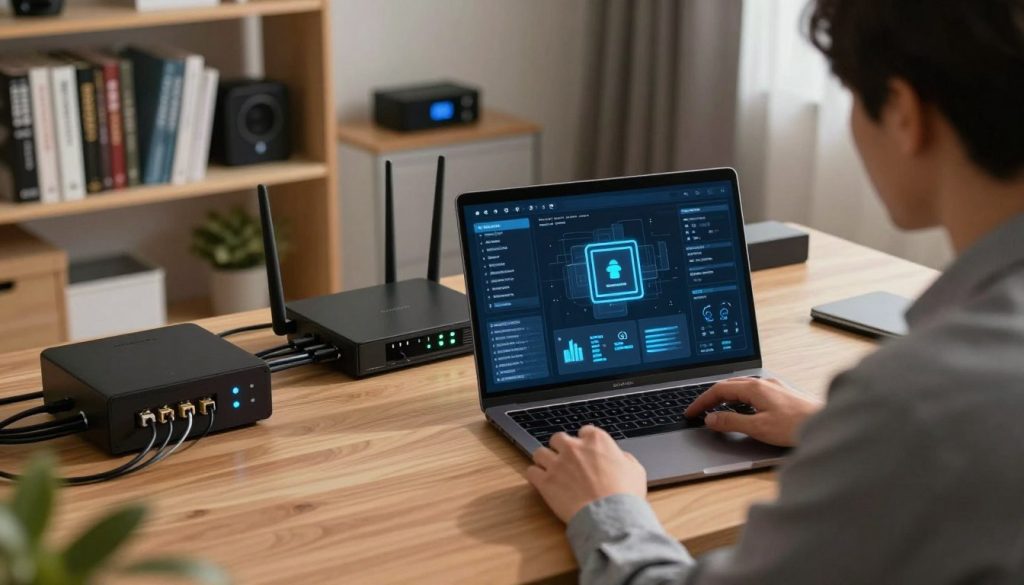
Configuring DNS over HTTPS for Enhanced Privacy
Standard DNS queries are not encrypted. This means your ISP can see every site you visit. Configuring DNS over HTTPS (DoH) encrypts these requests. It keeps your browsing private and hidden from others.
To use DoH, you can set it up in your browser or router. Using trusted providers like Cloudflare or Quad9 blocks your ISP from tracking you. This is a foundational step for keeping your online life private.
Implementing Hardware Firewalls for Network Traffic Control
Hardware firewalls offer stronger protection than software ones. They sit between your modem and router, controlling all data flow. They let you monitor and block unwanted connections.
Using a hardware firewall gives you granular control over your network. You can block specific ports or stop devices from talking to known threats. This keeps your data safe within your own secure space.
| Security Measure | Primary Benefit | Implementation Difficulty |
|---|---|---|
| DNS over HTTPS | Prevents ISP tracking | Low |
| Hardware Firewall | Blocks unauthorized access | Medium |
| Network Segmentation | Isolates sensitive devices | High |
Managing Metadata and File Security
Every image you make has hidden markers that track your actions. These markers, called EXIF data, show your device model, software version, and GPS. Sharing these files online can reveal your personal info to others.
It’s key to clean your media to keep your identity private. By removing these tags, your work stays separate from your personal life.
Stripping EXIF Data from AI-Generated Images
Always clean your files before sharing them online. Tools can quickly remove this data. Automation is your best friend for handling lots of files.
Here are ways to keep your images clean:
- Use software like ExifTool to clean folders fast.
- Try open-source GUI tools for a visual interface.
- Check your AI software settings to disable metadata by default.
Encrypting Files Before Cloud Synchronization
Even with clean metadata, cloud storage is risky. A breach could expose your files. Always put your files in an encrypted vault before cloud storage.
An encrypted vault locks your data with a strong password. Hackers will see only scrambled data, even if they get into your cloud account. Here’s how to stay safe:
- Pick encryption software that uses AES-256.
- Make sure your master password is strong and stored safely.
- Check that your cloud settings only upload the encrypted container, not the raw files.
Using metadata removal and an encrypted vault protects your digital assets. This way, your private projects stay private.
Recognizing Phishing and Malware Threats
The rise of AI-generated content has caught the eye of cybercriminals. They aim to trick users into giving up their personal info or infecting their devices. It’s crucial to stay highly vigilant to keep your data and devices safe. Knowing how these threats work is the first step to a secure online space.
Identifying Malicious AI Porn Sites
Many fake websites look like real platforms for AI content. They might use pop-ups, fake buttons, or tricky login pages to steal your info. Always check the URL for any spelling mistakes or weird domain names.
If a site asks you to turn off your antivirus or install something to see content, get out fast. These are signs of malware. Be cautious of sites that ask for too much personal info or want to link to your social media.
Safe Practices for Downloading AI Models and LoRAs
Downloading AI models and LoRAs from online hubs can be risky if you’re not careful. Cybercriminals might hide harmful scripts in the files. Only get files from trusted creators and places with good moderation.
Always scan new files with good security software before using them. Keeping your software up to date helps protect you from known threats. These steps keep your creative work safe and productive.
| Threat Type | Primary Risk | Prevention Strategy |
|---|---|---|
| Phishing Sites | Credential Theft | Verify URL and avoid logins |
| Malicious Models | System Infection | Scan files and use trusted sources |
| Fake Plugins | Data Exfiltration | Use official repositories only |
| Browser Hijackers | Tracking/Ads | Keep browser extensions minimal |
Maintaining Long-Term Digital Hygiene
Keeping your digital life private long-term means doing regular maintenance. Consistency is key to keeping your data safe from unwanted eyes. By being proactive, you turn privacy into a sustainable habit.
Regularly Clearing Browser Cache and Cookies
Your web browser is your gateway to the internet. But it also keeps a record of your online activities. Cookies and cache data from each site can track your actions over time. Clearing these files helps reset your session and stops tracking between sites.
Try to clear your browser data after each session or at least once a day. Most browsers let you set this up automatically or use extensions to clear data when you close the window. This keeps your current and past browsing separate, protecting your privacy.
Auditing Your Digital Footprint Periodically
It’s not just your browser you need to check. You should also review your overall digital presence. This means looking at active accounts, what info is public, and if your security is up to date. Regular audits help spot potential problems before they get big.
Follow this schedule to keep your digital security strong and ready for new threats.
| Task Category | Frequency | Primary Goal | Action Required |
|---|---|---|---|
| Browser Data | Daily | Remove tracking | Clear cache/cookies |
| Account Audit | Monthly | Reduce exposure | Close unused accounts |
| Security Check | Quarterly | Verify integrity | Update passwords/VPN |
| Metadata Review | Annually | Clean history | Delete old archives |
Conclusion
Protecting your personal info is key in today’s digital world. Just like people get ready for the St. Jude Walk National Virtual event on September 26, 2026, you need to get your digital defenses ready too. This ensures a safe online experience for you.
Creating a strong security setup is all about making it a habit. Using tools like Brave, Bitwarden, and VeraCrypt daily helps a lot. These tools help keep your identity safe while you explore new tech.
Your dedication to privacy keeps your data safe from new threats. Always stay updated on security news and check your settings often. This way, you can enjoy your online activities without worry.
Start taking care of your online presence today. Making a few changes can greatly improve your safety online. Your careful attention is the best way to stay safe on the internet.
FAQ
Why is it important to prioritize anonymity when exploring realistic AI porn?
In today’s world, keeping your online activities private is key. Just like the Wilmot Warrior Weekend 2026 raised money for cancer research, protecting your digital life is crucial. By choosing private AI porn, you keep your interests safe from unwanted eyes.
What are the primary risks associated with behavioral profiling on AI platforms?
Many AI platforms track your preferences to sell data to advertisers. To avoid this, use local software like Stable Diffusion. It lets you create content without sending data to servers.
Which browsers provide the best protection for private browsing sessions?
For the best privacy, use the Mullvad Browser or Brave. They block trackers and prevent fingerprinting. Also, use DuckDuckGo or Startpage for search engines to keep your history private.
What does a zero logs policy mean for my VPN provider?
A zero logs policy means your VPN, like Mullvad VPN or ProtonVPN, doesn’t store your data. This is vital for adult AI content users, keeping your online activity secret.
How can I secure my generated images and videos on my computer?
Use VeraCrypt to create an encrypted vault. It hides your data until you enter the right password. This way, your media is safe even if someone else gets your device.
Why should I avoid linking my social media accounts to AI generation sites?
Linking your accounts can connect your AI interests to your real identity. Use burner emails and separate VoIP numbers to keep your online and real-life separate.
Is it safe to use my personal credit card for AI model subscriptions?
Using a personal card can leave a trace on your statement. Instead, use Privacy.com for virtual cards or Cryptocurrency like Monero for more anonymity.
How do I prevent my home network from leaking my browsing habits?
Set up DNS over HTTPS (DoH) in your browser to encrypt DNS queries. Also, use a hardware firewall to block malicious connections.
What is metadata, and why should I strip it from my AI files?
Metadata contains hidden info about your files. Use ExifTool to remove it before sharing, keeping your files private.
How can I safely download new AI models and LoRAs?
Always choose files in the.safetensors format when downloading from sites like Civitai. Safetensors prevent malicious code, keeping your system safe.
What are the best practices for maintaining long-term digital hygiene?
Clear your browser cache and cookies regularly. Use a password manager to keep your credentials safe. This ensures your online activities remain private.