Ever wondered why some digital images feel real, while others seem fake? It’s often because of how light interacts with the subject. Learning about light is key to going from a simple photo to a cinematic masterpiece.
Today’s software lets creators easily mimic complex scenes. With a natural lighting ai, you can get the warm feel of sunset or the crisp look of a studio. This tech is crucial for making content that grabs your eye right away.
Whether you’re improving your portfolio or doing natural lighting ai porn, getting it right is essential. Knowing how to play with shadows and highlights can make your work stand out. This guide will show you how to achieve top-notch results through skill and technical know-how.
Key Takeaways
- Learn how to simulate realistic environmental light sources.
- Discover the difference between studio and cinematic profiles.
- Master the art of shadow manipulation for depth.
- Improve your digital imagery with advanced software tools.
- Apply professional techniques to elevate your creative projects.
Understanding the Fundamentals of Natural Lighting AI
To get photorealistic results, you need to understand the basics of rendering engines. Natural lighting AI is more than just adding light to a scene. It’s about how light acts in the real world. Learning these basics lets you control the mood and look of your work.
The Physics of Light in AI Generation
Today’s tools use tech like Lumen for global illumination. This simulates how light interacts with objects. When light hits something, it reflects, scatters, and absorbs, creating soft, natural light.
Nanite helps with foliage and complex shapes, adding detailed shadows. These systems make sure every pixel reacts to light accurately. This detail makes images look real.
Why Natural Lighting Matters for Realism
Our brains notice when lighting looks off. If shadows or highlights don’t match, we know it’s fake. Natural lighting ai helps by making light consistent in a scene.
Global illumination makes scenes look cohesive. It blends light from sources like windows or the sun, creating realistic colors. This cohesion is key for high-quality images.
Setting Up Your Environment for Optimal Results
Work in your digital space like a pro photographer. Start with a main light source and its strength, then add secondary lights. This avoids over-bright textures and keeps subjects clear.
| Lighting Technique | Primary Benefit | Best Use Case |
|---|---|---|
| Global Illumination | Realistic Bounces | Indoor Scenes |
| Direct Sunlight | High Contrast | Outdoor Landscapes |
| Softbox Diffusion | Smooth Skin Tones | Portrait Photography |
Balance these elements for an efficient natural lighting ai workflow. Aim for a realistic atmosphere. With these basics, you’re set to try more complex lighting setups.
Mastering Sun-Based Lighting Profiles
Getting the sun’s position right is key to top-notch AI images. By adjusting the virtual sun, you control the mood of your scenes. Using light presets makes it easy to mimic complex lighting setups.
Simulating Golden Hour and Sunset Effects
The golden hour gives a soft, warm light that photographers love. To get this, lower the sun’s position for long, dramatic shadows. Consistency is crucial to make the lighting feel natural.
“Light makes photography. Embrace light. Admire it. Love it. But above all, know light. Know it for all you are worth, and you will know the key to photography.”
Adjusting Sun Intensity and Angle for Depth
Changing the sun’s angle is vital for depth in your photos. A lower sun angle creates contact shadows that highlight details in foliage and grass. This realism makes your images stand out.
| Sun Position | Shadow Length | Visual Impact |
|---|---|---|
| High Noon | Short/Minimal | High contrast, harsh |
| Golden Hour | Long/Soft | Warm, inviting, cinematic |
| Sunset | Very Long | Dramatic, moody, deep |
Using HDR NSFW Data for Realistic Skin Tones
Getting skin textures right under the sun is tough. Using hdr nsfw data helps your model understand light on skin. This avoids the “plastic” look in lower-quality images. It keeps skin tones vibrant and true to life.
By mixing hdr nsfw data with light presets, you get pro results every time. Make sure to adjust intensity to avoid overexposure. This fine-tuning is what makes your work look cinematic.
Configuring Studio Lighting Setups
Learning studio lighting lets you shape your subjects with great care. You can control your virtual space fully. This skill is key for creating top-notch digital art.
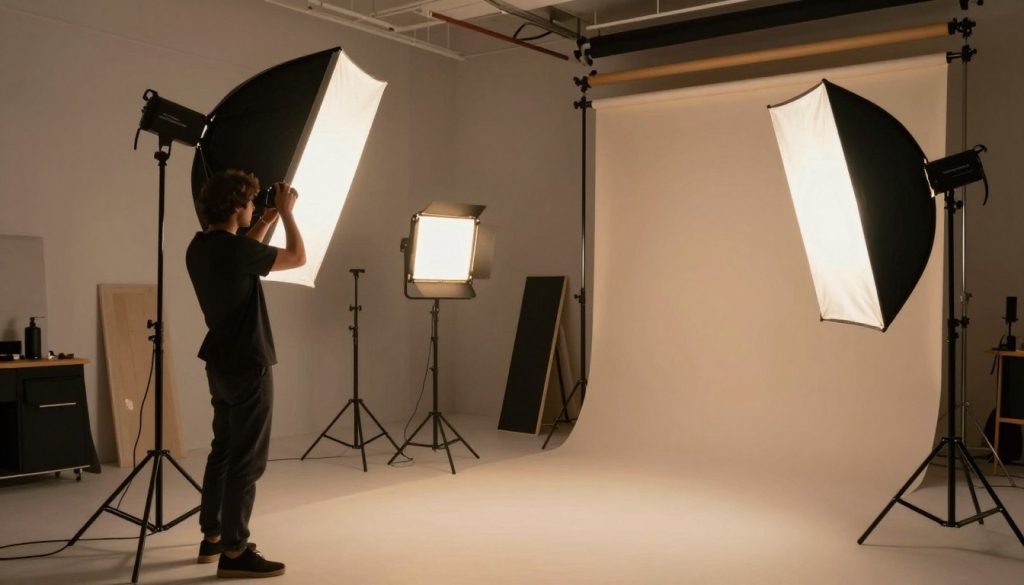
Replicating Three-Point Lighting Systems
The three-point lighting system is a must for pros in photography and film. It uses three lights to light up the subject, adding depth. This setup helps separate your subject from the background.
The key light is the main light source. Place it at an angle to create shadows that highlight the subject’s features. This makes your AI characters look real and not flat.
Softbox vs. Hard Light Diffusion Techniques
Soft and hard lights change how your scene feels. Softbox diffusion gives a soft, flattering light. It’s great for portraits, making them look clean and professional.
Hard light creates sharp edges, adding drama and texture. You can also use shadow blockers to control light. This adds depth to your scene, making it more interesting.
Balancing Key, Fill, and Backlights
Getting your lights right is key to a great image. The fill light softens shadows without losing them. Adjust the fill light if shadows are too dark.
The backlight makes your subject stand out from the background. Managing these lights well makes your image look polished. Use the table below to pick the right lighting for your project.
| Lighting Type | Primary Purpose | Shadow Quality | Best Use Case |
|---|---|---|---|
| Softbox | Gentle Illumination | Soft and Gradual | Beauty and Portraits |
| Hard Light | Dramatic Contrast | Sharp and Defined | Cinematic and Noir |
| Shadow Blockers | Light Subtraction | Deep and Moody | Artistic Depth |
Implementing Cinematic Lighting Profiles
Mastering cinematic lighting is key to moving beyond simple photos to telling stories with visuals. By controlling light, you can evoke emotions and guide the viewer’s eye. Cinematic profiles are about more than just brightness; they’re about creating a visual atmosphere that tells a story.
Achieving High-Contrast Noir Aesthetics
To create a compelling noir look, deep shadows are crucial. High-contrast lighting, or chiaroscuro, uses light and dark to build tension. Aim for sharp edges where light meets shadow to add mystery.
“The most important part of a film is the light. It defines the mood, the character, and the very soul of the narrative.”
Here are some techniques to master the noir look:
- Use a single, harsh light source for long, dramatic shadows.
- Limit colors to black and white to enhance contrast.
- Place your subject near a window or doorway for classic film noir silhouettes.
Utilizing Color Grading for Mood Enhancement
Color grading is the final touch for your cinematic projects. It changes the image’s temperature and tint to match your mood. Strategic color choices can turn a neutral scene into something warm or cold.
Adjusting color balance can highlight certain parts of your frame. For example, cooling shadows and warming highlights gives a professional look. This makes your lighting setup feel intentional and polished.
Applying Volumetric Lighting for Atmospheric Depth
Volumetric lighting adds physical presence to your light sources. It simulates light’s interaction with air particles, creating atmospheric depth. This is great for scenes with fog or haze.
Increasing fog density makes light volume more pronounced. This creates a soft, ethereal glow around your subjects. Volumetric effects make environments feel alive and grounded.
Step-by-Step Guide to Natural Lighting AI Porn Generation
Getting the perfect look in your projects starts with a clear, repeatable workflow. By following a structured path, you can ensure that your natural lighting ai outputs remain consistent and visually striking across every session.
Step One: Selecting the Base Model and Checkpoint
The foundation of your work relies heavily on the base model you choose. You should prioritize checkpoints that are specifically trained for high-fidelity skin textures and realistic environmental interactions.
Stability is key when working with complex lighting scenarios. Always test your chosen model with a neutral prompt to ensure it handles shadows and highlights correctly before adding more complex variables.
Step Two: Crafting Effective Lighting Prompts
To achieve professional results, your prompts must clearly define the light source. Integrating the Ultra Dynamic Sky framework allows you to simulate complex atmospheric conditions with ease.
“Lighting is the language of photography; when you master it, you control the entire mood of the image.”
When building your prompts for natural lighting ai porn, be specific about the time of day and the intensity of the sun. Using descriptive terms like “golden hour,” “diffused overcast,” or “harsh midday sun” helps the engine interpret your vision accurately.
Step Three: Fine-Tuning with Light Presets
Once your base prompt is set, you can apply specific light presets to refine the final output. These presets act as a shortcut to professional-grade color grading and shadow management.
You can adjust these settings to match the specific aesthetic of your project. Whether you need a soft, romantic glow or a high-contrast cinematic look, the right configuration makes all the difference.
| Lighting Style | Preset Intensity | Primary Use Case |
|---|---|---|
| Golden Hour | High | Warm, intimate portraits |
| Studio Softbox | Medium | Clean, commercial aesthetics |
| Noir Contrast | Maximum | Dramatic, moody scenes |
Step Four: Iterative Refinement and Upscaling
The final stage involves reviewing your generated images and making small adjustments to your parameters. If the lighting feels off, tweak your light presets or adjust the prompt weight for the sky conditions.
Once you are satisfied with the composition, use an upscaling tool to enhance the resolution. This ensures that your natural lighting ai porn content maintains its quality and detail, even when viewed on high-definition displays.
Advanced Techniques for Light Presets and Control
Getting perfect light in your renders means going beyond basic settings. You can fine-tune every detail with specialized tools. This way, you have complete creative authority over your digital world.
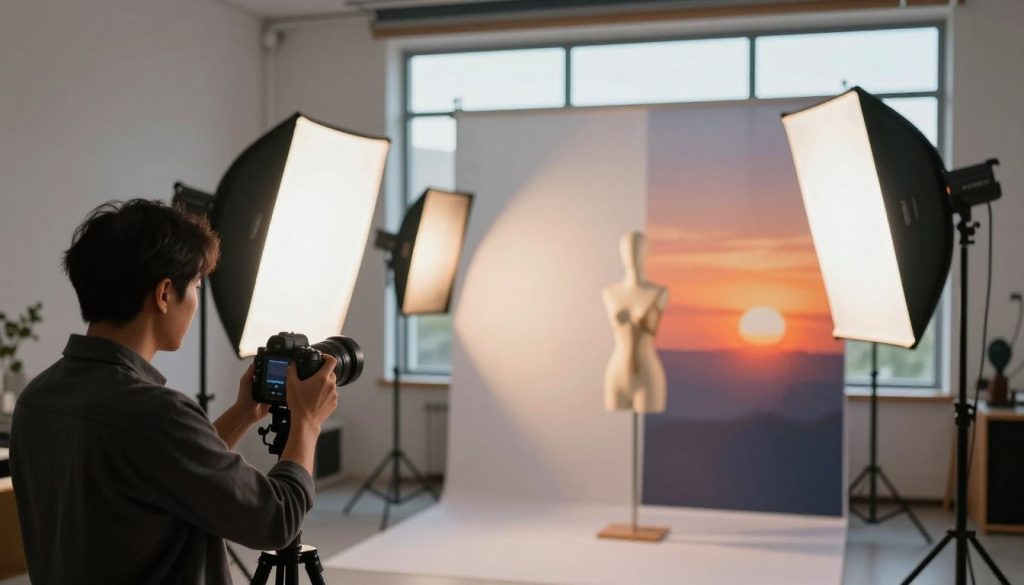
Creating Custom LoRA for Lighting Styles
Creating a custom LoRA model is a great way to standardize your look. Instead of using generic prompts, you can train a model on specific lighting behaviors. This lets you save your style as reusable light presets for any base model.
When training your LoRA, use high-quality images with consistent light sources. This helps your model learn how light direction affects shadows. Once trained, these files become a permanent part of your creative tools.
Using ControlNet for Precise Light Placement
ControlNet is key for artists who need exact control. You can use depth maps or edge detection to guide the AI. But the real power is in using invisible geometry to place shadows exactly where you want them.
This method stops light from looking like it’s floating or bleeding through objects. It keeps your composition grounded in reality. This control is crucial for complex, multi-light scenes.
Managing Shadows and Highlights in Post-Processing
Even with great generation, final touches are often needed for a professional look. When working with hdr nsfw data, keeping color accuracy and texture detail is key. Use high-bit-depth editing software to avoid clipped highlights and retain shadow gradients.
By managing these elements well, you can refine your light presets for maximum effect. Balancing contrast and exposure ensures your final output looks polished and intentional. This is where your artistic vision shines.
Troubleshooting Common Lighting Artifacts
Even top AI models can sometimes show lighting issues that mess up your image. These problems can come from small mistakes in light calculation. Learning how to fix these is key to getting a top-notch look, especially with complex hdr nsfw images.
One good way to cover up small problems is by adding a bit of fog or haze. This makes the background look deeper and softens any harsh edges. It helps create a smooth, unified look in your scene.
Fixing Overexposed Skin Textures
When skin looks too bright, it’s often because the light is too strong. To fix this, you can lower the light in your prompt or adjust the contrast. Using high-quality hdr nsfw settings helps the model get skin lighting right, avoiding that over-bright look.
If the skin still looks off, try adding a soft light filter later. This brings back details in bright areas. Getting skin tones right is all about balance, especially with bright lights.
Correcting Unnatural Shadow Casting
Shadows that don’t look right often come from wrong light sources or angles. Make sure your main light source matches the shadows on your subjects. If shadows seem too sharp, try making them softer by adjusting diffusion settings.
Adding a secondary light can also soften harsh shadows. This makes your image look more natural. Always double-check your light positions to avoid impossible shadows.
Resolving Color Bleeding Issues
Color bleeding happens when light from a bright area affects nearby objects. This is common in tight spaces where light bounces a lot. You can fix this by tweaking the light’s color or using a neutral color grade.
Another way is to move your subject away from bright surfaces. This lessens the effect of reflected light. Managing light bounces carefully keeps your colors true and bright.
| Issue | Primary Cause | Quick Fix |
|---|---|---|
| Overexposure | High intensity | Reduce exposure |
| Sharp Shadows | Hard light source | Increase diffusion |
| Color Bleeding | Surface reflection | Adjust saturation |
| Flat Depth | Lack of atmosphere | Add light fog |
Optimizing Your Workflow for Consistent Results
Being efficient is key to making top-notch AI content, especially with complex lighting. By improving your daily tasks, you can keep producing quality work without losing control over your creativity. Streamlining your process lets you focus more on your artistic vision and less on technical details.
Building a Library of Lighting Templates
Creating a personal collection of light presets is a great way to save time. Organize these files by type, like indoor studio, outdoor golden hour, or specific cinematic moods. This way, your favorite settings are easy to find for future projects.
Remember to add seasonal variations to your library to keep your content fresh. For example, make autumn and winter lighting profiles to capture the unique colors of those seasons. Keeping your templates organized makes it easy to switch styles as your project changes.
Automating Prompt Generation for Efficiency
Entering prompts manually can lead to uneven results across scenes. Use automated scripts or tools to add your light presets to your workflow. This keeps your lighting consistent, no matter the subject.
Automation connects your creative ideas to the final product. By using standard technical terms in your prompts, you avoid common issues like color bleeding. A smooth workflow means you can work faster and get consistent, high-quality results every time.
Conclusion
Your journey to create top-notch AI images starts with mastering light. Now, you have the tools to turn simple ideas into stunning visuals with Stable Diffusion or Midjourney.
Changing lighting profiles can change how people see your digital art. You can control the mood and depth of scenes by tweaking sun angles or studio setups. This precision makes your work stand out from the usual.
Getting better at this takes practice. Try out different light settings to see how they work with different models. You’ll learn to balance shadows and highlights as you work on more projects.
Seeing light as a key design element opens up new possibilities. Use these tips to create a portfolio that really grabs attention. You’re ready to make amazing, well-lit images with confidence.
FAQ
The Physics of Light in AI Generation
To get photorealistic results, you need to understand how light works in digital spaces. Using global illumination tech like Lumen helps simulate light bouncing off surfaces. This makes your scenes look cohesive and visually accurate.
Why Natural Lighting Matters for Realism
Natural lighting makes images feel alive. It adds details like soft shadows and ambient occlusion. These elements help your subjects feel real and grounded in their environment.
Setting Up Your Environment for Optimal Results
Before starting, set up your environment right. A solid base model ensures correct light bounces and reflections. This setup helps control the mood and atmosphere of your final image.
Simulating Golden Hour and Sunset Effects
The “golden hour” is loved for its warm glow. Use light presets to mimic this effect. It softens skin and creates elegant shadows, adding sophistication to your work.
Adjusting Sun Intensity and Angle for Depth
Changing the sun’s position shapes your subjects. Higher intensity creates sharp contrasts, while lower angles highlight details. This lets you change a scene’s mood from bright to dramatic.
Using HDR NSFW Data for Realistic Skin Tones
Integrating HDR NSFW data keeps skin tones vibrant and realistic. It prevents skin from looking grey or washed out under bright light. This results in a more lifelike finish.
Replicating Three-Point Lighting Systems
In a studio, the three-point lighting system is key. It includes key, fill, and backlights. This setup lets you shape your subject with precision, achieving a high-end look.
Softbox vs. Hard Light Diffusion Techniques
Knowing the difference between light sources is crucial. Softbox light spreads evenly, hiding flaws. Hard light creates sharp edges and highlights. Balancing these gives you control over your image’s drama or softness.
Balancing Key, Fill, and Backlights
The right balance between light sources adds depth. The key light illuminates, the fill softens shadows, and the backlight separates subjects from backgrounds. Shadow blockers can also add complexity to your scene.
Achieving High-Contrast Noir Aesthetics
Cinematic lighting tells a story. For a noir look, play with light and shadow to create drama. High-contrast profiles evoke emotions, using darkness as much as light to guide the viewer.
Utilizing Color Grading for Mood Enhancement
Color grading is a powerful tool for mood. Whether you want a cool blue for sci-fi or warm sepia for nostalgia, adjustments can enhance your scene’s mood.
Applying Volumetric Lighting for Atmospheric Depth
Volumetric lighting adds depth to the air. It creates visible light beams that enhance your scene’s atmosphere. This is great for outdoor scenes or dark interiors.
Step One: Selecting the Base Model and Checkpoint
Start by choosing the right base model or checkpoint. Platforms like Civitai offer models trained for lighting realism. This is the foundation for your lighting effects.
Step Two: Crafting Effective Lighting Prompts
Once your model is ready, write detailed lighting prompts. Use terms like “rim lighting” or “cinematic shadows.” The more specific your prompt, the better the AI will understand your vision.
Step Three: Fine-Tuning with Light Presets
After generating, refine your image with light presets. These presets align the AI’s output with professional standards. They ensure highlights and shadows are balanced for your scene.
Step Four: Iterative Refinement and Upscaling
The final step is refining and upscaling. Use tools like Topaz Gigapixel AI to increase resolution while keeping detail. This keeps your natural lighting ai porn projects crisp and high-quality.
Creating Custom LoRA for Lighting Styles
Advanced users can train custom LoRA models. These models learn specific lighting styles, like neon or candlelit rooms. This ensures consistent results across scenes.
Using ControlNet for Precise Light Placement
ControlNet offers exact control over light placement. It maps out highlights and shadows, ensuring perfect interaction with subjects. This eliminates guesswork in AI generation.
Managing Shadows and Highlights in Post-Processing
Post-processing tools like Adobe Photoshop or DaVinci Resolve manage HDR NSFW data. They help recover shadows and tone down highlights, ensuring color accuracy and texture detail.
Fixing Overexposed Skin Textures
Overexposed skin can ruin realism. Lower the light intensity in your prompt or use post-processing to manage HDR NSFW balance. ControlNet can also direct light placement.
Correcting Unnatural Shadow Casting
AI sometimes casts shadows incorrectly. Use ControlNet with a depth map to force shadows to match the scene’s geometry. This ensures a polished look.
Resolving Color Bleeding Issues
Color bleeding happens when light transfers color incorrectly. Adjust “cfg scale” or use fog to mask minor flaws. Fog separates subjects from backgrounds, reducing color bounces.
Building a Library of Lighting Templates
Efficiency is key. Save your favorite light presets and prompt structures as templates. This makes applying proven styles to new projects quick and easy.
Automating Prompt Generation for Efficiency
Automate your prompt generation for fresh content. Use seasonal variations like winter’s blue light or autumn’s warm tones. This keeps your portfolio diverse and engaging.
How does the Natural Lighting Engine improve AI realism?
The engine uses global illumination and Lumen to simulate real light. This creates cohesive environments where light and shadows interact realistically with subjects.
Can I achieve a specific time of day using light presets?
Yes, use specialized light presets for golden hour, midday, or sunset. Adjusting intensity and angle changes the scene’s mood with a single click.
What is the benefit of using HDR NSFW data in my workflow?
HDR NSFW data offers a higher dynamic range, crucial for realistic skin tones. It prevents textures from looking flat and ensures details are visible in high-contrast scenes.
How do I prevent my skin textures from looking overexposed?
To avoid overexposure, lower light intensity in your prompt or use post-processing tools. ControlNet can also help direct light placement for better skin tones.
Is it possible to create my own custom lighting styles?
Absolutely. Advanced users create custom LoRA models for unique lighting aesthetics. This allows for a consistent, signature look across multiple projects.
What tools are best for managing volumetric lighting and fog?
Tools like Stable Diffusion with ControlNet offer precise atmospheric control. Volumetric lighting adds depth, while fog masks minor flaws and enhances cinematic quality.
How can I automate my lighting workflow for seasonal variations?
Build a library of light presets for different seasons. Automating your prompts with these presets ensures consistency while keeping your content fresh and diverse.